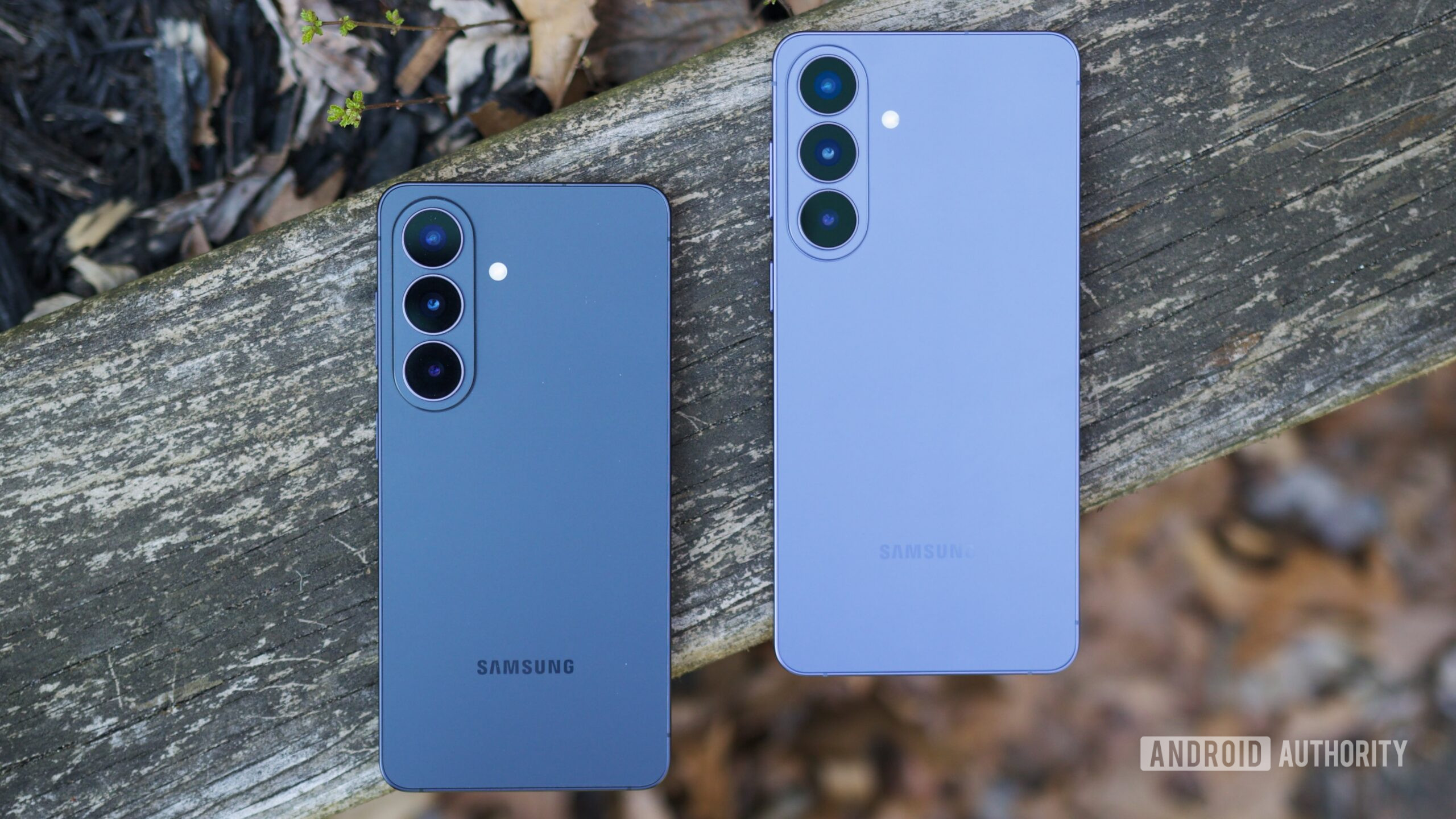
After a year-long hiatus, Samsung’s custom chip series has returned to the Galaxy S26 series with the new Exynos 2600. While the powerhouse Qualcomm Snapdragon 8 Elite Gen 5 for Galaxy is reserved for all Ultra models and select markets like the US, the Exynos 2600 boasts a number of improvements that it hopes will persuade global customers that Samsung is back at the top table of chip design.
We’ve already covered the latest Exynos vs Snapdragon race, but here are the key talking points. The Exynos 2600 steps up its performance with Arm’s latest C1-Ultra and C1-Pro cores, albeit at slower clock speeds than Qualcomm’s custom Oryon cores. Similarly, the GPU has been upgraded to an Xclipse 960, with up to 50% better ray tracing performance and Samsung’s Exynos Neural Super Sampling (ENSS) technology. The NPU has seen a significant 113% boost, too, ensuring the chip can run the latest on-device AI models.
In addition to the highly anticipated component upgrades, Samsung has debuted its new Heat Path Block (HPB) technology with the Exynos 2600. This is designed to improve heat transfer using High-k EMC materials, reducing thermal resistance by up to 16% and helping the chip sustain performance under heavy loads. Sounds promising, but what does it actually mean for head-to-head performance?
| Snapdragon 8 Elite Gen 5 | Exynos 2600 | |
|---|---|---|
|
CPU |
Snapdragon 8 Elite Gen 5
2x Prime @ 4.6GHz |
Exynos 2600
1x C1-Ultra @ 3.8GHz |
|
SME? |
Snapdragon 8 Elite Gen 5
SME |
Exynos 2600
SME2 |
|
RAM |
Snapdragon 8 Elite Gen 5
LPDDR5X |
Exynos 2600
LPDDR5X |
|
GPU |
Snapdragon 8 Elite Gen 5
Adreno 840 |
Exynos 2600
Xclipse 960 |
|
NPU |
Snapdragon 8 Elite Gen 5
Hexagon |
Exynos 2600
32K MAC NPU |
|
Video decode |
Snapdragon 8 Elite Gen 5
H.264, H.265, VP9, AV1 |
Exynos 2600
H.264, H.265, VP9, AV1 |
|
Storage |
Snapdragon 8 Elite Gen 5
UFS 4.1 |
Exynos 2600
UFS 4.1 |
|
Modem |
Snapdragon 8 Elite Gen 5
Snapdragon X85 |
Exynos 2600
N/A – external |
|
Process |
Snapdragon 8 Elite Gen 5
TSMC 3nm N3P |
Exynos 2600
Samsung 2nm GAA |
Exynos 2600 vs Snapdragon 8 Elite Gen 5 benchmarks
Diving right into Geekbench 6’s ever-popular CPU test, we can see the pros and cons of the Exynos and Snapdragon architectures. Qualcomm’s larger, higher-clocked Oryon CPU cores deliver a significant single-core performance lead. The Snapdragon chip is 16% faster here, a far bigger gap than the 7.5% advantage Qualcomm held the last time that Samsung shipped two Galaxy chipsets. As much as Arm has moved to improve the raw throughput of its latest powerhouse cores, Samsung’s low clock speeds here mean there’s a far larger gap to close. I can only hope that this conservative nature helps with power efficiency.
Thankfully, multi-core performance, which is more important for everyday apps, is virtually the same between the two; I clocked just a 1% difference, which is essentially a margin of error. Whether you’re playing the latest Android games or flicking through 101 Chrome tabs, the Exynos 2600’s higher core count can keep up with Snapdragon’s raw throughput. That said, single-core performance does have advantages for app load responsiveness, emulator performance, and running your phone as a PC companion, so the 8 Elite Gen 5 for Galaxy remains more capable here.
Snapdragon’s custom CPU and GPU are faster, but Exynos can match it in places.
Switching to graphics, I ran 3DMark’s Wild Life Extreme and Solar Bay stress tests to test these GPUs across both high-end traditional rendering and mixed ray tracing workloads.
Starting with Wild Life, the Snapdragon 8 Elite Gen 5 for Galaxy continues to hold a major advantage in raw rasterization. It scores 25% faster than the Exynos 2600, a considerable difference that is bound to affect average and lower frame rates, especially for demanding emulators. The Exynos 2600 also appears to run hotter after just one run, though I won’t put too much stock in this metric alone, since the Galaxy S26 Ultra has a better cooling setup. Still, it certainly seems to warm up more quickly.
It’s not all bad news for Samsung’s chip here; it scores 74.9% in sustainability, compared to Qualcomm’s 53.8%. This means the Exynos phone drops its peak frame rate less during prolonged, demanding work. This is evident: after about 9 minutes of testing, the two scores level off, and the Exynos variant actually runs marginally faster in the final quarter of the test. While most Android games aren’t as demanding as 3DMark’s tests, this is an important caveat for very long gaming or emulator sessions where heat inevitably builds up — Exynos actually performs very similarly in these instances.
3DMark’s Solar Bay stress test tells a different story. AMD’s work in improving the ray tracing performance of the Xclipse 960 GPU used by Samsung has clearly paid off; it’s essentially just as fast as the Snapdragon in this test. In fact, the Exynos 2600 wins out across all other metrics; its temperatures are lower during the first few tests, suggesting it’s not working quite as hard, and it sustains its peak scores for 3 runs before throttling back. The Snapdragon 8 Elite Gen 5, by comparison, can only sustain its best score for a single run.
Over the full stress test, performance between the two chips again ends up very similar by mid-test, with the Exynos maintaining a slim lead after 20 minutes. This ray-tracing gain is a promising result for Samsung; it’s just a shame that ray-tracing remains more of a niche feature and that standard rasterization performance isn’t closer, which would help close the gap in classic emulators and mainstream Android titles.
Do you think Exynos chips have become more competitive in recent years?
147 votes
Is Exynos back for good this time?

Joe Maring / Android Authority
It’s good to see Samsung back in the chipset game this year. However, the Exynos 2600 again feels like a mixed bag from Samsung in terms of raw performance. While it’s made some efforts to close the gap with Qualcomm in NPU and ray-tracing graphics, which is appreciated, I still have some concerns about temperatures.
The chipset’s CPU clock speeds are quite low for a 2026 flagship piece of silicon. MediaTek’s Dimensity 9500 uses a similar Arm C1-Ultra yet is able to hit 4.21GHz instead of 3.8GHz. That’s not enough to completely close the gap, but certainly suggests Samsung is being conservative, quite possibly owing to the yield on its 2nm manufacturing process. Likewise, higher temperatures under stress suggest an underlying issue with temperatures that even the HPB technology can’t address. Or perhaps the Xclipse GPU is simply not great under strain. Paired with early reports that Samsung’s new chip isn’t great for power efficiency, I am a bit concerned that 2nm GAA might not be quite as robust as Samsung wants us to believe.
Snapdragon may be faster on paper, but Exynos remains a high-performance chip.
As with previous years, there’s a reason Samsung is sticking with Snapdragon for its premium Galaxy S26 Ultra — it’s still the fastest mobile chip money can buy. That said, the Exynos 2600 version of the Galaxy S26 and S26 Plus for global customers is still a high-performing chip that’ll handle daily and demanding workloads just fine. It’s undoubtedly a step up from the Exynos 2400 a couple of years back and puts the likes of Google’s Tensor G5 to shame. There are some positive steps for Exynos here, but it’s probably going to take another couple of generations to replace Snapdragon completely.
Don’t want to miss the best from Android Authority?


Thank you for being part of our community. Read our Comment Policy before posting.