Will artificial intelligence be the death knell for some of the most influential companies in the technology sector? The issue has already shaken the sector: Microsoft’s shares have fallen more than 21% this year, Salesforce’s by 26%, Workday’s by 36% and Asana’s by 51%. The IGV, a benchmark index for software stocks, is down almost 22% so far this year. It is also affecting credit markets as investors become more cautious about lending to technology companies.
In the world of large-scale software, there is a real fight for survival. The key question is whether AI-assisted programming will become so powerful that companies no longer need these suppliers, or whether, on the contrary, software companies’ new products, the evolution of their pricing strategy and their long-term reliability, will achieve customer loyalty.
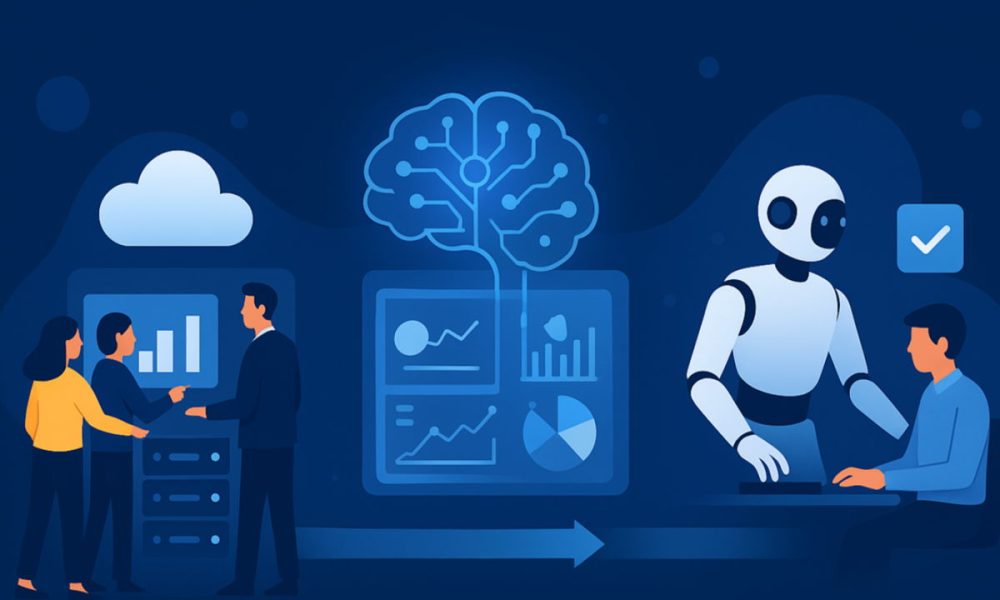
Salesforce and Microsoft, in particular, are painting a picture in which Companies will continue to need their platformsbut they will use them differently: by managing AI agents to do the work in the background on all platforms.
AI agents will pay licenses, says Microsoft
At a recent conference, Microsoft executive Rajesh Jha raised a provocative idea. In a future where companies deploy fleets of AI agents, these agents might need their own identities: logins, mailboxes, and even spaces within software systems. If so, AI would not reduce software sector revenues, but could increase them.
Yeah; AI agents will pay software licenses just like humans… «All these physical agents represent opportunities for use»says Jha, imagining organizations with more agents than humans, each of whom is, in effect, a user who must pay for a software license, or “position” in industry jargon.
This represents a radical change in the SaaS pricing debate rocking companies like Microsoft, Salesforce and Workday. Investors are concerned that AI could weaken the license pricing model, the foundation of enterprise software. If a single person can manage dozens of agents, why pay for dozens of licenses?
AI will not make SaaS obsolete. Instead, it shifts the value proposition of large software companies to focus on security, reliability, and AI tools that can work across multiple programs to make life easier for enterprise customers. “Most traditional software buyers say they are not very interested in a widespread trend to replace SaaS vendors with internally developed systems. Its main objective is for AI to be integrated into existing software. “Most large companies still prefer to have trusted vendors handle the complexity inherent in software solutions.”comment some analysts.
In addition to customers who appreciate technology, there are competitors whose programming skills have been greatly enhanced. A senior Salesforce executive told Business Insider that the company risks losing small and medium-sized business customers to competitors that use AI to develop software and offer lower prices.
However, the main defense, as Workday CEO Bhusri said during an earnings call in February, is the risk and complexity involved for companies using these programs. The large software processes payments, manages employees’ Social Security numbers and stays up to date with global regulations. «No superficial programming is going to be able to do that»assures the manager in reference to AI programming.