Researchers no longer only use the genetic molecule DNA to store biological information. It is now used as a high-precision building material for tiny machines that are supposed to take on complex tasks in your body or in production.
Nanoscale mechanics
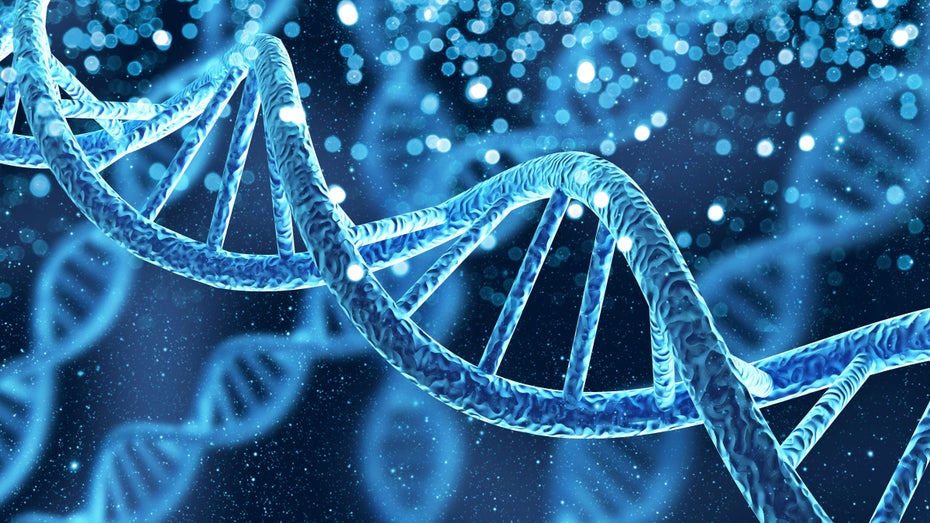
As SciTechDaily reports, these robots are based on the so-called DNA origami technique. A long strand of DNA is folded into an extremely precise, three-dimensional shape using hundreds of short retaining clips.
A team led by scientist Lifeng Zhou from the Chinese University of Beijing has now investigated how classical mechanics can be transferred to this level. In an article in the journal SmartBot, the researcher describes how rigid DNA bundles act as levers and flexible individual strands act as joints.
Of joints and engines
These designs enable movements that we know from large machines, such as swivel or thrust joints. So that the tiny helpers don’t just remain rigid, they need a drive that is often controlled via chemical signals.
The principle of DNA strand displacement allows molecular instructions to be programmed directly into the structure. A new DNA strand displaces an existing one, triggering a targeted mechanical reaction or shape change.
Use in medicine
Especially in medicine, these nanobots promise advances in the targeted administration of medications. They could act like molecular surgeons, specifically searching for sources of disease in the body and releasing active ingredients there.
There are already prototypes of nanogrippers that can surround viruses like SARS-CoV-2 and render them harmless. We previously reported on the potential of DNA as a data storage device, highlighting the versatility of this material.
Hurdles of the tiny world
Despite the progress, researchers are struggling with the physical conditions of the nanoworld. Brownian molecular motion causes the robots to be constantly jostled by other molecules and to shake uncontrollably.
In addition, there is currently a lack of industrial infrastructure to produce these machines cost-effectively in large quantities. Scaling from the laboratory environment to mass production is one of the technical challenges of the coming years.
Manufacturing outlook
Outside of medicine, DNA robots could change the way we make computer chips or optical components. They serve as programmable templates that can position nanoparticles with an accuracy of less than one nanometer.
This precision is beyond what is possible today with conventional lithographic processes. However, it should be noted that the long-term stability of these biological machines in aggressive environments is not yet fully understood.
AI as a design aid
An important driver for development is the use of artificial intelligence in the design of DNA sequences. Software solutions such as MagicDNA help to automatically translate complex movement sequences into the appropriate genetic code.
This lowers the entry barrier for engineers who have previously had little experience with molecular biology. However, it remains to be seen how reliably these AI-generated designs will perform in real-world conditions outside of simulation.
Editorial recommendations
${content}
${custom_anzeige-badge}
${custom_tr-badge}
${section}
${title}
The development shows that the boundary between biology and classical robotics is becoming increasingly blurred. Whether and when these molecular machines reach our everyday lives depends largely on the solution to the mechanical stability problems.
It is a field that shows how precisely we can manipulate matter today. The coming years will show whether the biological components can prevail against conventional approaches.
Top Article
${content}
${custom_anzeige-badge}
${custom_tr-badge}
${section}
${title}