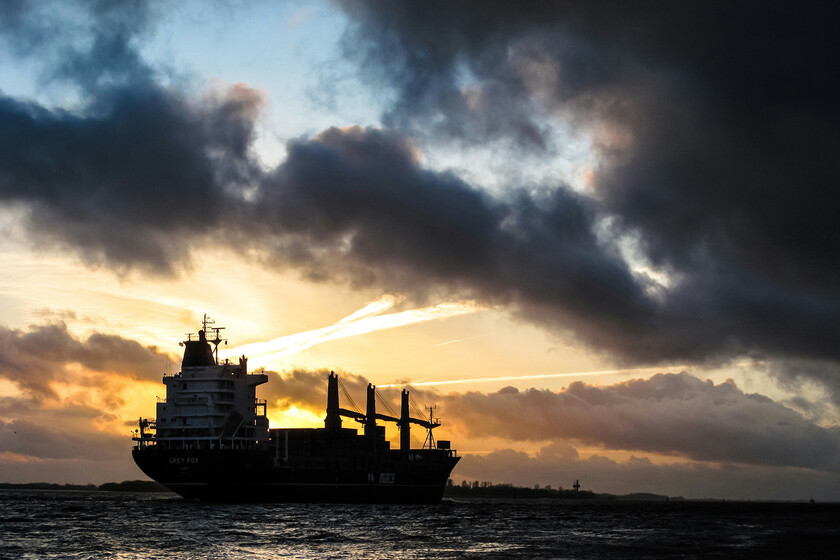
When war broke out between Egypt and Israel in 1967, fifteen commercial ships were trapped in the Suez Canal. The captains dropped anchor assuming they would only have to wait a few days for the fighting to end. They were right about the duration of hostilities: it was the Six-Day War. However, It took eight years for the canal to reopen. When the ships were finally able to set sail in 1975, only two were still seaworthy. The rest had rusted so much under the desert sun that They went down in history as the “Yellow Fleet”.
Almost sixty years later, history rhymes in the Persian Gulf. Ninety days after the war between the United States, Israel and Iran blocked the Strait of Hormuz in late February, the most important maritime passage in the world remains closed. Dozens of oil tankers wait at anchor, waiting for a diplomatic agreement that always seems imminent but never arrives.
The optimism trap on Wall Street
The analyst Javier Blas, in his column for Bloombergexposes the dangerous complacency with which the world is facing this closure. The financial industry operates under an adapted version of Stein’s Law: “The Strait cannot be closed forever because it would cause too much economic damage; therefore, it will reopen soon.”
The problem with this logic is that the economy has not yet inflicted the pain necessary to force peace. As Blas points out:
- For Washington: The war is proving politically cheap. The US economy is riding with quarterly growth of more than 4% and the S&P 500 index is close to historical highs, having risen almost 10% since the start of the conflict.
- For Tehran: Even as the currency plummets and inflation chokes the population, the Iranian regime has demonstrated for decades an almost inexhaustible capacity to absorb economic punishment when it considers it faces an existential threat.
As mediators seek an agreement in Islamabad, inertia maintains the illusion of normality. The market has absorbed the disappearance of about 20 million barrels per day thanks to accumulated inventories and massive releases of strategic reserves. Pero the global tank is emptying.
June: The end of logistics inertia
If we do not see shortages on the streets it is due to pure physics of transportation: a supertanker moves at the speed of a bicycle. The fuel that the West consumed in the spring left the Gulf before the first missile fell.
However, the data already shows the cracks in the system. Global demand fell by 5 million barrels per day in April, the largest consumption destruction since the COVID-19 pandemic. And the blow is already being felt at home: Funcas warns that, if the conflict continues, Spanish inflation will exceed 4% and growth will fall to 1.8%. In addition, the multimillion-dollar extra cost of fuel for airlines such as Iberia or Vueling directly threatens the waterline of Spanish tourism.
The real precipice has a date: June. With the arrival of summer, the peak driving season and the massive use of air conditioning will collide with inventories at multi-year lows. Furthermore, a diplomatic reopening would not solve the physical problem: clearing the mile-wide safe lane of Hormuz would require months of complex naval operations.
However, the impact of this crisis goes far beyond the gas pump. As the physical shortage of crude oil becomes undeniable, the most serious repercussions are brewing in the bowels of the global financial system:
- The fracture of the petrodollar: The unwritten agreement of 1974, which guaranteed security in the Gulf in exchange for crude oil being sold in dollars and reinvested in US debt, is breaking down. Countries like India are selling their US Treasury bonds to obtain liquidity and pay for much more expensive oil.
- The bond market: The persistence of energy inflation has skyrocketed sovereign bond yields. 30-year Treasury bonds in the US exceeded 5.15%.
- The real cost of living: If government bonds yield above 5%, 30-year mortgages inexorably approach 7%. This translates into more expensive loans, lower business investment and a paralysis of the real estate market. As several analysts warn, undoing the economic damage from Hormuz could require an induced recession to curb borrowing costs.
The bypass of the desert
While the world waits, some actors have already given up on Hormuz. The United Arab Emirates has urgently accelerated the construction of a gigantic oil pipeline that bypasses the strait, with the aim of exporting 3.5 million barrels a day directly to the Gulf of Oman by 2027. It is “prudent planning for the worst scenario”, and a clear sign that Abu Dhabi believes the waterway could remain threatened for years.
Half a century ago, no one imagined that 15 ships would spend a decade rotting in the sun in Suez for a war that lasted less than a week. Today, the world assumes that the Hormuz crisis will be a temporary blip. But as the days go by, the shock absorbers wear out and the financial markets creak. The oil is simply still waiting in the sea.
Image | Photo by Jens Rademacher on Unsplash
| The war in the East has reached an unexpected agreement: one where the US does not discuss Iran’s missiles, bombs or uranium