By using this site, you agree to the Privacy Policy and Terms of Use.
Accept
World of SoftwareWorld of SoftwareWorld of Software
  • News
  • Software
  • Mobile
  • Computing
  • Gaming
  • Videos
  • More
    • Gadget
    • Web Stories
    • Trending
    • Press Release
Search
  • Privacy
  • Terms
  • Advertise
  • Contact
Copyright © All Rights Reserved. World of Software.
Reading: AI chips have always wanted to become more and more powerful. TSMC has just pointed out the true limit: efficiency
Share
Sign In
Notification Show More
Font ResizerAa
World of SoftwareWorld of Software
Font ResizerAa
  • Software
  • Mobile
  • Computing
  • Gadget
  • Gaming
  • Videos
Search
  • News
  • Software
  • Mobile
  • Computing
  • Gaming
  • Videos
  • More
    • Gadget
    • Web Stories
    • Trending
    • Press Release
Have an existing account? Sign In
Follow US
  • Privacy
  • Terms
  • Advertise
  • Contact
Copyright © All Rights Reserved. World of Software.
World of Software > Gaming > AI chips have always wanted to become more and more powerful. TSMC has just pointed out the true limit: efficiency
Gaming

AI chips have always wanted to become more and more powerful. TSMC has just pointed out the true limit: efficiency

News Room
Last updated: 2026/06/01 at 4:10 PM
News Room Published 1 June 2026
Share
AI chips have always wanted to become more and more powerful. TSMC has just pointed out the true limit: efficiency
SHARE

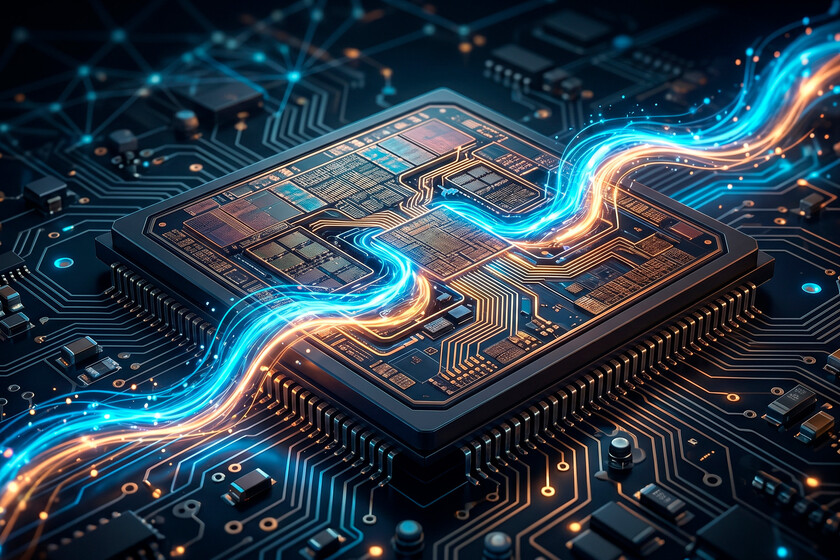
More performance? It is the first thing we usually ask of a new chip, almost without thinking about it. We have done it for years with the processors in our devices and we do it now with the chips that support much of the deployment of AI. More computing power, more speed, more scope to do things that previously seemed out of reach. But this logic begins to encounter a very specific limit: energy. What is making its way now is a less flashy idea, but increasingly difficult to ignore: progress will not only be measured by how much a chip calculates, but also by how much energy it needs to do it.

The clearest clue comes from TSMC. We are talking about the largest contract chip manufacturer in the world, a company that does not sell processors under its own brand, but rather produces semiconductors designed by other players in the industry. According to Reuters, Kevin Zhang, senior vice president of business development, explained at a conference in Amsterdam that his customers are increasingly paying attention to performance improvements that do not increase consumption. The pressure comes from very different profiles, from smartphone manufacturers to AI data center operators, all with a concern that we have seen growing in recent times: cost of electricity and availability of energy.

The key is in the manufacturing. TSMC has not simply described a change in priorities. It has also placed it in its technological calendar with A14, a future manufacturing technology scheduled around 2028. The firm expects that this process will offer more than a 20% improvement in performance and, at the same time, reduce consumption by up to 30% compared to N2, the process that the company takes as a reference in that comparison. The key is that we are not talking about a specific processor, but rather the method with which subsequent chips can be manufactured.

Not everything is about miniaturizing. For decades, reducing the size of transistors has been one of the great ways to gain performance and efficiency in chips. That logic doesn’t go away: transistor density remains within TSMC’s roadmap. What Zhang points out is that in the face of energy pressure from AI, other solutions, such as advanced packaging, chip stacking, and photonics, are also gaining weight. In parallel, as we pointed out a few weeks ago, TSMC has decided not to use High-NA EUV, the lithography associated with ASML’s most advanced and ambitious equipment, in its A13 and A12 processes planned for 2029.

The battle is also in the data. Huawei enters this conversation with Tau Scaling Law, a proposal that seeks to improve performance by accelerating the movement of data within chips. The idea shifts part of the focus from the transistor to architecture and integration, two areas that gain weight when manufacturing smaller components is not enough. Along the same lines appears LogicFolding, which Huawei presents as a possible step beyond traditional 3D stacking, but which will depend on new design tools for folded architectures and better dissipation solutions for devices ranging from smartphones to AI data centers.

Where are we going? TSMC does not speak for the entire industry, but its position makes the message carry. The firm suggests that, at least in its roadmap and in conversations with its clients, energy efficiency is gaining prominence that was previously more hidden behind performance. And it’s not a concern limited to AI data centers. Huawei, for its part, shows that the problem is also being addressed from architecture and integration, not just from the manufacturing process. The common point is not a closed conclusion, but an increasingly visible tension: chips will have to continue to be more capable, but each leap will be more difficult to justify if it increases consumption, heat or costs.

Images | with Nano Banana

In | Samsung has just achieved a milestone that has not been recorded for eight years. The problem is that it is a mirage

Sign Up For Daily Newsletter

Be keep up! Get the latest breaking news delivered straight to your inbox.
By signing up, you agree to our Terms of Use and acknowledge the data practices in our Privacy Policy. You may unsubscribe at any time.
Share This Article
Facebook Twitter Email Print
Share
What do you think?
Love0
Sad0
Happy0
Sleepy0
Angry0
Dead0
Wink0
Previous Article Nostalgic for the Game Boy Advance SP? The Retroid Pocket Flip 2 is for you (-48%) 🎁 Nostalgic for the Game Boy Advance SP? The Retroid Pocket Flip 2 is for you (-48%) 🎁
Next Article Anthropic Confidentially Files for U.S. IPO Anthropic Confidentially Files for U.S. IPO
Leave a comment

Leave a Reply Cancel reply

Your email address will not be published. Required fields are marked *

Stay Connected

248.1k Like
69.1k Follow
134k Pin
54.3k Follow

Latest News

Anthropic Confidentially Files for U.S. IPO
Software
Nostalgic for the Game Boy Advance SP? The Retroid Pocket Flip 2 is for you (-48%) 🎁
Mobile
Intel plant Physical-AI-Comeback mit Robotik-Chips
News
set of 4 UGREEN FineTrack Mini 2 at €28, Xiaomi TV Box S 3rd Gen at €41…
Computing

You Might also Like

three million people have disappeared
Gaming

three million people have disappeared

7 Min Read
There are coupons of up to 110 euros and discounts on mobile phones, consoles and more
Gaming

There are coupons of up to 110 euros and discounts on mobile phones, consoles and more

8 Min Read
Two architects fled the chaos of New Delhi to build a mud house in the Himalayas. Now it’s an Airbnb
Gaming

Two architects fled the chaos of New Delhi to build a mud house in the Himalayas. Now it’s an Airbnb

4 Min Read
The great deindustrialization of Europe, on a map that divides the continent into two
Gaming

The great deindustrialization of Europe, on a map that divides the continent into two

6 Min Read
//

World of Software is your one-stop website for the latest tech news and updates, follow us now to get the news that matters to you.

Quick Link

  • Privacy Policy
  • Terms of use
  • Advertise
  • Contact

Topics

  • Computing
  • Software
  • Press Release
  • Trending

Sign Up for Our Newsletter

Subscribe to our newsletter to get our newest articles instantly!

World of SoftwareWorld of Software
Follow US
Copyright © All Rights Reserved. World of Software.
Welcome Back!

Sign in to your account

Lost your password?