The scenario took place during the round of 16 of the World Cup 2026. While Portugal led 2-1 after endless added time, Croatian defender Josko Gvardiol propelled the ball into the back of the net in the 103rd minute. But after a long wait and the intervention of the VAR, the but croate is finally canceled for offside that no one, on the field or in front of the screens, had been able to detect.
How was a technology able to see the invisible?
To understand the Croatian frustration, we must dissect thecontentious action. On a long cross, striker Igor Matanovic jumps to head the ball but seems to miss it. The leather continues his race towards his teammate Mario Pasalic, who puts it back for Gvardiol. At real speed, and even with slow motion classic television cameras which run between 25 and 50 frames per second, none contact is not detectable.
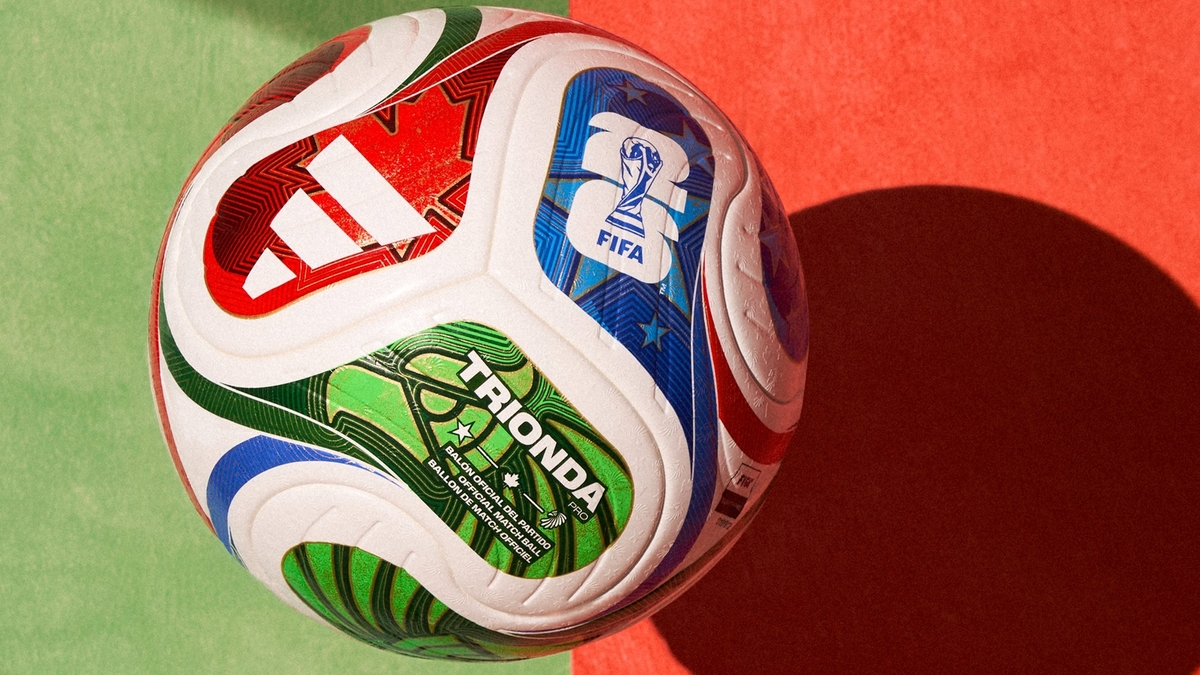
The official Trionda ball
It is here that the Connected Ball Technology » comes into play. Alerted by the video control, the referee was able to consult a graph showing a very clear oscillation at the precise moment when the ball grazed Matanovic’s head. The verdict is clear: the attacker did indeed brushed the ball with the ends of my hair. This tiny deviation automatically placed Pasalic, the decisive passer, in an offside position. The striker himself admitted after the match to having felt very light contact.
What is the secret of the Trionda connected ball?
This surgical decision is based on the innovations integrated into the official Trionda balldesigned by Adidas in partnership with the company Kinexon. At the heart of the sphere is a inertial measurement unit sensor (IMU) weighing just 14 grams. Unlike previous models, it is not suspended but glued directly on the internal wallwith counterweights so as not to alter the trajectory of the ball.
This sensor continuously measures the movements, rotations and accelerations of the ball, then transmits data 500 times per second in the viewing room. It’s this ultra-high frequency which makes it possible to date a contact to the nearest thousandth of a second, where a conventional camera can miss a stealthy contact between two images. The sensor leaves nothing to chance.
According to the data provided by Connected Ball Technology housed within the @adidasfootball Trionda, the official match ball of the @FIFAWorldCup, it was proven that contact was made by Croatia’s #20 Igor Matanović in the build up to the goal against Portugal, allowing the… pic.twitter.com/AyBz11N3wV
— FIFA Media (@fifamedia) July 3, 2026
Is this surgical precision the future of football?
The ball sensor does not work alone. It is coupled to semi-automatic offside system of FIFA. In the stadium, twelve cameras constantly scan 29 data points on each player’s body. By crossing the exact position of the players with the microsecond of the touch detected by the ball, the algorithm generates a decision of scientific precision as if incontestable
If the technology offers unrivaled accuracy, as was already the case in 2022 to prove that Cristiano Ronaldo had not touched a ball, the decision sparked fury from the Croatian camp. L’technological arbitrage pushes sport into a new dimension, but it questions the part of human appreciation remaining, as on the interpretation of a “deliberate” throw-in or not by a defender, which could have changed everything about this same action.