Reading:A Claude operative bought these $2 trillion artificial intelligence (AI) stocks before the ceasefire with Iran. Now they’re both on the rise – is it too late to buy?
A Claude operative bought these $2 trillion artificial intelligence (AI) stocks before the ceasefire with Iran. Now they’re both on the rise – is it too late to buy?
When geopolitical tremors rocked the stock market ahead of Iran’s ceasefire, most investors hit the sell button. But an artificial intelligence (AI) agent built on Anthropic’s Claude models did the opposite: it silently loaded Microsoft(NASDAQ: MSFT) and make Broadcom(NASDAQ:AVGO) its largest position.
Now both stocks are rising. The AI agent’s move was not a lucky gamble. It was the product of a system unencumbered by fear – a system that analyzes balance sheets, validates backlog pipelines, and assesses adoption curves. As Wall Street scanned the same data and saw excessive risk, Claude saw asymmetry.
Will AI create the world’s first trillionaire? Our team just released a report on the one little-known company, called an “Indispensable Monopoly,” that provides the crucial technology that Nvidia and Intel both need. Continue “
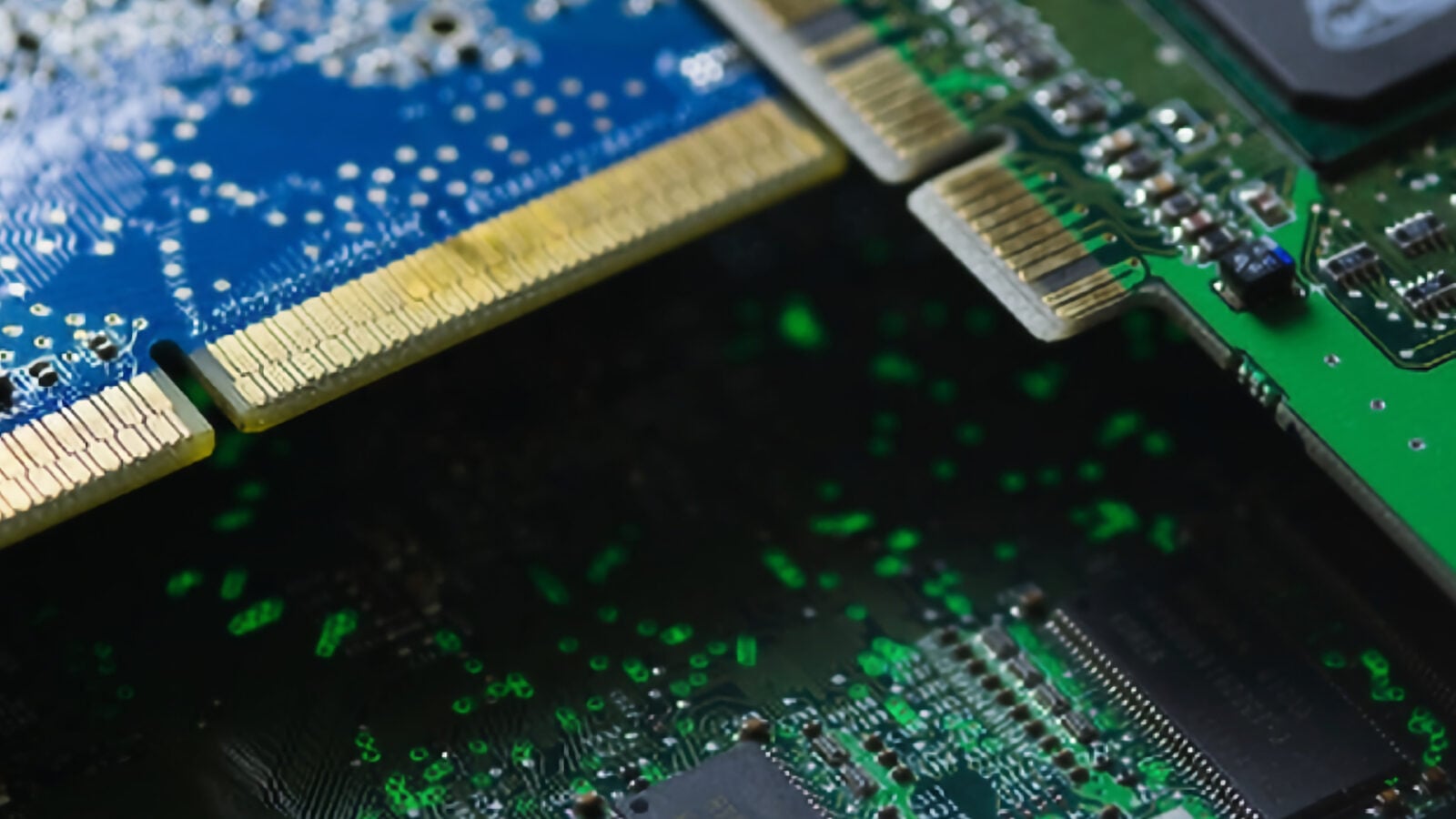
Image source: Getty Images.
Claude’s portfolio is unaffected by headlines or rhetoric that boost stock momentum. Instead, the algorithm runs on ruthless optimization: locating the largest gap between valuation and intrinsic compounding.
In late March, an account on Positions of this size are not incremental adjustments. They represent high-conviction ideas within the broader portfolio, as Claude’s models calculated expected returns above 20%, while the next best names hovered around low single digits.
The difference between a Claude agent and a real analyst is not the ability to process data faster. It’s simply that bots lack the emotions that drive sentiment and psychology. Therefore, it behaves differently from a human. People have a habit of fixating on the latest headline, rumor, or a specific number from an earnings report.
Claude, on the other hand, treats these variables as inputs to his model and not as final conclusions. Essentially, AI dilutes potential concerns into simple questions:
Which companies will be in a position to own the rails of artificial intelligence in ten years?
At what price is this infrastructure offered today?
The Iran ceasefire was, to be honest, just a fuss that threw the tech sector into turmoil. The continued structural expansion of AI is most relevant to the storyline.
Before the ceasefire recovery, Microsoft shares were down roughly 28% from their highest levels – the worst start to the year since 2008. The company was trading at a price-to-earnings (P/E) ratio of 20 – 34% below the software sector average and the cheapest valuation in five years.
To Claude, this decline in valuation was not a signal of weakness or rift in Microsoft’s business. The selling pressure was just a mispricing of one of the largest enterprise cloud platforms in the world at a time when its fortress was growing bigger and bigger.
Claude identified two vectors that collided at the same time. First, Azure expects 38% growth next quarter, supported by a staggering $625 billion revenue backlog. Second, Copilot has surpassed 4.7 million paid subscribers, proving that generative AI is not a science experiment, but a legitimate revenue generator that has embedded itself into Office – one of the stickiest business software suites in the world.
The risk to Microsoft’s growth seems obvious: more than $100 billion in AI investments will put pressure on free cash flow in the near term. But Claude views these expenses very differently than Wall Street.
The AI business model views Microsoft’s infrastructure budget not as a capital flight, but more as the price required to scale operating systems for the AI era. If Azure continues to grow and Copilot continues to embed itself in Microsoft’s vast ecosystem, the current multiple compression should be temporary as the company’s earnings power becomes a key asset.
Wall Street is pricing Microsoft out of fear, while Claude is pricing the Internet giant as a long-term producer.
While Microsoft provides the cloud infrastructure, Broadcom provides the silicon that powers cloud intelligence. At the end of March, Claude agent Broadcom made 10% of the portfolio – its largest single position.
Why was Claude so optimistic about Broadcom? Because the AI recognizes that Broadcom has built a near-monopoly in the custom AI chip landscape, controlling 60% to 80% of the custom silicon market. These chips, known as application-specific integrated circuits (ASICs), are specialized accelerators that use hyperscalers to train and run next-generation models.
During the first quarter, AI semiconductor revenues grew 106% year over year to $8.4 billion, while Broadcom’s order book is on track to reach $100 billion by 2027. In particular, Broadcom has hyperscalers, including Alphabet, Metaplatformsand OpenAI as part of the growing backlog.
Shortly after the earnings report, the thesis around Broadcom was validated when Google extended its TPU partnership through 2031. Additionally, Anthropic has committed to supplying 3.5 gigawatts of Broadcom-powered AI TPUs starting next year. Analyst Vijay Rakesh from Mizuho estimates that the anthropic relationship could add $21 billion in revenue for Broadcom this year alone and reach $42 billion by 2027.
While Wall Street discounts semiconductor stocks due to cyclical risk amid macro uncertainty, Claude sees structural inevitability: AI hyperscalers rush to build their own silicon as clusters of general-purpose chips are no longer enough to keep pace with new applications in agentic AI, robotics and autonomous systems.
Broadcom doesn’t sell regular shovels. The company designs the custom forged steel from which the shovels are made. When the ceasefire was announced and sentiment turned, Broadcom’s stock could simply be compared to the lag that has supported the company’s growth trajectory all along.
Claude did not buy Microsoft and Broadcom as a swing trade. The agent understands that the next decade of AI will be on their rails, and those rails have only just been laid. For human investors willing to take a similarly disciplined approach to an AI-optimized portfolio, the opportunities Claude saw are still alive and well.
Consider the following before buying shares in Broadcom:
The Motley Fool stock advisor The analyst team has just identified what they think is the 10 best stocks for investors to buy now… and Broadcom wasn’t one of them. The ten stocks that survived the cut could deliver monster returns in the coming years.
Think about when Netflix made this list on December 17, 2004… if you had $1,000 invested at the time of our recommendation, you would have $555,526!* Or when Nvidia created this list on April 15, 2005… if you had $1,000 invested at the time of our recommendation, you would have $1,156,403!*
It’s worth mentioning Stock Advisors total average return is 968% – a market-crushing outperformance compared to 191% for the S&P 500. Don’t miss the latest top 10 list, available at Stock Advisorand join an investment community built by individual investors for individual investors.
View the 10 stocks »
*Stock Advisor returns April 13, 2026.
Adam Spatacco has positions at Alphabet, Meta Platforms and Microsoft. The Motley Fool holds positions in and recommends Alphabet, Broadcom, Meta Platforms and Microsoft. The Motley Fool has a disclosure policy.
A Claude operative bought these $2 trillion artificial intelligence (AI) stocks before the ceasefire with Iran. Now they’re both on the rise – is it too late to buy? was originally published by The Motley Fool
Sign Up For Daily Newsletter
Be keep up! Get the latest breaking news delivered straight to your inbox.
By signing up, you agree to our Terms of Use and acknowledge the data practices in our Privacy Policy. You may unsubscribe at any time.