By using this site, you agree to the Privacy Policy and Terms of Use.
Accept
World of SoftwareWorld of SoftwareWorld of Software
  • News
  • Software
  • Mobile
  • Computing
  • Gaming
  • Videos
  • More
    • Gadget
    • Web Stories
    • Trending
    • Press Release
Search
  • Privacy
  • Terms
  • Advertise
  • Contact
Copyright © All Rights Reserved. World of Software.
Reading: A GPS Can’t Work Underwater, So How Do Submarines Navigate? – BGR
Share
Sign In
Notification Show More
Font ResizerAa
World of SoftwareWorld of Software
Font ResizerAa
  • Software
  • Mobile
  • Computing
  • Gadget
  • Gaming
  • Videos
Search
  • News
  • Software
  • Mobile
  • Computing
  • Gaming
  • Videos
  • More
    • Gadget
    • Web Stories
    • Trending
    • Press Release
Have an existing account? Sign In
Follow US
  • Privacy
  • Terms
  • Advertise
  • Contact
Copyright © All Rights Reserved. World of Software.
World of Software > News > A GPS Can’t Work Underwater, So How Do Submarines Navigate? – BGR
News

A GPS Can’t Work Underwater, So How Do Submarines Navigate? – BGR

News Room
Last updated: 2026/04/05 at 9:25 AM
News Room Published 5 April 2026
Share
A GPS Can’t Work Underwater, So How Do Submarines Navigate? – BGR
SHARE


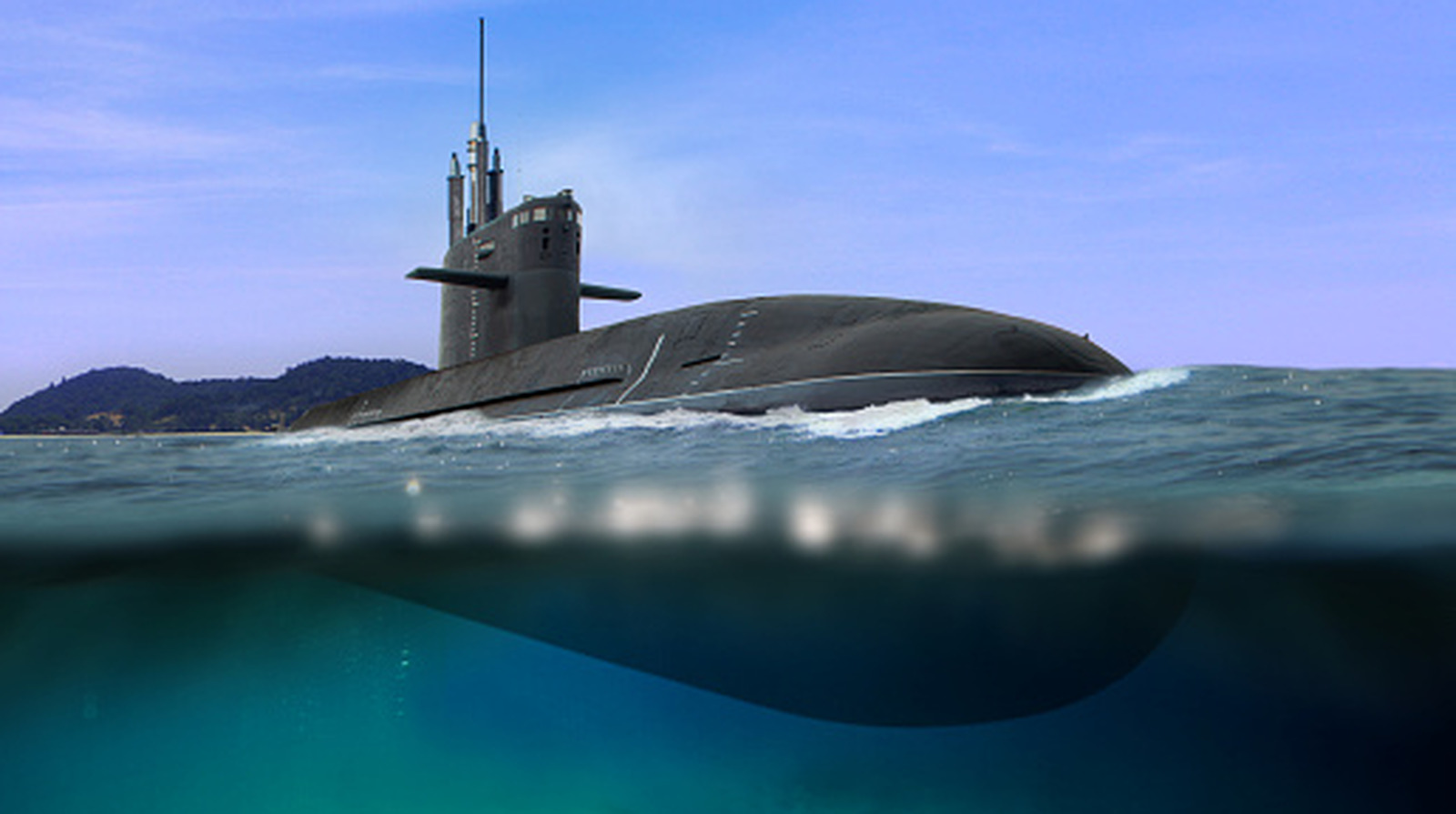
Razihusin/Getty Images

We rely daily on the GPS on our phones to get to many different places in our lives. However, the technology stops working in the depths of the ocean, which is why submarines need something different. That is because satellite signals cannot pass through ocean water efficiently, forcing these underwater vessels to rely on alternative systems in order to navigate.

To steer these submarines, which can stay underwater for months and travel practically blind, one of the main systems used is the Inertial Navigation System (INS). This tool is capable of calculating movement and direction the submarine is headed, without external references to guide the crew. This helps keep routes safe, especially when the ocean blocks most other types of communication.

In addition, the crew also has other ways to figure out where they are. It’s possible to combine these calculations with detailed maps of the ocean’s underwater terrain and other procedures to reduce the chance of error. So, even though they don’t have GPS access like we do on the surface, submarines have other alternatives to not get lost during a mission.

How submarines navigate without GPS underwater
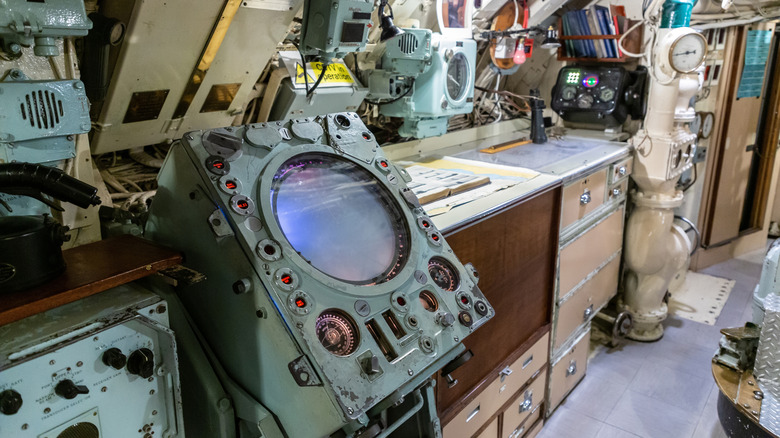

Submarine control room interior showing radar console, navigation equipment, and instrument panels.
Sergii Figurnyi/Shutterstock

Since GPS does not work underwater, submarines, including advanced nuclear-powered ones, primarily depend on inertial navigation to determine their position in the ocean. This system starts from a known position and, using gyroscopes and accelerometers, determines the direction, speed, and displacement during the journey. It then adds up every change in movement along the route to estimate where it is, but this also creates problems, since small calculation errors can build up, creating a drift.

To reduce these errors and the chances of a submarine getting lost in the open sea, there are other layers of support. One of them is manual dead reckoning, which sailors use as a backup to estimate position based on the submarine’s heading and speed. There are also bathymetric charts, which are detailed maps of the underwater terrain, important for comparing the real environment with what is already known about the seafloor.

In some situations, the submarine can also use sonar or other acoustic methods depending on the mission they are involved in, but with caution. Active sonar, for example, sends out pings that help with navigation, but it can also reveal the vessel’s position to others nearby. Because of that, there are also more discreet solutions, such as terrain-relative navigation, which compares the terrain detected during the mission with other maps in an attempt to correct drift and make journeys more accurate.

Why GPS signals can’t penetrate water
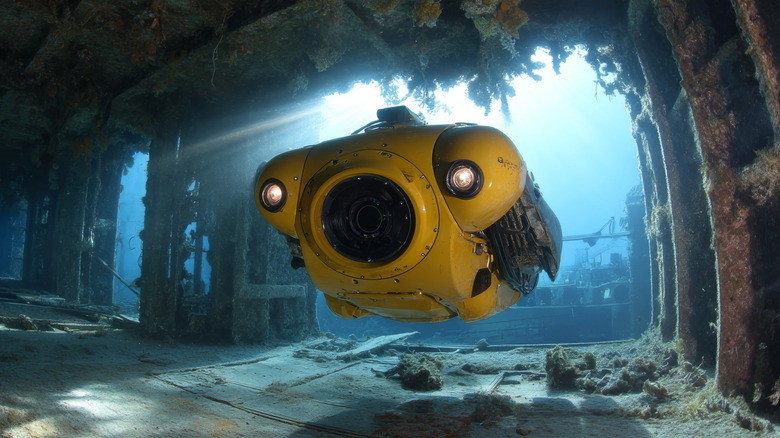

Small yellow submersible exploring an underwater wreck structure.
Sussa Mgt/Shutterstock

One of the major problems that GPS faces in working underwater lies in the type of signal it uses. Satellites emit radio waves at high frequencies, such as the L-bands used by GPS, but this type of communication quickly loses strength when it tries to penetrate water. Under the sea, this is even worse, since the salt from seawater increases conductivity, causing the signal to be lost almost immediately.

The effect is so severe that a submarine operating at even minimal depths becomes completely isolated from GPS satellites. That’s why, when submerged, they cannot receive location data the same way a phone or a car on the surface can, and this issue affects similar services like GLONASS, Galileo, and China’s advanced GPS alternative BeiDou as well.

For GPS to work properly, the submarine would need to be close to the surface, which isn’t very useful during many missions. There are some extremely low-frequency radio wave alternatives, such as ELF, that are capable of reaching them. However, they are usually so slow that transmitting a three-character-long code can take around 15 minutes, which is far too slow for something that needs to navigate in real time.




Sign Up For Daily Newsletter

Be keep up! Get the latest breaking news delivered straight to your inbox.
By signing up, you agree to our Terms of Use and acknowledge the data practices in our Privacy Policy. You may unsubscribe at any time.
Share This Article
Facebook Twitter Email Print
Share
What do you think?
Love0
Sad0
Happy0
Sleepy0
Angry0
Dead0
Wink0
Previous Article How to Make a Media Kit for Influencers (Free Template) How to Make a Media Kit for Influencers (Free Template)
Next Article HomePod Mini Is Now 2,000 Days Old HomePod Mini Is Now 2,000 Days Old
Leave a comment

Leave a Reply Cancel reply

Your email address will not be published. Required fields are marked *

Stay Connected

248.1k Like
69.1k Follow
134k Pin
54.3k Follow

Latest News

Vibe coding significantly boosted App Store review submissions in 2025
News
This Week in Cyber Mayhem: A Not-So-Dead Tortoise, a Very Alive Hack, and Free Money
News
How to Use Pinterest’s New Story Pins for Creators
Computing
5 Amazon Tablet Accessories That Will Level Up Your iPad – BGR
News

You Might also Like

Vibe coding significantly boosted App Store review submissions in 2025
News

Vibe coding significantly boosted App Store review submissions in 2025

1 Min Read
This Week in Cyber Mayhem: A Not-So-Dead Tortoise, a Very Alive Hack, and Free Money
News

This Week in Cyber Mayhem: A Not-So-Dead Tortoise, a Very Alive Hack, and Free Money

14 Min Read
5 Amazon Tablet Accessories That Will Level Up Your iPad – BGR
News

5 Amazon Tablet Accessories That Will Level Up Your iPad – BGR

13 Min Read
NASA administrator defends Trump’s proposed budget cuts
News

NASA administrator defends Trump’s proposed budget cuts

0 Min Read
//

World of Software is your one-stop website for the latest tech news and updates, follow us now to get the news that matters to you.

Quick Link

  • Privacy Policy
  • Terms of use
  • Advertise
  • Contact

Topics

  • Computing
  • Software
  • Press Release
  • Trending

Sign Up for Our Newsletter

Subscribe to our newsletter to get our newest articles instantly!

World of SoftwareWorld of Software
Follow US
Copyright © All Rights Reserved. World of Software.
Welcome Back!

Sign in to your account

Lost your password?