Perhaps you don’t see yourself doing hour-long yoga sessions on the regular, but you like the idea of how yoga can benefit the body.
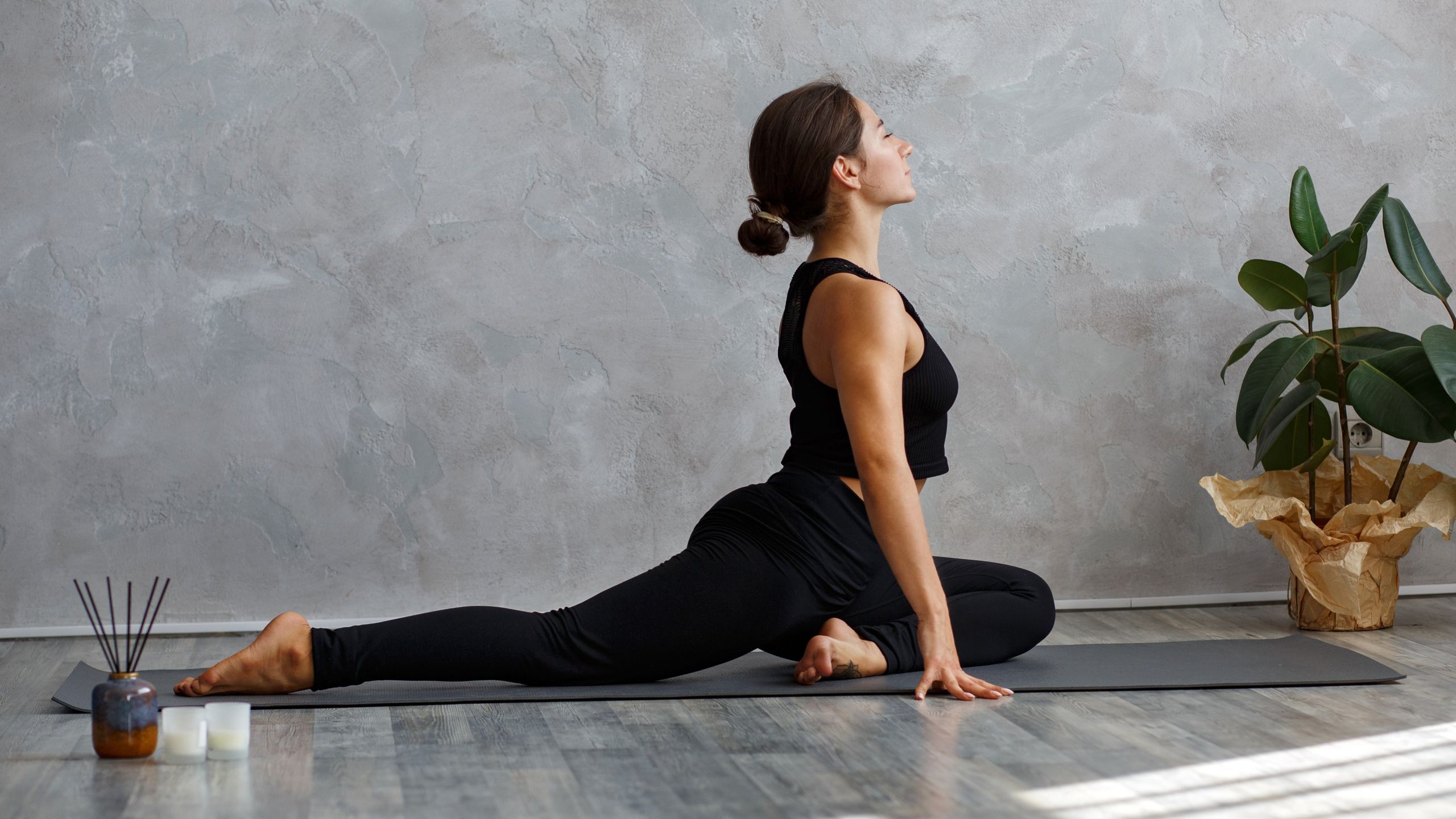
Take it from me, someone who wishes they did yoga more often but instead incorporates a few key moves I’ve learned from the practice into my post-workout stretching. One of these moves, which yoga teacher and founder of Soljourn yoga, Dr. Jordan Ashley, also swears by, is Pigeon Pose. She says, “One of my favorite moves for hip mobility and for releasing emotional tension and physical tightness is Pigeon Pose.”
I have been using it for years as part of my post-workout stretch routine at the gym or at home on one of the best yoga mats. My sequence usually flows from downward dog into Pigeon Pose, and it always leaves my hips feeling looser. I genuinely think it’s one of the reasons I’ve managed to stay mostly injury-free as a runner, long may it continue.
How to get into and hold the pose:
- Start on all fours (tabletop) or in Downward-Facing Dog.
- Bring your right knee forward towards your right wrist. Aim to have your right knee and right hip in the same line.
- Extend your left leg straight back behind you, ensuring your back foot is relaxed and straight (not sickled).
- Square your hips toward the front of the mat.
- Inhale to lengthen your spine, rolling your shoulders down and away from your ears.
- Exhale to walk your hands forward, lowering your upper body toward the floor. You can rest your forehead on the mat, your hands, or a block.
If you’re unsure how long to stay in the stretch for, Dr Ashley recommends anything between one and three minutes will do. It’s a passive, cooling pose, so you can relax into it and let gravity do the work. If it feels intense at first, shorten the hold or place a cushion or yoga block under your hip for support.
Modifications
Doesn’t feel good for you? Dr Ashley provided a few modifications you can try.
- Too intense? If the stretch feels too intense on the knee or hip, angle your front foot in closer to your hip (bringing the heel toward the groin).
- Want to try a prop? If your right sitting bone (glute) isn’t making contact with the ground, place a blanket or pillow underneath it for support. You can also support your heart and forehead by placing a block underneath the sternum and brow bone.
- Common Mistakes? The shoulders. Avoid hunching. Ensure your shoulders roll down away from your ears to keep the neck long.
- Alternative? If this pose causes any knee pain, flip onto your back and take a Figure-4 stretch instead.
Why does hip mobility matter?

Your hips do a lot of heavy lifting in everyday life. They’re put to work when you walk, run, sit at a desk, climb stairs, and train, so when they get tight, you tend to feel it everywhere.
Stiff hips can show up as an achy lower back, reduced range of movement during exercise, or that familiar feeling of needing to constantly stretch but never quite getting relief. Keeping them mobile helps your body move more comfortably and makes everything feel a little easier.
There’s also a mental side to it, especially in yoga. Dr Ashley explains that the hips are often thought of as a place where we hold onto stress and emotions, which is why opening them up can feel surprisingly releasing. “A great way to work through any ‘stuck’ feelings or stress is to practice opening up the hips,” she says.
And because Pigeon Pose involves folding forward, it can be especially calming for the body, too. Dr Ashley notes that it helps slow down the nervous system, making it a lovely stretch to do in the evening when you want to relax, switch off, and signal to your body that it’s time to rest.

Follow Tom’s Guide on Google News and add us as a preferred source to get our up-to-date news, analysis, and reviews in your feeds.