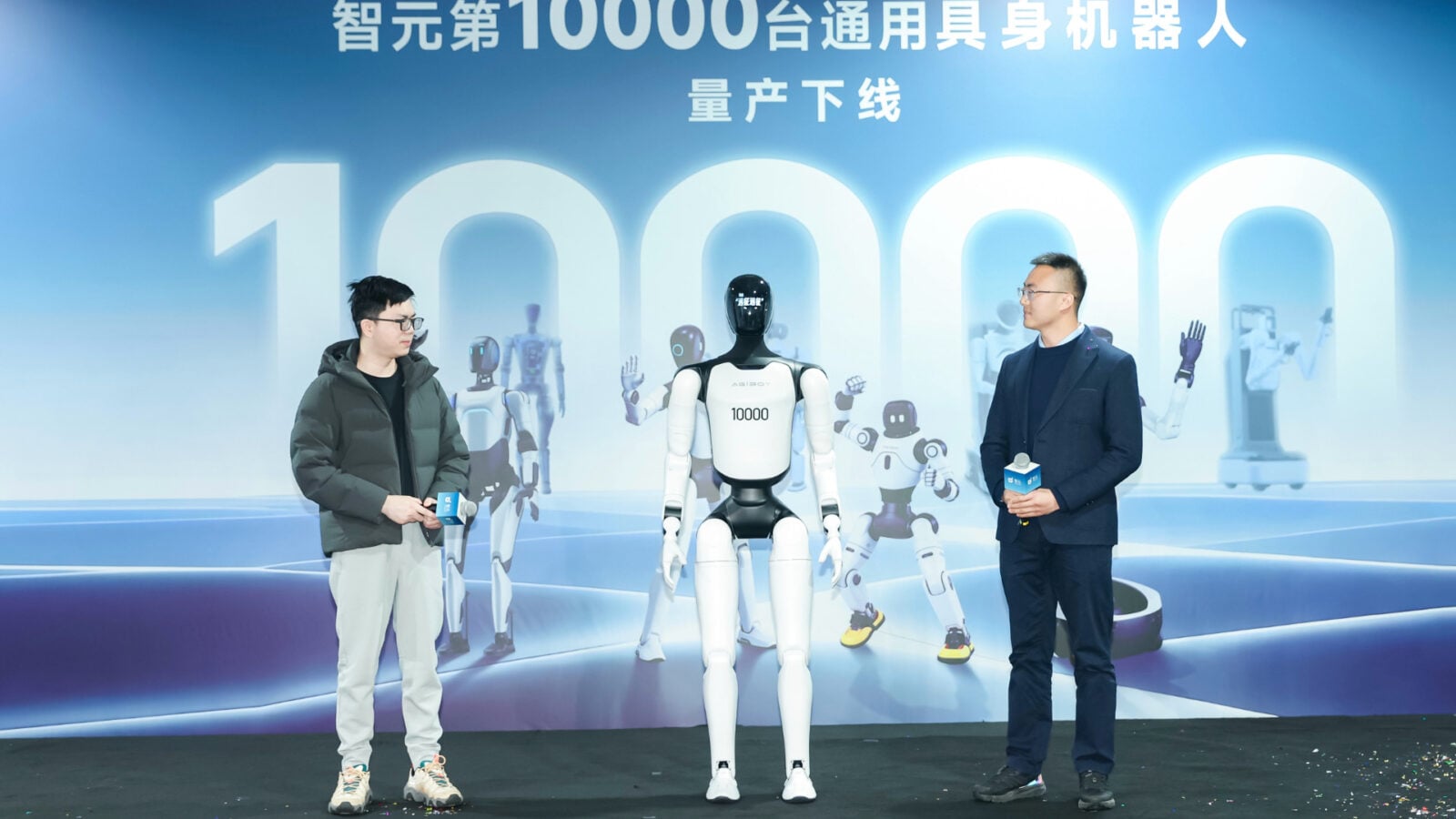
The numbers speak for themselves. Agibot took almost two years to produce its first 1,000 humanoid robots. It then took about a year to reach 5,000 units. But to go from 5,000 to 10,000, only three months were enough. A spectacular change of pace, the result of an industrial shift.
Robots already at work
For Peng Zhihui, technical director of the company, this milestone is more than just a symbolic threshold: “ Reaching 10,000 units is not just about producing more robots, it reflects a fundamental shift in our ability to accelerate our industrial process. » The machine has taken off thanks to a now well-established supply chain and better-controlled manufacturing. Result: what took years can now be done in a few months.
But beyond industrial performance, it is above all the market that is evolving. Humanoid robots are gradually moving beyond the scope of technical demonstrations to enter more concrete uses, with deployments almost everywhere. At the start of the year, Agibot was already leading the sector, with just over 5,000 robots delivered. For comparison, its competitors remained far behind. And above all, almost 90% of humanoid robots were manufactured in China. A domination which does not seem ready to be reversed.
Another interesting point: these robots do not sit on the shelves collecting dust. A large part of the 10,000 units produced are already used in real environments. They are found in logistics, stores, public reception, education and even industry. Some navigate showrooms, others assist customers, and a few are even starting to work directly on production lines.
The phenomenon is not limited to the Chinese market. Agibot says its robots are already deployed in Europe, North America, Japan, South Korea, Southeast Asia and the Middle East. A sign that demand goes far beyond local borders. The company is observing a change in uses: pilot projects are giving way to larger and repeated deployments. In other words, robots are no longer just being tested, they are starting to be adopted.
Some competitors prefer to move more cautiously. Companies like Figure, Agility Robotics or Boston Dynamics take the time to refine their machines before mass producing. A secure approach but which can also cause you to lose ground. Going quickly also has its advantages: more robots on the ground means more feedback, therefore more improvements.
🟣 To not miss any news on the WorldOfSoftware, follow us on Google and on our WhatsApp channel. And if you love us, .