By using this site, you agree to the Privacy Policy and Terms of Use.
Accept
World of SoftwareWorld of SoftwareWorld of Software
  • News
  • Software
  • Mobile
  • Computing
  • Gaming
  • Videos
  • More
    • Gadget
    • Web Stories
    • Trending
    • Press Release
Search
  • Privacy
  • Terms
  • Advertise
  • Contact
Copyright © All Rights Reserved. World of Software.
Reading: AI’s Future is in Space | HackerNoon
Share
Sign In
Notification Show More
Font ResizerAa
World of SoftwareWorld of Software
Font ResizerAa
  • Software
  • Mobile
  • Computing
  • Gadget
  • Gaming
  • Videos
Search
  • News
  • Software
  • Mobile
  • Computing
  • Gaming
  • Videos
  • More
    • Gadget
    • Web Stories
    • Trending
    • Press Release
Have an existing account? Sign In
Follow US
  • Privacy
  • Terms
  • Advertise
  • Contact
Copyright © All Rights Reserved. World of Software.
World of Software > Computing > AI’s Future is in Space | HackerNoon
Computing

AI’s Future is in Space | HackerNoon

News Room
Last updated: 2026/02/23 at 7:03 PM
News Room Published 23 February 2026
Share
AI’s Future is in Space | HackerNoon
SHARE

The rapid advancement of artificial intelligence (AI) has created an unprecedented surge in the demand for energy. Training and running large-scale models require massive computational resources housed in power-intensive data centers. Today, hyperscale AI facilities demand gigawatts of power, equivalent to the needs of an entire city. This demand strains grids and increases emissions from fossil fuel reliance, not to mention exacerbating water scarcity due to cooling needs. While there have been improvements in efficiency in hardware and algorithms, the exponential scaling of AI models means infrastructure on Earth faces real limits in energy availability, land, regulatory hurdles, environmental impact, and cooling ability. This is where space comes into the picture.

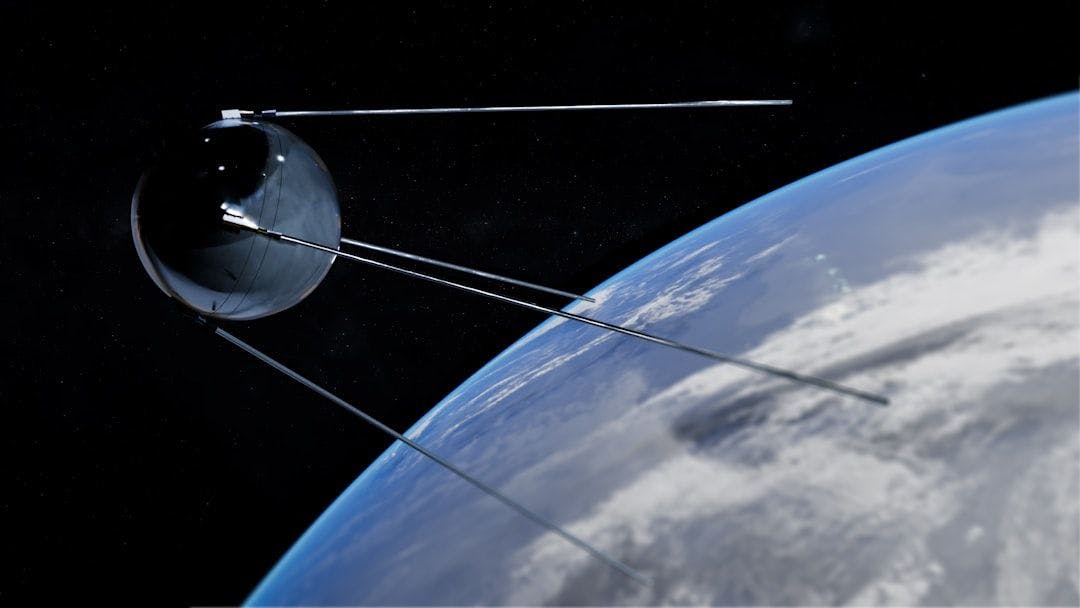
In the very near future, AI servers and data centers may be launched into space, which is deemed a viable location for such sizeable and energy-hungry technologies. In orbit, solar panels receive constant, uninterrupted sunlight – energy – without the need for human-generated electricity, removing the ability to overextend the existing energy grid limit on Earth. In space, it’s near-limitless, clean energy capture. Equally important, the vacuum of space provides superior radiative cooling, dissipating heat efficiently without the massive air- and water-based systems required on Earth, where cooling can use massive amounts of energy.

SpaceX and Google have already announced plans to deploy orbital servers for trial. At the recent Davos conference, Elon Musk said that space-based computing could become the cheapest option for AI training within the next two or three years. “The lowest cost place to put AI will be space, and that’ll be true within two years, maybe three at the latest,” Musk said.

The advantages of space-based AI servers are compelling. They offer abundant, always-on solar power that can support gigawatt-scale operations sustainably, eliminate land and water issues, reduce emissions, and enable modular constellations for massive scalability. The natural vacuum cooling of space eliminates not only the need for heavy cooling infrastructure but also protection from Earth-based disasters or regulations, providing operational stability and resilience.

However, while the dream of space-based AI data centers is likely to become a reality mainly due to necessity, there are significant hurdles that must first be overcome. Launch costs may be dropping with reusable rockets like Starship, but they are still limited and too high to sustain frequent deployments. Hardware needs to be upgraded as it will face intense radiation that will degrade its components, and heat management will require careful design to avoid overheating in the sunlight. Latency for data transmission to Earth, while low in low-Earth orbit, introduces significant delays compared to terrestrial systems.

Maintenance will be close to impossible without advanced autonomous robotics, as it will be difficult and costly to send astronauts into space every time there is a server issue. The overall economics of such an endeavor are unknown, so it remains a long-term solution for now and not an immediate fix. In the near term, though, we will need to rely on Earth-based systems to generate the energy and cooling needs of AI data centers. Once the technical and economic hurdles are overcome, orbital data centers, with their many advantages, will no doubt become a reality.


Sign Up For Daily Newsletter

Be keep up! Get the latest breaking news delivered straight to your inbox.
By signing up, you agree to our Terms of Use and acknowledge the data practices in our Privacy Policy. You may unsubscribe at any time.
Share This Article
Facebook Twitter Email Print
Share
What do you think?
Love0
Sad0
Happy0
Sleepy0
Angry0
Dead0
Wink0
Previous Article Apple is finally starting to test secure RCS messaging between iPhone and Android Apple is finally starting to test secure RCS messaging between iPhone and Android
Next Article AI agents suspend AI agents suspend
Leave a comment

Leave a Reply Cancel reply

Your email address will not be published. Required fields are marked *

Stay Connected

248.1k Like
69.1k Follow
134k Pin
54.3k Follow

Latest News

The best early headphones deals from Amazon’s Big Spring Sale
News
Beyond Software: The Physical Buildout Behind AI Expansion
Gadget
Encyclopedia Britannica sues OpenAI over copyright
Mobile
How to Convert a Photo to Portrait Mode on an iPhone
News

You Might also Like

What Happens When You Let AI Write Your Code for a Week? | HackerNoon
Computing

What Happens When You Let AI Write Your Code for a Week? | HackerNoon

12 Min Read
Insta360 unveils Connect: an all-in-one video conferencing device with dual 4K cameras and AI features · TechNode
Computing

Insta360 unveils Connect: an all-in-one video conferencing device with dual 4K cameras and AI features · TechNode

1 Min Read
Does the Adam Optimizer Amplify Catastrophic Forgetting? | HackerNoon
Computing

Does the Adam Optimizer Amplify Catastrophic Forgetting? | HackerNoon

8 Min Read
Intel Compute Runtime 26.09.37435.1 Brings More Features & Performance Optimizations
Computing

Intel Compute Runtime 26.09.37435.1 Brings More Features & Performance Optimizations

2 Min Read
//

World of Software is your one-stop website for the latest tech news and updates, follow us now to get the news that matters to you.

Quick Link

  • Privacy Policy
  • Terms of use
  • Advertise
  • Contact

Topics

  • Computing
  • Software
  • Press Release
  • Trending

Sign Up for Our Newsletter

Subscribe to our newsletter to get our newest articles instantly!

World of SoftwareWorld of Software
Follow US
Copyright © All Rights Reserved. World of Software.
Welcome Back!

Sign in to your account

Lost your password?