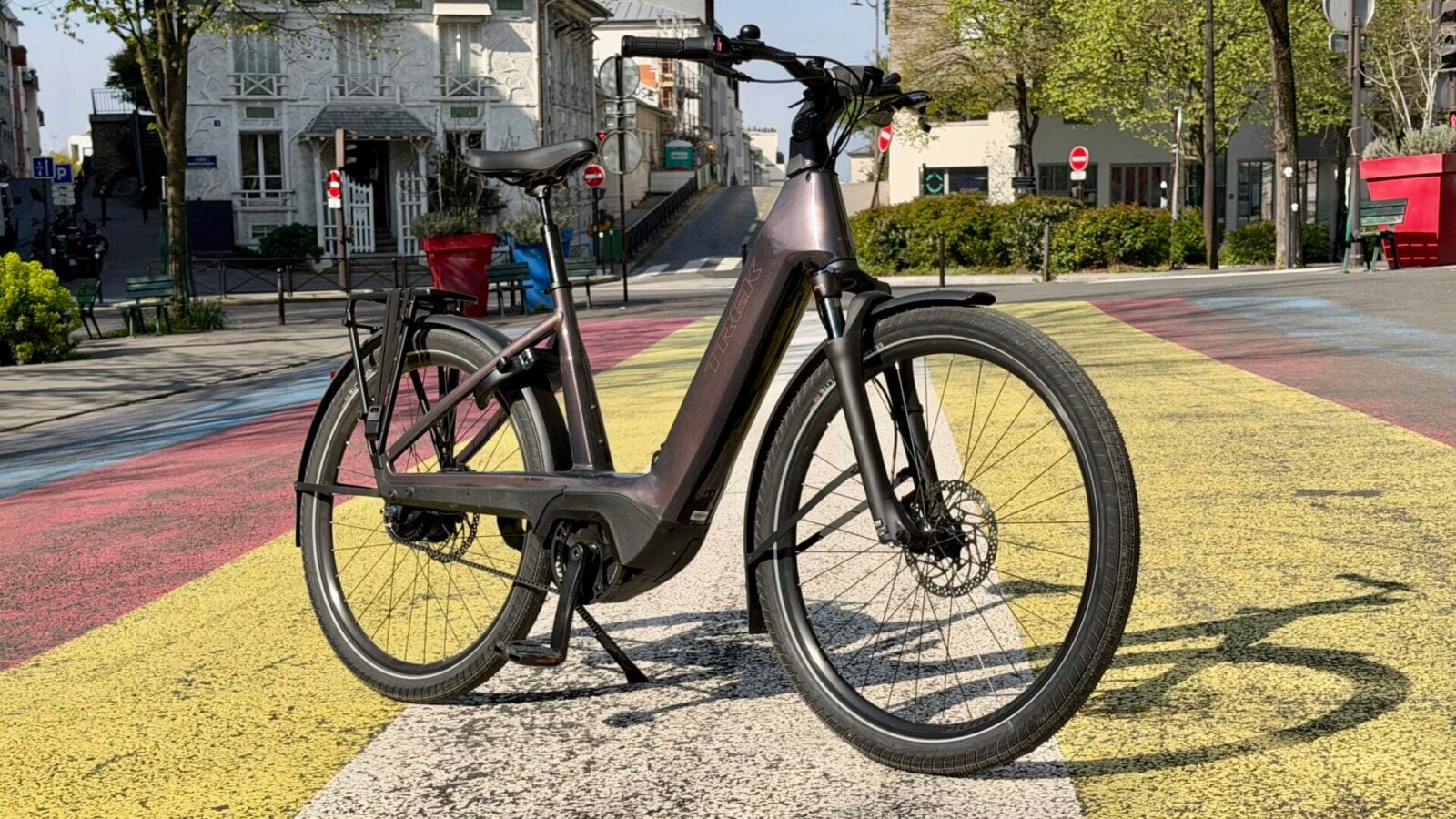
There are times when the high-end urban e-bike market resembles a very exclusive club whose entry is paid with five hundred euro notes. The Mustache Mardi 27.6 FS, which we recently tested, with its full-suspension one-piece frame from the Vosges and its price of 5,600 euros, is the most striking example. An exceptional bike, certainly, but one that leaves a good portion of buyers who are convinced by the concept on the side of the road. It is precisely this gap that Trek has decided to step into with its brand new Charter+.
The brand from Waterloo (Wisconsin) — fifty years of existence under the clock — has built its reputation on technically solid bikes, as demonstrated in a lighter style by the Verve+ 1 LT. With the Charter+, it is tackling a more demanding segment, that of the premium urban e-bike, by offering a range structured around three main families: the Charter+ 4, the Charter+ 4 Trail for more adventurous outings and the Charter+ 5, which competes with the most sophisticated models.
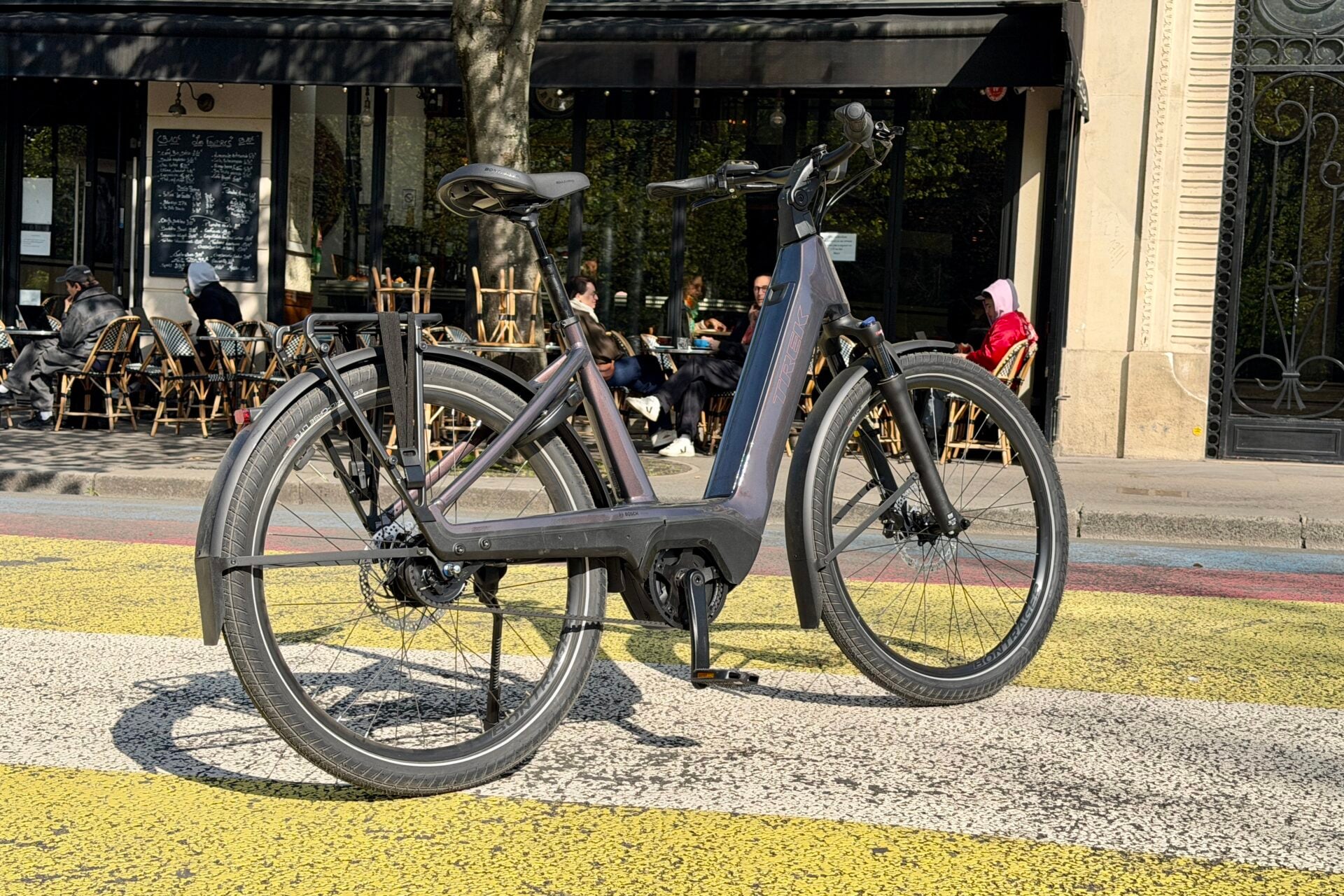
It is the Charter+ 4 Nexus 5 version with belt drive, open frame and equipped with the powerful 800 Wh battery, that we had the opportunity to evaluate. Priced at 4,100 euros, it costs 1,500 euros less than the high-end Mustache. The question that naturally arises: what do we lose in the deal?
Design and finish: sober, integrated, without pomp
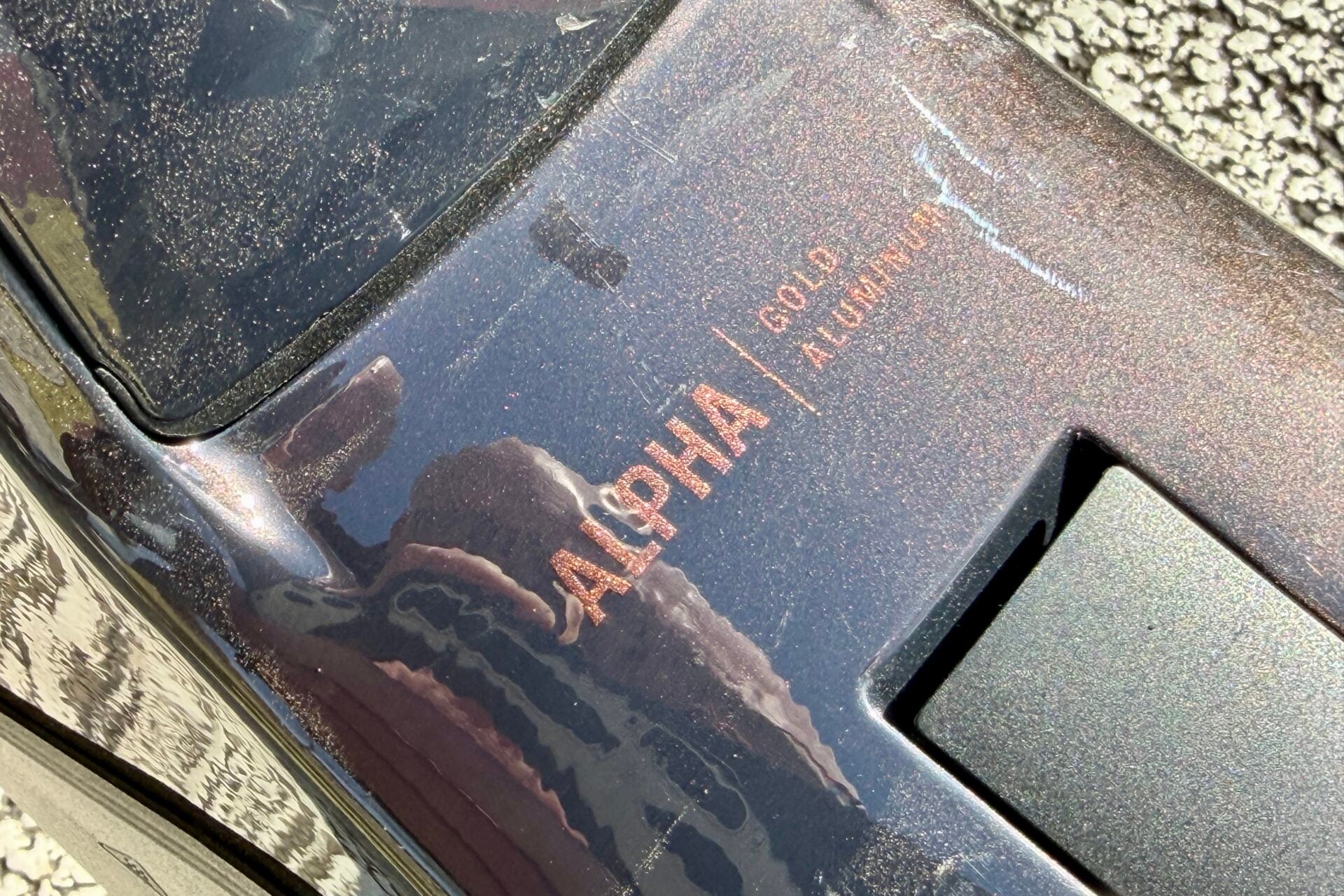
The Charter+ does not seek to impress with convoluted shapes. Its aluminum frame available in open or closed frame displays a clean and contemporary line. The “Covellite Blue” color of our test model, a deep and elegant blue-violet, gives it an assertive character while remaining discreet; perfect for an urban bike.
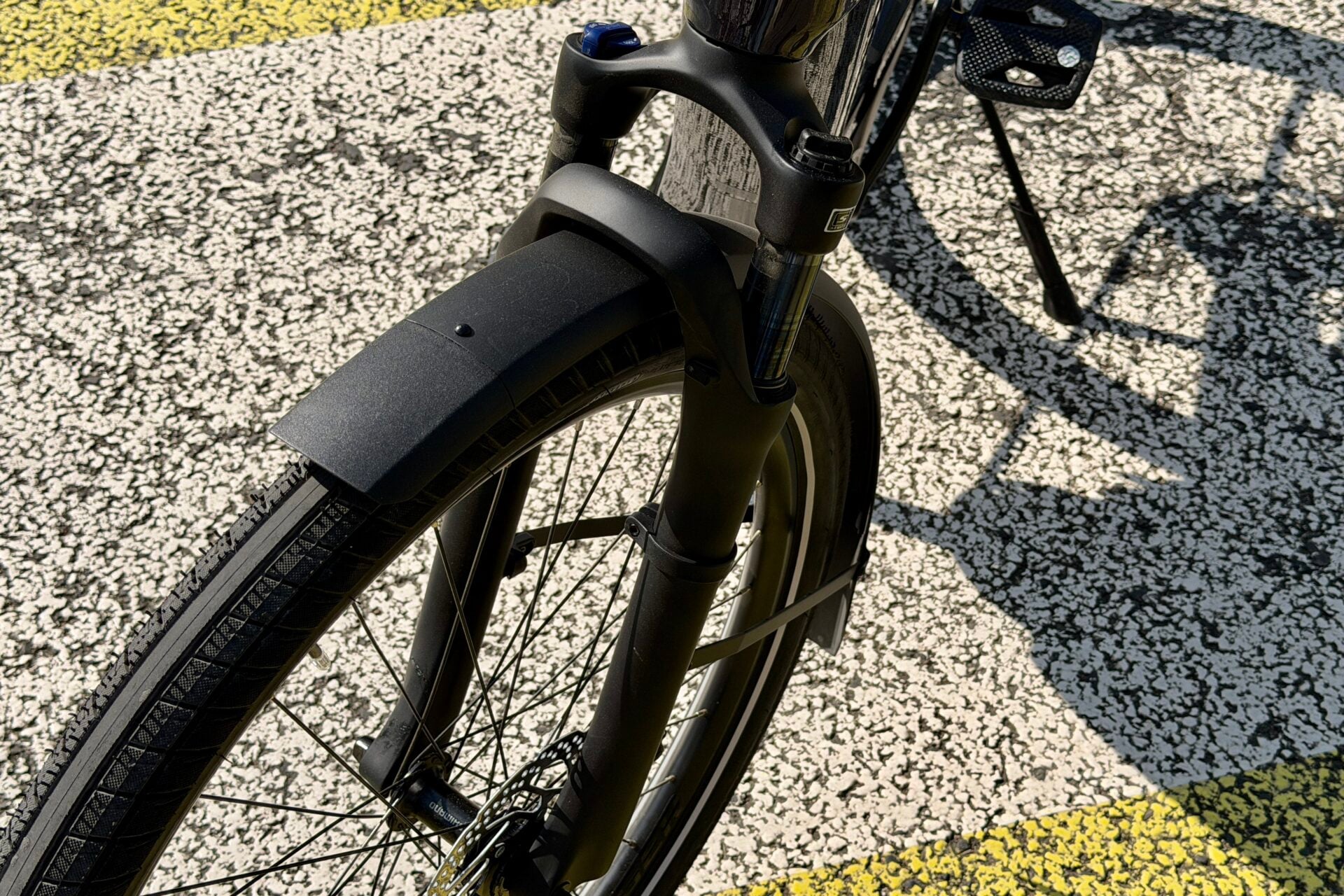
What is immediately striking is the care taken in integration. The cable routing is completely hidden in the frame, the cockpit seems free of any stray wires and the battery, housed in the downtube, is hidden behind a well-designed magnetic cover which opens from the top. The rear rack is natively integrated into the frame, as are the mudguards. The latter, very elongated, provide generous protection which keeps the shoes protected from projections.
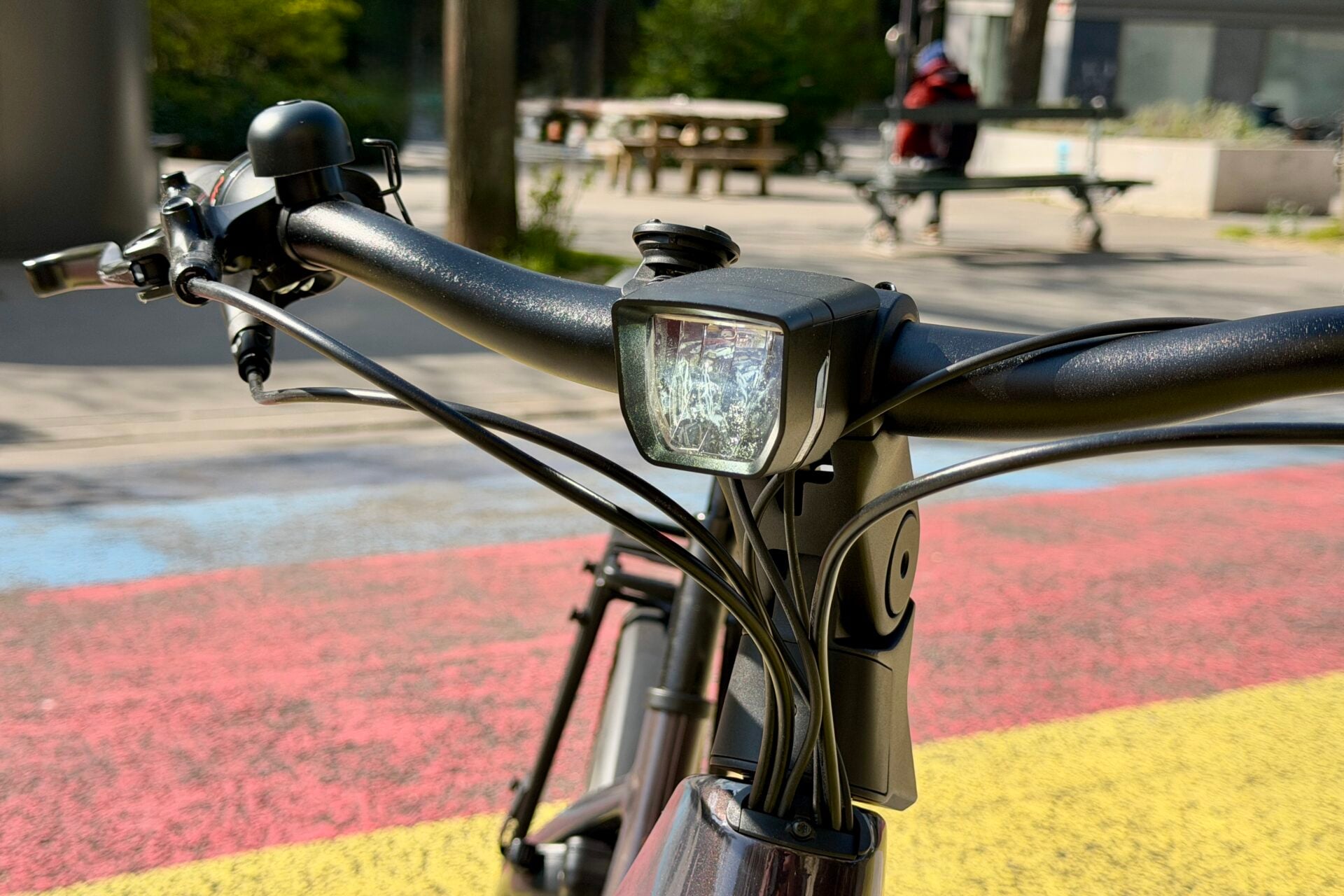
The stem is fully height adjustable, allowing the riding position to be finely adjusted according to preference. The 630 mm wide handlebars invite you to have a relaxed, slightly raised posture, ideal for everyday use in the city or commuting. The suspended seat post discreetly absorbs small irregularities in the ground and contributes to overall comfort.
Equipment: the level expected at this price, without cutting corners on the essentials
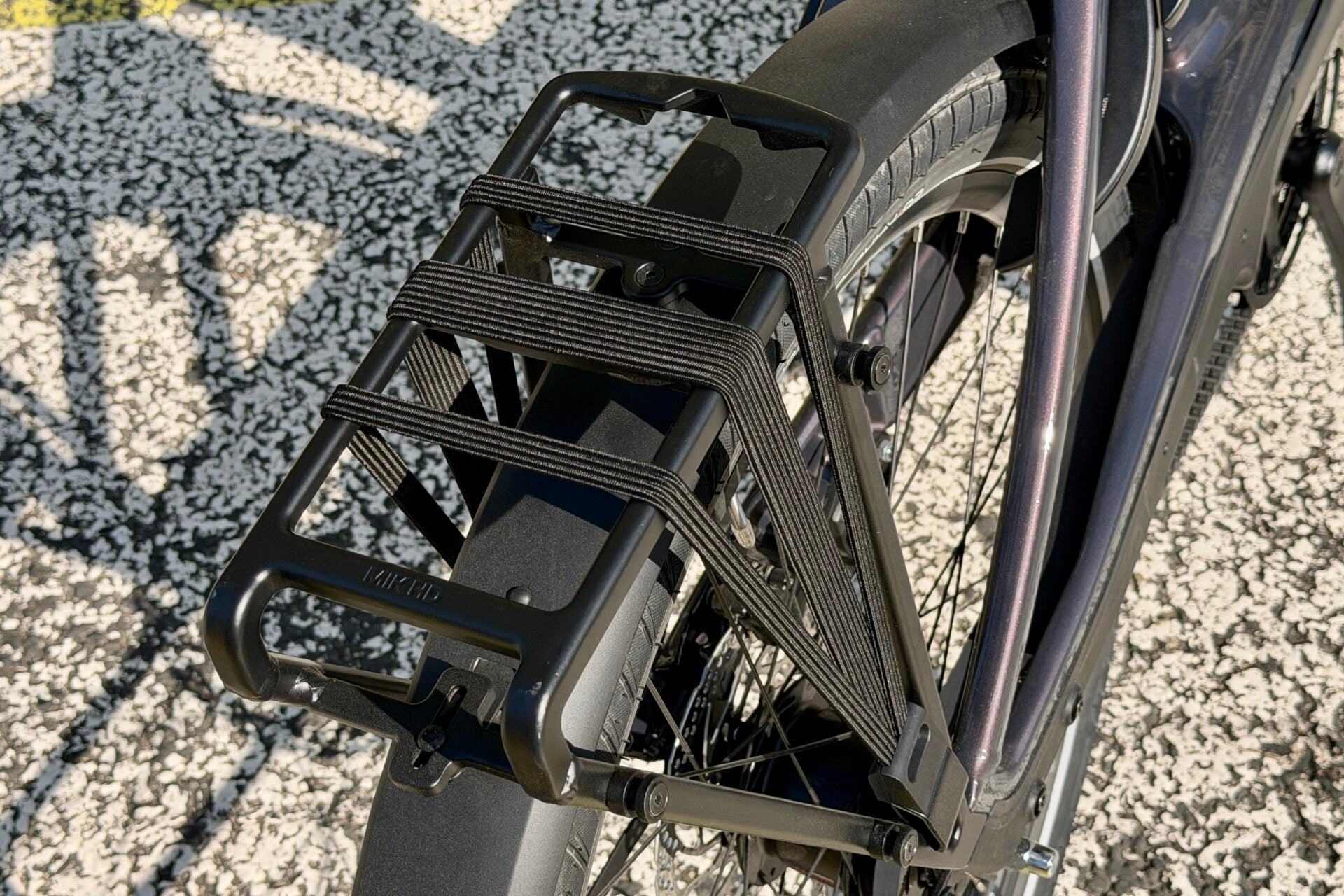
Trek has chosen a complete equipment standard, which is unfortunately not always the case in this segment. The MIK HD rear luggage rack with its QL3.1 side attachments and integrated tensioners is included straight away, at no extra cost. This is a notable difference with certain competitors who reserve this essential accessory as a paid option (200 euros more for the Mustache model). The front and rear lights are well integrated. The power of the headlight also allows you to be seen as well as to see the road clearly in peri-urban environments.
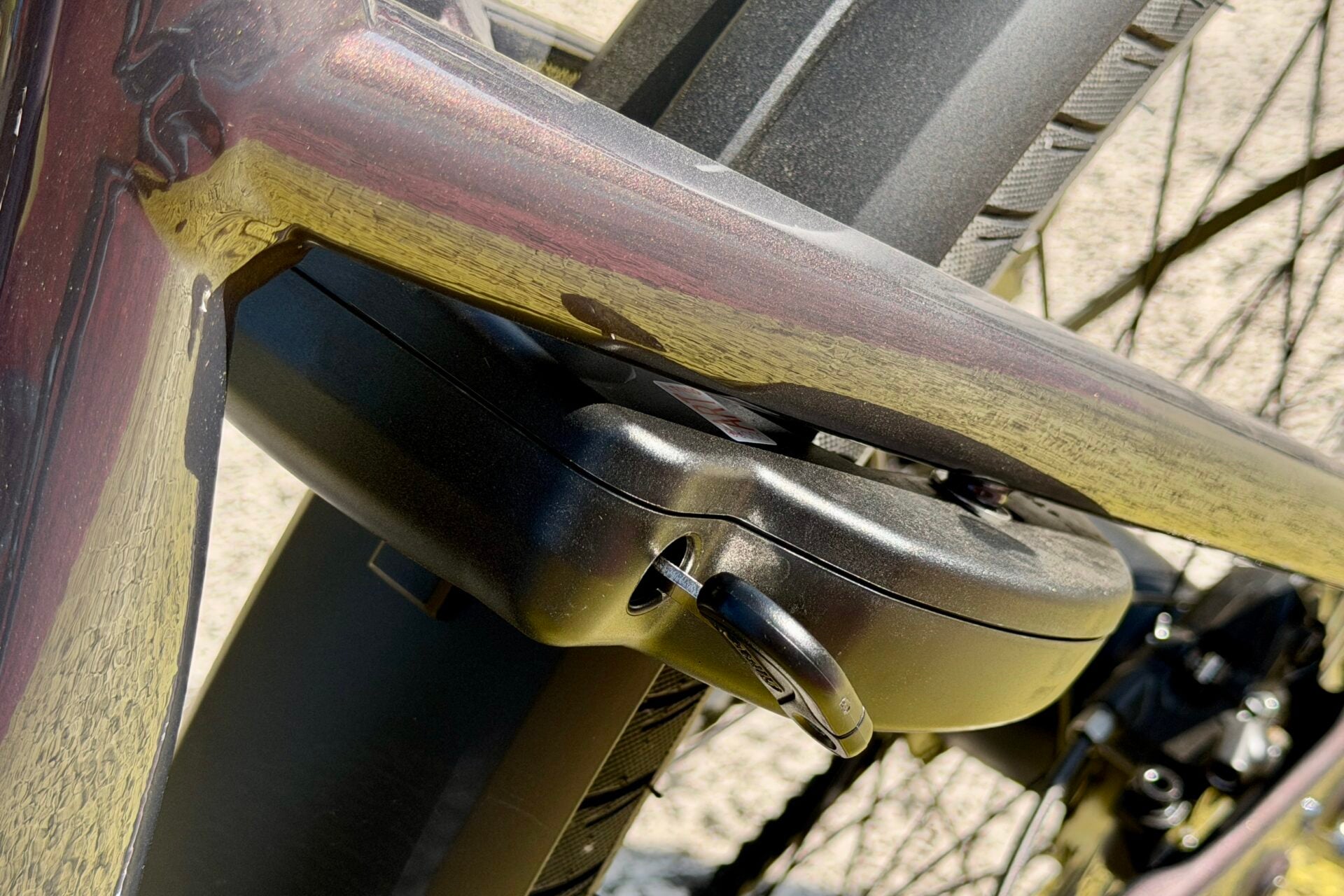
On the security side, a frame lock locks the rear wheel. Practical, its key is the same as to unlock the battery. Less practical, it must remain on the lock when it is open. It’s therefore impossible to add it to your kit unless you like to see it dangling while you ride. Damage.
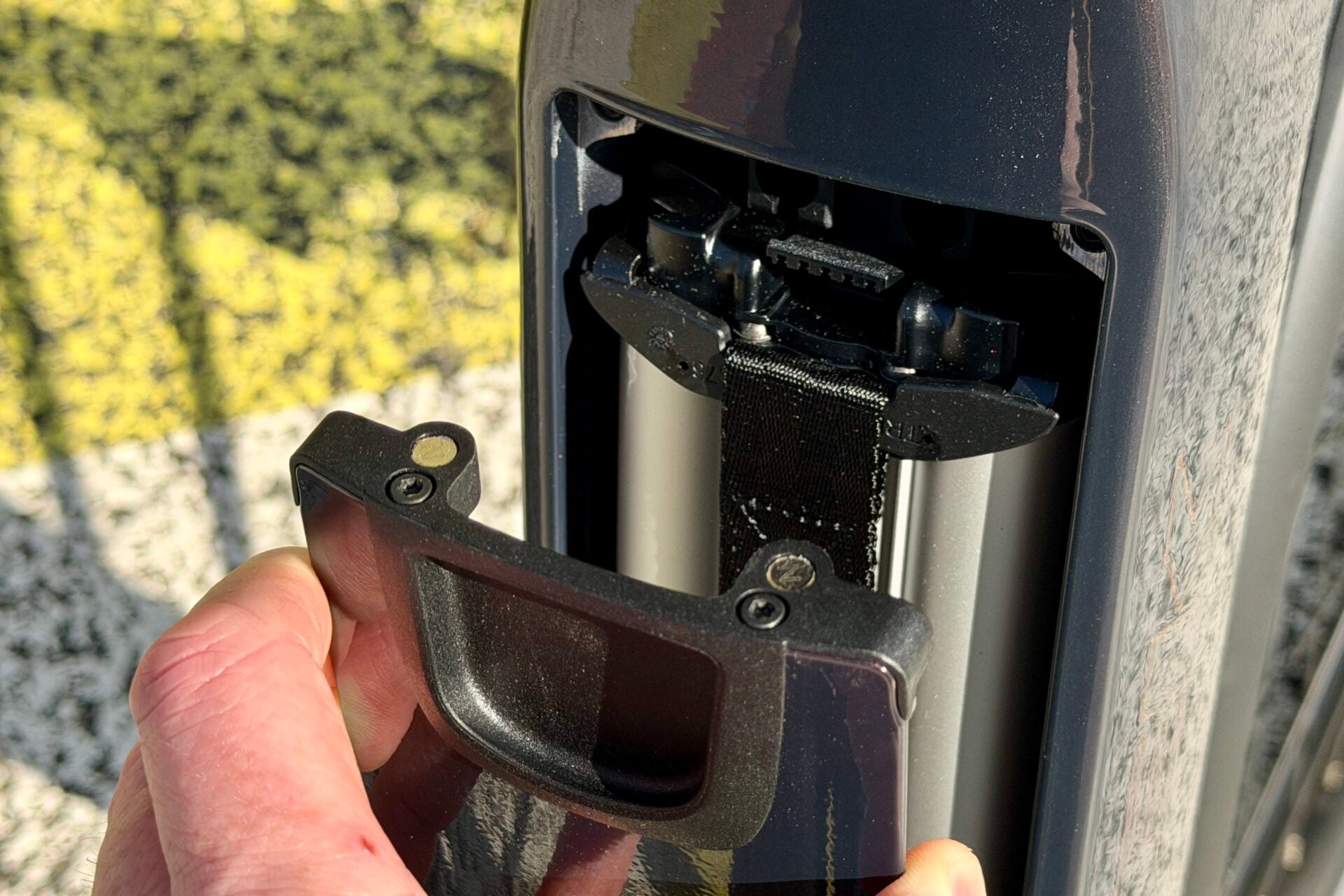
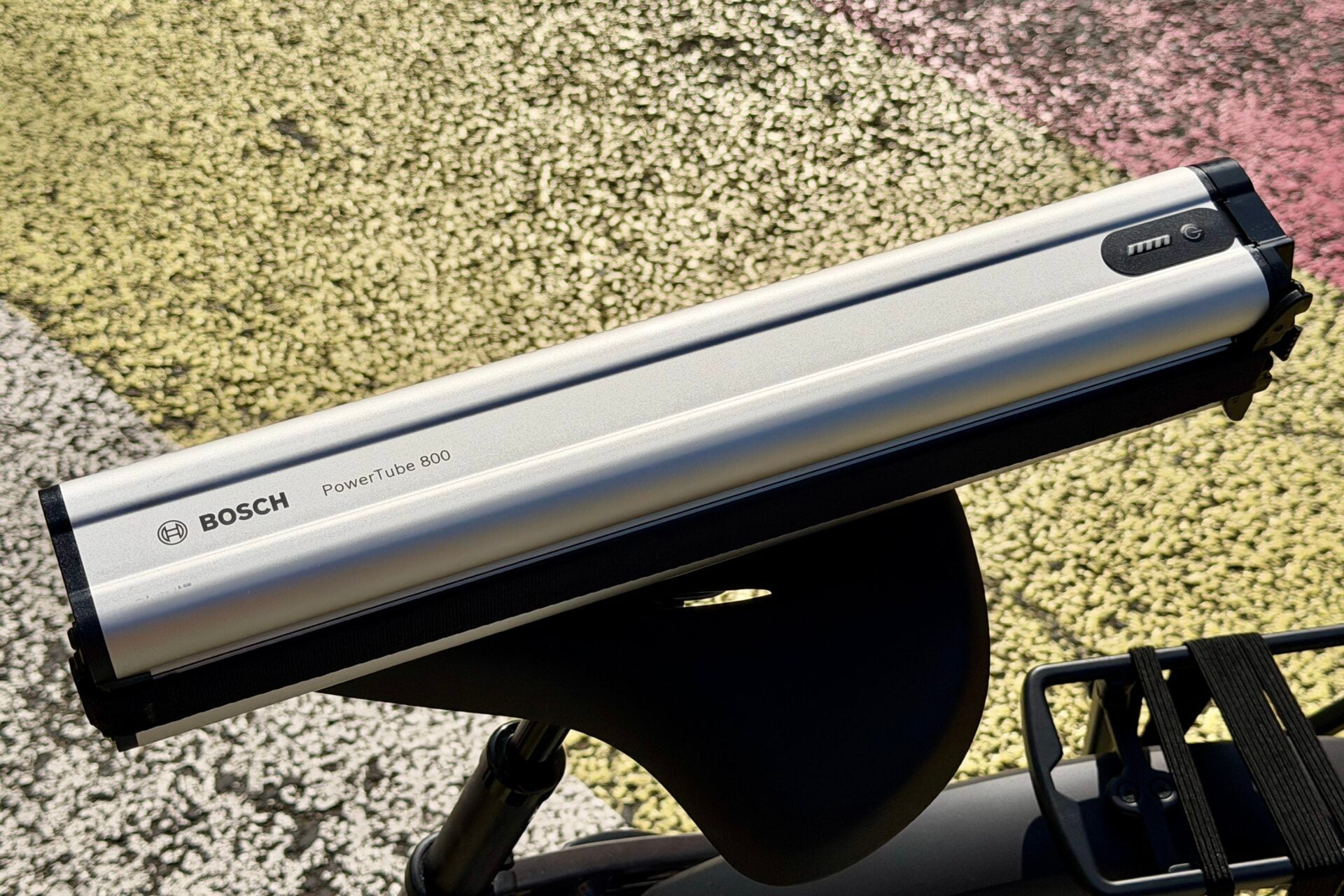
The Bosch PowerTube 800 Wh battery deserves special attention, not only for its impressive capacity, but above all for its top extraction system, equipped with a very practical integrated handle for lugging around almost 4 kg.
The Bosch Purion 200 screen is simple and readable. It does not offer the advanced customization possibilities of a Kiox 500, but perfectly fulfills its role of displaying essential data. Those wanting a more connected and feature-rich experience will need to look to the higher versions of the range (Charter+ 5), which offer the automatic Enviolo system and a more powerful engine.
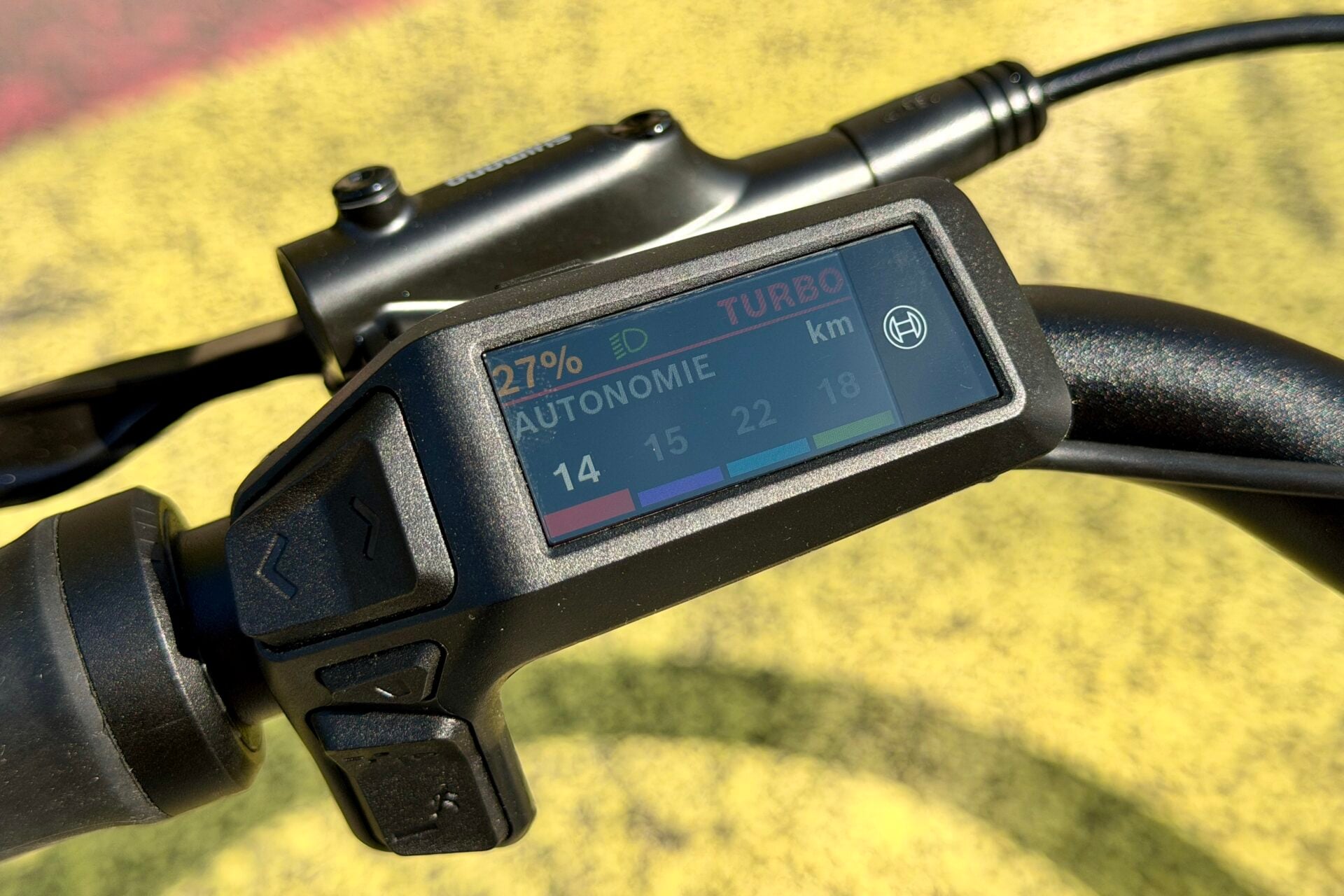
On our version, however, the system remains fully compatible with the comprehensive and excellent Bosch eBike Flow application, which provides access to locking and advanced navigation functions with battery estimation upon arrival. You then use your smartphone as the main screen, at the cost of an additional mount as we did during our test with an SP Connect system.
Behavior: comfort, maneuverability and safety on the menu
The Charter+ is based on a semi-rigid architecture, with an SR Suntour SF25-NVX32 fork offering 63mm of travel. Compared to the 100mm fork of the Mustache Mardi 27.6 FS (not even mentioning its Magic Grip Control rear shock), this may seem modest. But this forgets that most urban e-bikes are satisfied with a rigid fork and that 63 mm of travel already constitutes appreciable comfort on the degraded surfaces of everyday life. Above all, his behavior is exemplary, avoiding unpleasant rebounds. Speed bumps pass without violence, small cobblestones are absorbed and the vibrations transmitted to the handlebars remain very contained. The Charter+ is not a magic carpet but it behaves like one of the most urban e-bikes comfortable of the market.
The Bontrager E6 Hard-Case Lite tires in 27.5 x 2.40 inches actively contribute to this smooth ride. Wide and resistant to punctures, they offer excellent grip on dry or wet asphalt and can be inflated to moderate pressure to benefit from added comfort. We will not venture on very uneven paths with them – their profile remains oriented towards roads and stabilized paths – but for 100% urban and peri-urban use, they are perfectly designed for the exercise.
Braking is provided by Shimano MT200 hydraulic calipers with 180mm discs. They offer a very effective level of braking, which ensures sharp, powerful and well-adjustable decelerations. The power is there to quickly stop the Charter+ in all circumstances, even on steep slopes.
However, we must accept a reality that the Charter+ shares with almost all of its competitors in this segment: it is heavy. 27.6 kg on the scale in size M Suffice to say that once loaded and ready to roll, the machine exceeds 30 kg. However, this is hardly noticeable once in the saddle, thanks to the remarkable behavior of its frame and a Bosch engine managing most of the effort. But as soon as it comes to carrying it up a staircase, lifting it on a support or maneuvering it in a restricted space without electrical assistance, the problem arises. A reality to keep in mind before purchasing, especially if your bicycle parking is not on one level.
Despite this imposing size, the Charter+ is agile in traffic. Its balanced geometry and adjustable stem allow you to adopt an active riding position that makes changes in trajectory easier. The aluminum frame offers exemplary rigidity so as not to deform in turns and faithfully transmit the rider’s intentions. A real treat, quite unexpected given the weight of the machine.
Engine and transmission: the Gates belt, combined with exemplary discretion
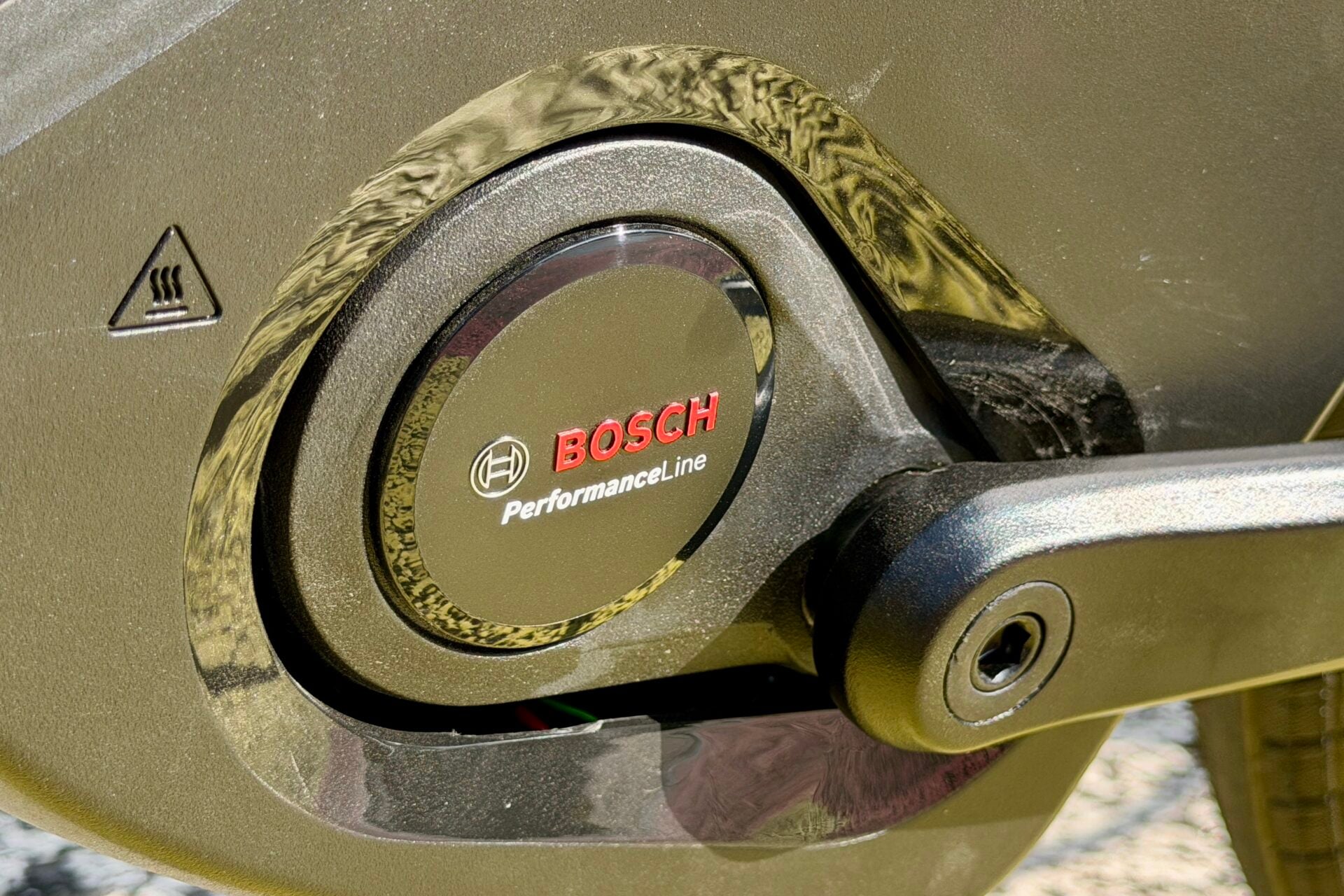
The heart of the beast is the Bosch Performance Line motor, which develops a torque of 75 Nm, a notch below the Performance Line CX (100 Nm). In fact, the difference is mainly felt on steep climbs and very busy starts where the CX shows slightly greater responsiveness and punch. In ordinary urban use, the Performance Line proves to be amply sufficient, progressive and still pleasant to use. Its Auto mode intelligently manages assistance based on the terrain profile and the effort provided, allowing you to concentrate on the road rather than on managing the assistance modes.
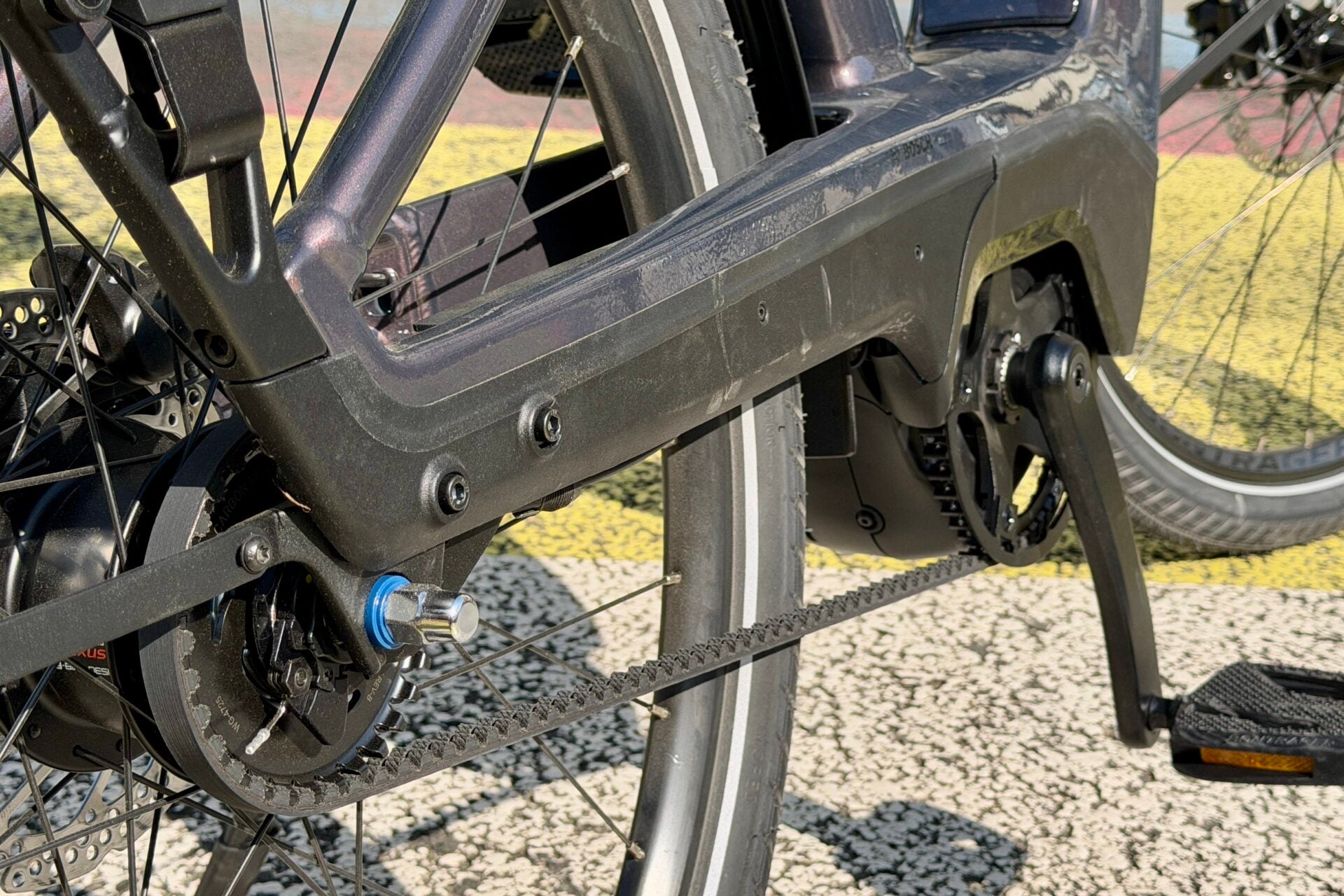
The Gates CDX belt drive, combined with the Shimano Nexus C7000 5-speed internal hub, forms a particularly attractive package for those looking to minimize maintenance. The belt does not get dirty, does not rust and is much quieter than a conventional chain. The Nexus hub, for its part, offers the valuable advantage of allowing gear changes from a complete stop. At lights and stops, you always leave in the right gear, without having to anticipate or suffer from the unpleasant clicking of a mishandled chain. Only five speeds, of course, but this proves to be quite suitable for almost all urban situations, especially associated with the Auto mode of the Bosch engine which compensates for the shortcomings of the gearbox with fine assistance management.
The twist shift handle is precise and intuitive. The engine-transmission assembly forms a homogeneous duo which gives the driving an appreciable fluidity from the first turns of the wheel.
Autonomy: the large battery as a strong argument
This is perhaps the most spectacular point of this version: the Bosch PowerTube 800 Wh battery places the Charter+ at the top of the basket in terms of energy capacity. Trek announces autonomy theoretically reaching up to 200 kilometers. In real and varied use, on our usual rather demanding route in terms of hills, with assistance pushed to the maximum in Turbo mode, we reached the 80 km. You can reasonably do several days of cycling (15 to 20 km round trip) before having to reconnect the charger. In Auto mode, depending on the route profile and wind conditions, it is a safe bet that it is possible to exceed 100 km.
On the other hand, it is extremely regrettable that the American brand only provides a 2 A charger. With such a battery capacity, the full charge exceeds 12 hours! So of course, it’s an VAE that we won’t recharge every day, but the economy is petty and poorly suited to such an accumulator. The most impatient will therefore opt to purchase an additional 4 A charger which reduces the charging time to just under 7 hours.
👉🏻 Follow tech news in real time: add 01net to your sources on Google, and subscribe to our WhatsApp channel.