As financial institutions race to meet the demands of real-time payments, digital lending, and AI-driven analytics, many find themselves constrained by aging technology stacks designed for a different era. Monolithic legacy systems once the backbone of global banking are now widely recognized as barriers to innovation, operational resilience, and regulatory agility.
Across the industry, modernization has shifted from a long-term goal to an immediate necessity. Cloud-native architectures, event-driven systems, and data-centric platforms are no longer optional enhancements; they are rapidly becoming baseline requirements. Within this transition, engineers who combine deep backend expertise with financial domain knowledge are playing a pivotal role in shaping the next generation of banking infrastructure.
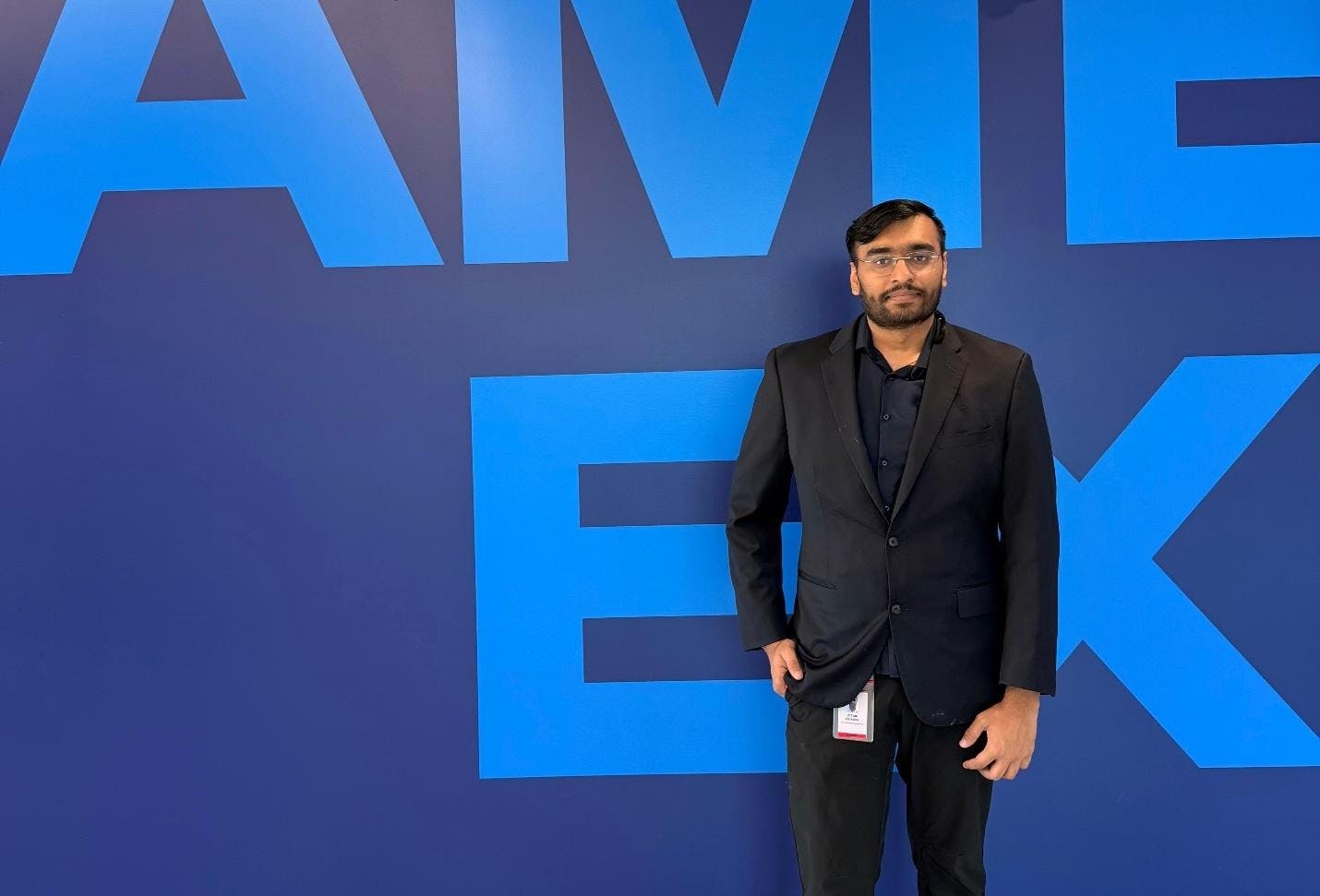
One such engineer is Uttam Kotadiya, whose work across banking, credit card, and investment platforms reflects the architectural transformation underway in global financial technology.
Engineering Foundations Built on Academic Rigor
Kotadiya holds a Master of Science in Computer Science from the Illinois Institute of Technology, completed in 2023. His academic training spans large-scale data processing, artificial intelligence, data mining, and visualization disciplines increasingly central to modern financial systems.
This research-oriented foundation enables him to approach engineering challenges with analytical depth, particularly in environments where performance, scalability, and data integrity are non-negotiable. In an industry where milliseconds can determine transaction success and system failures carry regulatory consequences, such rigor has become a defining asset.
Driving Change Across Core Financial Platforms
Since 2021, Kotadiya has contributed to mission-critical systems supporting banking operations, credit card processing, and investment services. His work has included the development and modernization of loan origination platforms and payment processing systems domains where reliability, security, and throughput directly affect both institutional risk and customer trust.
By operating at the intersection of complex business logic and large-scale distributed systems, Kotadiya has helped translate regulatory and financial requirements into resilient, production-grade software—an increasingly scarce skill set as financial systems grow in complexity.
From Monoliths to Microservices
One of the most persistent challenges facing banks today is the migration away from tightly coupled monolithic architectures. Kotadiya has led multiple efforts to decompose legacy systems into scalable microservices, leveraging Spring Boot and twelve-factor application principles to improve system flexibility and deployment velocity.
His backend expertise in Java-based enterprise systems has supported the development of high-performance services that can evolve independently without disrupting core operations.
“Modern financial platforms need architectures that can change continuously without destabilizing critical services,” Kotadiya noted. “Well-designed microservices allow institutions to adapt to market and regulatory shifts while maintaining operational stability.”
Enabling Real-Time, Event-Driven Finance
As real-time decision-making becomes standard across financial products, event-driven architectures have emerged as foundational infrastructure. Kotadiya has designed and managed messaging and streaming systems that enable asynchronous communication across distributed services, ensuring low-latency data flow and system resilience.
His experience spans both relational and non-relational databases, supporting transactional consistency alongside high-volume analytical workloads. In parallel, he has implemented secure service integrations using industry-standard APIs and authentication frameworks—an essential requirement in security-sensitive financial environments.
Engineering Discipline at Enterprise Scale
Beyond architecture, Kotadiya is known for emphasizing engineering discipline and delivery maturity. He has applied test-driven and behavior-driven development practices across enterprise projects, ensuring code quality in systems where failures can have outsized consequences.
His work spans the full software development lifecycle under Agile and hybrid delivery models, with a focus on observability, monitoring, and continuous improvement key capabilities as financial systems operate across global time zones and customer bases.
Solving Infrastructure and Performance Bottlenecks
Infrastructure automation remains a persistent challenge for large financial organizations. Kotadiya addressed this by implementing infrastructure-as-code strategies in cloud environments, significantly reducing deployment time and improving consistency across environments.
At the performance layer, he has resolved real-time bottlenecks in high-throughput messaging systems and optimized backend services through concurrency tuning and memory management improvements that directly impact transaction reliability and system stability.
Recognition Across Research and Industry Communities
Kotadiya’s contributions extend beyond commercial systems into the global research and professional community. His work has been recognized through multiple international conference awards, including Best Paper honors and innovation awards in artificial intelligence.
He has also served as a peer reviewer for leading academic publishers and international conferences, contributing to the evaluation of emerging research in computing and engineering. In addition, he has participated as a speaker and session chair at global conferences spanning communication technologies, multidisciplinary research, and applied computing.
The Future of Financial Backend Systems
Looking ahead, Kotadiya identifies multi-cloud strategies, serverless architectures, and real-time data platforms as defining forces in financial technology. His experience across major cloud ecosystems aligns with the industry’s push for resilience, cost optimization, and geographic redundancy.
He also points to the growing importance of data-as-a-product models, supported by real-time streaming and large-scale analytics, as institutions seek immediate insight rather than retrospective reporting. API evolution, including selective adoption of GraphQL, is further reshaping how financial data is consumed at scale.
Most significantly, Kotadiya sees artificial intelligence as the next phase of backend evolution not as a standalone capability, but as an integrated layer embedded within scalable, cloud-native platforms.
“Backend systems are no longer just processing transactions,” he said. “They are becoming intelligent platforms where real-time data, cloud architecture, and AI converge to drive decision-making.”
:::tip
This story was distributed as a release by Sanya Kapoor under HackerNoon’s Business Blogging Program.
:::