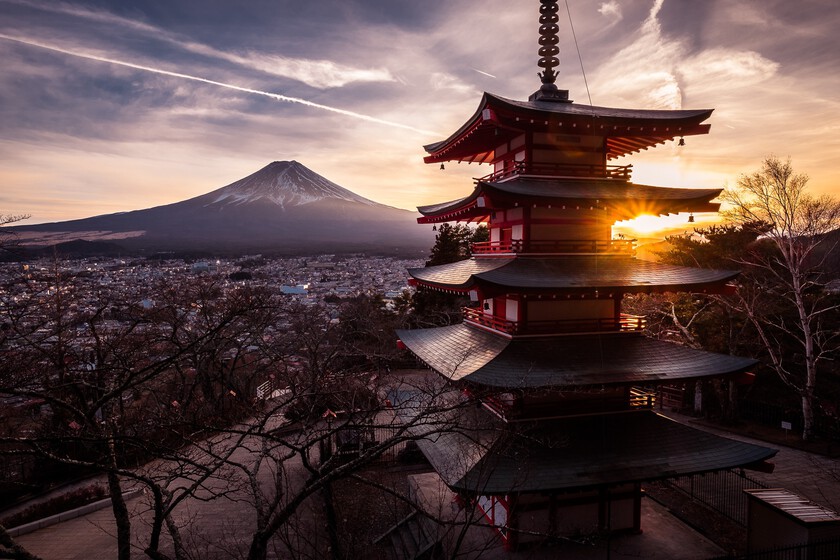
A few years ago the inhabitants of Fujiyoshida, a city in the Yamanashi prefecture, in Japan, realized that they were wasting a tourist treasure. The town is just a couple of hours by train from the capital and enjoys privileged views of one of the country’s great icons: Mount Fuji. With these wickers and taking advantage of their own landscapes, in 2016 the local authorities promoted a festival focused on the flowering of cherry trees.
Now Fujiyoshida has a problem: his plan to attract visitors has worked surprisingly well. So much so that he has decided to cancel it.
What has happened? That at Fujiyoshida they have encountered a curious problem. In 2016, the authorities promoted an initiative to attract visitors from the rest of Japan and other countries. Now, ten years later, the plan is working so well that its proponents have backed down. In fact they have canceled it.
The reason is simple: Fujiyoshida has become a very popular destination among foreign travelers, which in turn translates into the arrival of millions of yen. The problem is that its neighbors have concluded that even that flow of money does not compensate for the inconvenience of being invaded by hordes of tourists.
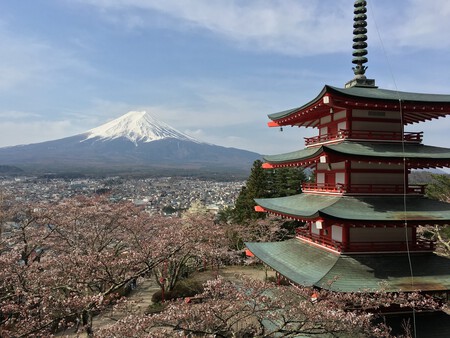
But what about that… why? Basically because Fujiyoshida has ended up becoming a huge photocall outdoors. The city is very close to Fuji and also has large areas of cherry trees that become a real spectacle during the spring, during the flowering season.
In 2016, those in charge decided to add both ingredients (the views of Fuji and the traditional sakuracherry blossom) and promote a festival in Arakuyama Sengen Park. There, tourists will find cherry trees, a pagoda and, above all, impressive views of Fujiyoshida with Fuji in the background. everyone’s dream instagramer who wants to brag about their trip to Japan.
What is the problem? That Fujiyoshida hit the nail on the head. Their festival was a success. Tremendous. According to the Kyodo News agency, during the cherry blossom season the city welcomes more than 10,000 visitors a day. Throughout the year the total count is around 200,000 tourists. Not bad for a population that in 2020 did not exceed 50,000 residents.
The avalanche of tourists is so brutal that, despite its enormous economic impact, the city has decided to cancel the festival this year for the sake of something more important: preserving “the quiet life” of its residents, now “threatened.”
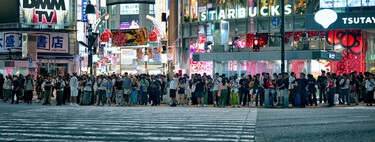
Is it that serious? It seems so. At least if we pay attention to the local and international press. The BBC talks about traffic jams, problems with rubbish and challenges directly related to the bad behavior of visitors.
To be more precise, he cites cases in which tourists have sneaked into houses to use the bathrooms or even defecated in gardens. “We have an intense feeling of crisis,” confesses the city’s mayor. From looking for a way to attract visitors, Fujiyoshida has become “overwhelmed” and saturated by an “excess of tourism” that “seriously impacts” the daily lives of its neighbors.
And what is he going to do? The authorities have decided to cancel this year’s festival, although they are aware that after a decade of tradition, tourists are likely to continue arriving during the months of April and May to enjoy the views from Arakuyama Sengen park. Hence, they have decided to reinforce security and deploy extra measures, such as installing portable toilets, strengthening security and establishing a temporary parking system.
Whatever it takes to control the congestion of tourists around the park and prevent the avalanche of visits from altering the lives of the neighbors.
Is it a specific problem? No. And that is why the Fujiyoshida case is so interesting. The general recovery of international tourism after the pandemic, the weakness of the yen and above all the popularity it has gained on the networks has turned Japan into a coveted destination for tourists from half the planet.
In 2025, the country received 42.7 million foreign visitors, almost 16% more than in 2024 and well above the 31.9 million before the pandemic. This boom has not always been easy to digest in the busiest areas, such as in Kyoto, where there have been problems with tourists harassing the geishas.
Probably the most popular case is that of Fujikawaguchiko, a town that installed a large screen that blocked the views of Mount Fuji. The objective was the same: to remove the attractiveness of a place that had become a hotbed of tourists. Beyond Japan, other countries such as Italy or even Spain have moved to protect themselves from the avalanche of tourists and their impact.
Images | Giuseppe Milo (Flickr) and Olivier Bruchez (Flickr)
In WorldOfSoftware | Japan has found the three most serious problems with the massive arrival of tourists. And none of it has to do with tourists.