Hearthcare artificial intelligence startup Corti Inc. today announced the launch of a production-grade, multi-agent execution and orchestration framework that enforces rules and guardrails when they are needed most.
The company stated that generative AI and automation are prone to a common issue that appears within real-life healthcare workflows, which can rapidly become overwhelmed by small errors due to highly interconnected systems. It’s hard to see these issues until patients and finances are affected.
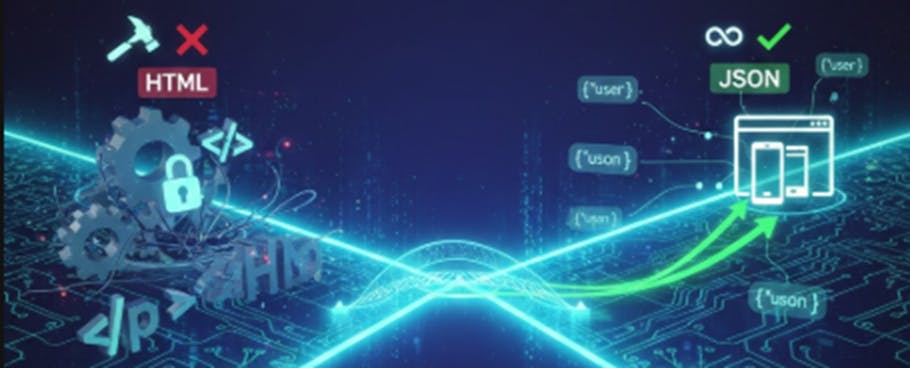
Corti claims that its new framework is designed to prevent cascading failures by adding what it calls deterministic rules and guardrails to prevent errors from breaking through.
Today’s launch is the Corti Agentic Framework, a foundation for building AI agents that can handle the work in healthcare and life sciences. It includes a single application programming interface for orchestration, guardrails and compliance, allowing developers to move agents from demonstration to deployment.
The libraries include AI agents that reason and act, AI experts that handle specific skills and multi-agent composition capabilities, which mix and match agents and experts based on the task at hand.
Examples of agents include medical coding agents that can generate specific documentation, clinical education agents that access evidence-based clinical explanations, evaluation agents that examine patient care against clinical guidelines and medication reconciliation agents that examine clinical records. Experts bundle skills such as searching structured trial data, accessing up-to-date drug intelligence, integrating medical knowledge from PubMed, running questionnaires, pulling content from the internet, performing reliable medical calculations and more.
Combining the reasoning capabilities of agents and the data collection experts, Corti’s agentic framework can orchestrate and validate actions and manage workflows within specific scopes. According to the company, once a role is set, agents cannot act outside of it.
Examples of roles for agents include delivering assistance with telehealth. This can include intake, examining patient history, developing a medication and allergy knowledge-base and filling out forms faster so that patient and provider are ready for a visit the moment a video call is online. Agents can listen in during doctor visits to transcribe notes and then help write referrals, identify which medications were mentioned and make it easy to find them. It also makes billing simpler and paperwork faster.
Anyone who has ever sat in a doctor’s office already knows how long they have to wait to see their doctor. Much of this time isn’t because of how long the doctor spent with the previous patient. It’s how much time the doctor spent reviewing and writing notes. Additionally, extra time doctors can spend with patients can be a good thing, if they don’t need to spend even more time doing paperwork.
Corti today has over 100 customers piloting its agentic framework for nurse triaging. While OpenAI Group PBC and Anthropic PBC are developing better generalist models, with an eye for healthcare and medicine, Corti believes the advantage for healthcare requires specialized infrastructure.
The company said it builds on Nvidia Corp.’s Blackwell graphics processing units and NIM microservices, allowing real-time execution without adding latency.
The framework launches with full compatibility for Agent-to-Agent and Model Context Protocol standards. Developers can quickly integrate with existing tools, connect any MCP-compatible system and extend functionality.
Image: News/Microsoft Designer
Support our mission to keep content open and free by engaging with theCUBE community. Join theCUBE’s Alumni Trust Network, where technology leaders connect, share intelligence and create opportunities.
- 15M+ viewers of theCUBE videos, powering conversations across AI, cloud, cybersecurity and more
- 11.4k+ theCUBE alumni — Connect with more than 11,400 tech and business leaders shaping the future through a unique trusted-based network.
About News Media
Founded by tech visionaries John Furrier and Dave Vellante, News Media has built a dynamic ecosystem of industry-leading digital media brands that reach 15+ million elite tech professionals. Our new proprietary theCUBE AI Video Cloud is breaking ground in audience interaction, leveraging theCUBEai.com neural network to help technology companies make data-driven decisions and stay at the forefront of industry conversations.