When the best performance of the year hit theaters in October 2025, most were completely unaware. Featuring a generation-defining filmmaker, a transformational performance, and star-ladened supporting cast, the legacy of Richard Linklater’s “Blue Moon” is sure to dramatically outlive its short stint at the box office, as critics and fans alike hail Ethan Hawke’s portrayal of troubled songwriter Lorenz Hart as the crowning achievement of one of Hollywood’s most captivating actors.
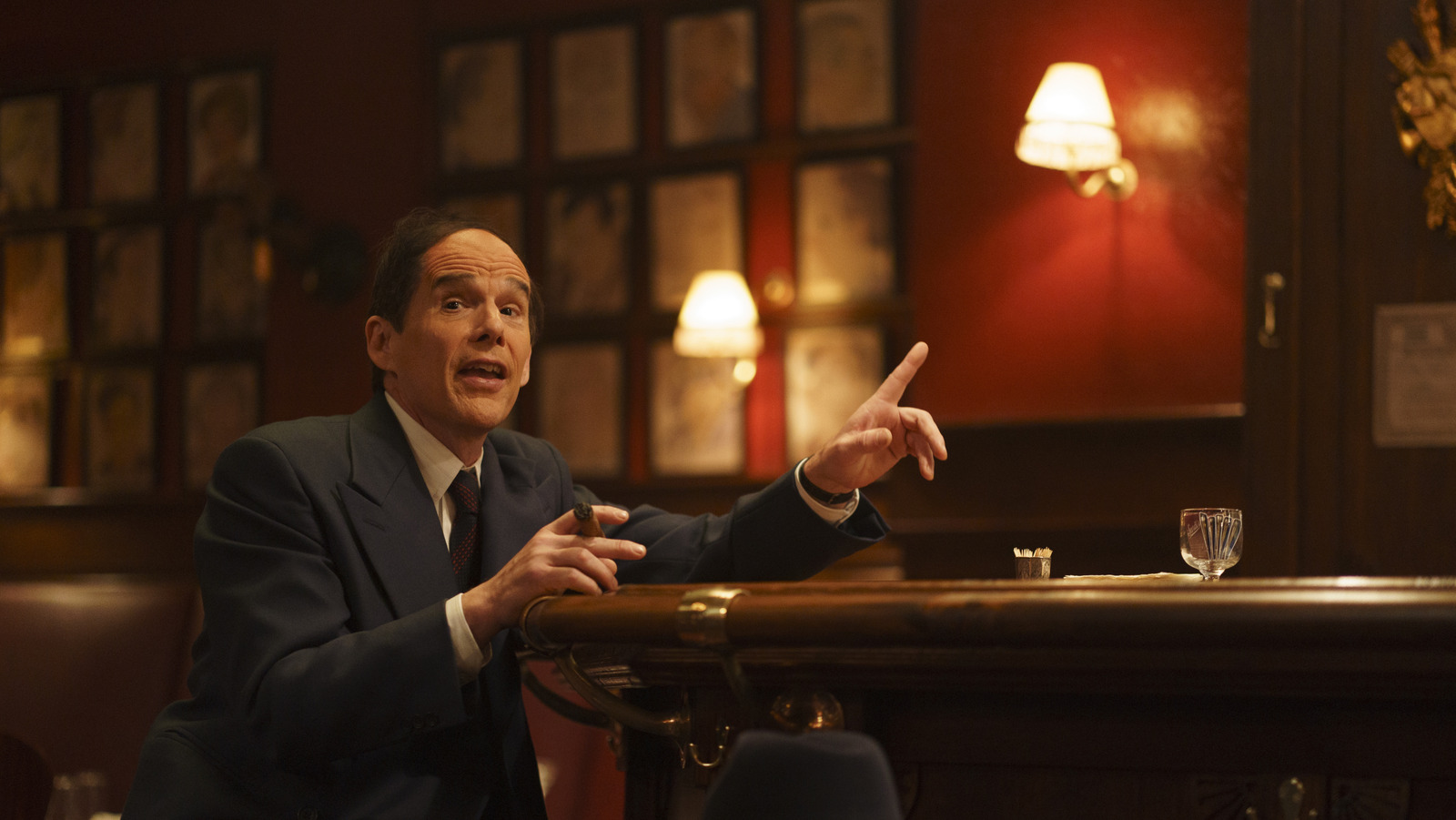
A heartbreaking character study of a man who finds his world, artform, and friends passing him by, “Blue Moon” watches as Hart’s facade of wise cracks and self-aggrandizement disintegrates beneath a flood of melancholy and jealousy as his longtime writing partner Richard Rodgers, played by Andrew Scott, embarks on the most successful run in musical theater history with the release of the iconic “Oklahoma!”. Largely taking place over the course of a single night at the legendary New York haunt Sardi’s, the film confines one of America’s great artistic tragedies to a series of urgent conversations between Hart and his fellow patrons, including a slick bartender (Bobby Cannavale), writers Oscar Hammerstein (Simon Delaney) and E.B. White (Patrick Kennedy), and protégé-turned-potential-love-interest Elizabeth Weiland (Margaret Qualley).
Hawke’s performance is equal parts comic and tragic, as the alcoholic Hart attempts to mask feelings of despair and envy behind a flood of crass jokes, rollicking soliloquies, amorous declarations, and half-baked writing pitches. Hawke’s performance is one of the best of his storied career. Replete with a combover and an impossible-seeming 12-inch height reduction, his transformation into the enigmatic songwriter responsible for classics like “My Funny Valentine,” “Isn’t It Romantic?,” “My Heart Stood Still,” “Bewitched,” and the eponymous “Blue Moon,” is as compelling a feat of movie magic as 2025 has to offer and more than worthy of the award-season buzz it hopes to garner.
The imp inside Ethan Hawke
Debuted at the Berlin film festival to raucous applause, “Blue Moon” is a standout performance a decade in the making, as the duo have batted around fellow Richard Linklater-collaborator Robert Kaplow’s script for roughly 12 years. The problem? Ethan Hawke was too hot to play the diminutive, balding Hart. And while audiences might lovingly roll their eyes at the heartthrob sarcastically lamenting the career opportunities squandered by his graceful aging, the extended time spent marinating in Hart’s character is readily apparent. Incorporating all the bizarre affectations and personality quirks of the eccentric writer, Hawke tears Hart straight from the back pages of Broadway history, conjuring the infamously larger-than-life personality onto the screen in a captivating dance of comedic timing and existential anxiety. What makes the transformation even more compelling is that Hart appears so diametrically opposed to Hawke’s public persona. As Hawke himself describes in an interview with co-star Andrew Scott on Sony Pictures Classics’ YouTube channel, every actor has an “imp” or a “really profoundly different character to our actual self that lives inside of us, and this is mine.”
Watching Hawke in “Blue Moon” feels like holding an amber-enclosed fossil up to the candlelight; viewers delight in the incandescence of seeing a relic of the past wholly contained within its small, Bourbon-hued prism. As Hart manically pinballs between biting theater criticism to over-earnest implorations for love, friendship, and just one more drink, the façade crumbles beneath the weight of a world he hardly recognizes. But rather than an act of existential dissolution, the film balances pessimism with a hefty dose of witty banter and philosophical pontification, transforming what should feel like a slow car wreck into an emotional monster truck rally with your favorite foul-mouthed uncle.
Is it time?
“Blue Moon” comes at an interesting time for both its lead and director. Ethan Hawke, whose career is full of captivating performances, is in the midst of a miniature renaissance with installments of his “Black Phone” horror franchise and “The Lowdown” television thriller. For Richard Linklater, it’s his second 2025 film examining an eccentric artist at a career inflection point, with his first, Netflix’s “Nouvelle Vague,” showcasing director Jean-Luc Godard’s groundbreaking 1960 French New Wave classic, “Breathless.” In both cases, Linklater presents a snapshot of an indelible moment in art history, one that depicts a legendary artist on the precipice of stardom, and the other having fallen off the edge.
But the duo are far from the film’s only standouts. Andrew Scott as Hart’s reserved and circumspect former writing partner, Richard Rodgers, is the ideal foil to Hawke’s earnestness, presenting a clear window into the pain beneath Hart’s manic yammerings. Margaret Qualley, who plays a Yale student the infamously homosexual Hart has deluded himself into loving, is an equally entrancing look into the anguish hiding beneath his boisterous exterior.
On the surface, Hawke’s performance has everything you look for in an Oscar winner: transformational makeup, showstopping sermons, bizarre personality quirks, and a script full of humor and heartbreak. Unfortunately, the field for Best Actor is a crowded one, with superstar performances from Leonardo DiCaprio in “One Battle After Another,” Michael B. Jordan in “Sinners,” and Timothée Chalamet in “Marty Supreme” likely reaching more eyeballs. However, if “Blue Moon” can overcome its box-office deficit to garner Hawke his third acting nomination, a key metric since voters are now required to watch every nominated film, voters will be hard-pressed not to recognize one of the defining performers of his generation with his first Academy Award.