This week, our team fanned out across CES 2026 in Las Vegas, encountering thousands of new products, many of which are poised to revolutionize the way we interact with technology.
It’s not all about AI, though, of course, that’s a big theme. We saw some extra wacky robots this year, as well as exoskeletons that you can wear. The latest devices—TVs, laptops, and mobile phones—are featuring innovative new displays, powered by next-gen chips. In the smart home category, companies are focusing on ease of setup and use, bringing a practical breath of fresh air to the space.
Here are the major trends you need to know as we kick off 2026. For more coverage from Vegas, head to our CES hub. And check out the Best of CES 2026 Awards, where experts from PCMag and our sibling publications narrow down the list of the most cutting-edge AI tech from the show.
‘Physical AI’ Is the New Buzzword
Nvidia CEO Jensen Huang gives the CES 2026 keynote (Credit: PATRICK T. FALLON / Contributor / AFP via Getty Images)
After a few years of software-focused chatbots like ChatGPT, people are ready to interact with AI hardware. The new buzzword for this is “physical AI,” and it was the throughline of nearly every booth at CES. We saw self-driving cars, humanoid factory workers, robot puppies, butlers, bartenders, and much more.
The idea is to make physical devices smarter and more practical than ever. A car, for instance, could handle more nuances on the road without driver input. A robotic factory worker could troubleshoot an anomaly on the assembly line without glitching out. A faux puppy could comfort you when you’re crying, becoming a meaningful companion.
In Nvidia CEO Jensen Huang’s keynote, he predicted that as AI models become more accessible, it is inevitable that anyone, not just large companies, will be able to program and customize robots for their work and home. Nvidia has been touting this vision for several years now, and the rest of the industry appears to be catching up.
TVs With Ultra-Vivid Screens

Hisense 116UXS (Credit: Hisense)
If you’re shopping for a TV this year, look for one with an RGB LED screen. That stands for red green blue light-emitting diode, and it’s what all the latest models have, replacing the OLED and mini-LEDs that have dominated the high-end TV market for the past few years. At CES, Hisense showcased its 116UXS model featuring RGB MiniLED evo technology. Samsung also has a new lineup of Micro LED TVs, as does LG.
In the past, LEDs in TVs typically emitted only white or blue light. They could adjust to improve contrast, but not color vividness. But TVs with RGB LEDs have clusters of red, green, and blue lights. They individually adjust to improve not only contrast, but also color. It’s among the most promising display tech our expert has seen.
That being said, some companies are experimenting with other approaches. TCL showed off the industry-first X11L SQD LED (Super Quantum Dot Mini-LED), which the company claims has even better color than RGB LEDs. The most boundary-pushing TV display we saw was easily LG’s wallpaper-thin model.
The Birth of Wi-Fi 8

Asus Wi-Fi 8 router prototype (Credit: Asus)
Although you probably don’t yet have a Wi-Fi 7 router in your home, the industry is already moving forward with Wi-Fi 8. It’s set to become the new standard, although the specs aren’t finalized, and it doesn’t promise significant speed improvements over Wi-Fi 7. The big benefits are reduced latency, increased throughput, and better efficiency between devices.
Asus debuted its concept router, the ROG NeoCore, at the show. The company intends to sell its first set of Wi-Fi 8-compatible home routers and mesh systems by the end of 2026. The concept router promises twice the midrange throughput, twice the wide IoT coverage, and up to six times reduction in P99 latency.
Meanwhile, Broadcom announced a new APU, the BCM4918, and two new dual-band radios designed for Wi-Fi 8 routers, and MediaTek introduced its new Filogic 8000 chip, which will help power Wi-Fi 8-compatible devices.

Get Our Best Stories!
Your Daily Dose of Our Top Tech News

By clicking Sign Me Up, you confirm you are 16+ and agree to our Terms of Use and Privacy
Policy.
Thanks for signing up!
Your subscription has been confirmed. Keep an eye on your inbox!
The Laptop Chip Race Heats Up

Intel Core Ultra X9 388H (Credit: Intel)
Chips have been big at CES for several years, but this year we saw more laptop-focused processors than usual. AMD teased its Ryzen AI 400 series, set to launch in Q1 of this year with a focus on laptops and mini desktops, as well as the Ryzen 7 9850X3D, which it bills as the world’s fastest gaming processor for laptops and desktops.
Qualcomm unveiled a new set of next-generation X2 processors, dubbed Snapdragon X2 Plus, which the company says will power more affordable laptops. Qualcomm is leaning into neural processing units (NPUs), with 80 trillion operations per second (TOPS)—nearly double the 45 TOPS of the first-generation Snapdragon X family—and more on-SoC TOPS than any other consumer chip line we’ve seen to date.
Intel’s Panther Lake chips, set to ship in Core Ultra Series 3 processors by the end of January, are probably the most exciting development here. They marry the efficiency and AI advances of last year’s Lunar Lake, but for ultraportable laptops with the high-potency of Intel’s H-grade high-performance chips. Topping it all off, Intel majorly upgraded the graphics via a new GPU architecture.
Foldable Phones: Can Apple Be Far Behind?

Samsung Galaxy Z Fold 7 (Credit: Eric Zeman/PCMag)
Are traditional, slab-style mobile phones slowly becoming outdated? At CES, we saw two new models of foldable devices that promise larger screens without being much bigger in your pocket. Motorola teased the Razr Fold, which looks like a typical phone but opens up like a book. It is compatible with a stylus accessory, which can be purchased separately.
The Samsung Z Galaxy TriFold opens not once like a book, but twice, like a paper brochure, yielding a massive 8-inch display. We got our hands on it for the first time at CES.
Recommended by Our Editors


Among CES attendees, there was considerable chatter about whether a foldable iPhone is in the works; rumors have been circulating for years, but Apple has yet to confirm anything.
We also saw innovative laptop displays, including a ThinkPad that expands and contracts, Lenovo’s latest ultra-wide gaming display, and an Asus desktop that projects dancing holograms.
More Practical Smart Home Devices

PCMag smart home expert Andrew Gebhart with the Lutron smart blinds (Credit: Joe Maldonado)
As smart home technology has become more refined and popular over the years, people are increasingly seeking simplicity in setup and operation.
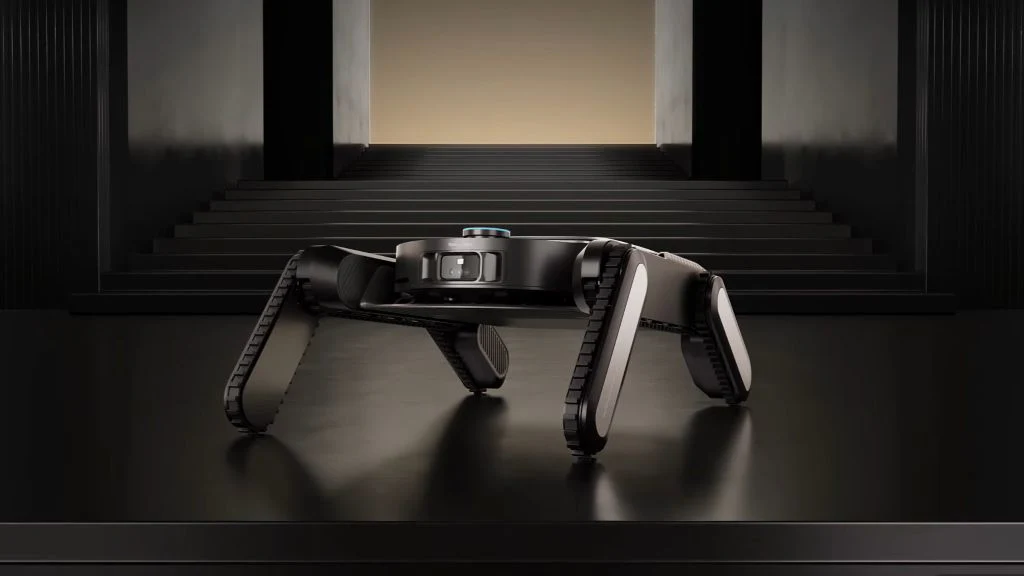
We saw a smart lock that doesn’t require charging and new Ring sensors that supposedly work out of the box without requiring you to establish a connection to a hub or even your own Wi-Fi router. The new Roborock Saros Rover vacuum has sprouted legs, allowing it to go up steps and climb over obstacles as it cleans. New smart blinds from Lutron keep the sun out of your eyes and may help reduce your energy bill.
Meanwhile, be on the lookout for smart toilets such as the $99 Vivoo Smart Toilet, which analyzes your urine and shares hydration data to a companion app. Back in October, Kohler debuted a $600 model that analyzes your poop.
Exoskeletons to Boost Your Physical Performance

PCMag’s Angela Moscaritolo was the first journalist to try the Dephy exoskeleton at CES (Credit: Allie Chartoff/Dephy)
Biohacking has been a significant trend in recent years, as people seek to optimize their physical performance. (Multimillionaire Bryan Johnson, arguably the face of this trend, is featured in the Netflix documentary Don’t Die: The Man Who Wants to Live Forever, which explores his $2 million-per-year quest to halt the aging process.)
The concept emerged at CES in the form of exoskeletons, or hardware that straps to your body and assists movement. Our team saw several different concepts at the show. One from the company Dephy straps to your calves and feet, giving you an extra pep in your step. It could be a breakthrough for seniors or people with mobility issues. Another product, the Ascentiz H1 Pro, goes around the hips. It analyzes and corrects your stride, helping to speed up walking and jogging; however, the Dephy was more promising, according to our expert.
About Our Expert

Emily Forlini
Senior Reporter
Experience
As a news and features writer at PCMag, I cover the biggest tech trends that shape the way we live and work. I specialize in on-the-ground reporting, uncovering stories from the people who are at the center of change—whether that’s the CEO of a high-valued startup or an everyday person taking on Big Tech. I also cover daily tech news and breaking stories, contextualizing them so you get the full picture.
I came to journalism from a previous career working in Big Tech on the West Coast. That experience gave me an up-close view of how software works and how business strategies shift over time. Now that I have my master’s in journalism from Northwestern University, I couple my insider knowledge and reporting chops to help answer the big question: Where is this all going?
Read Full Bio