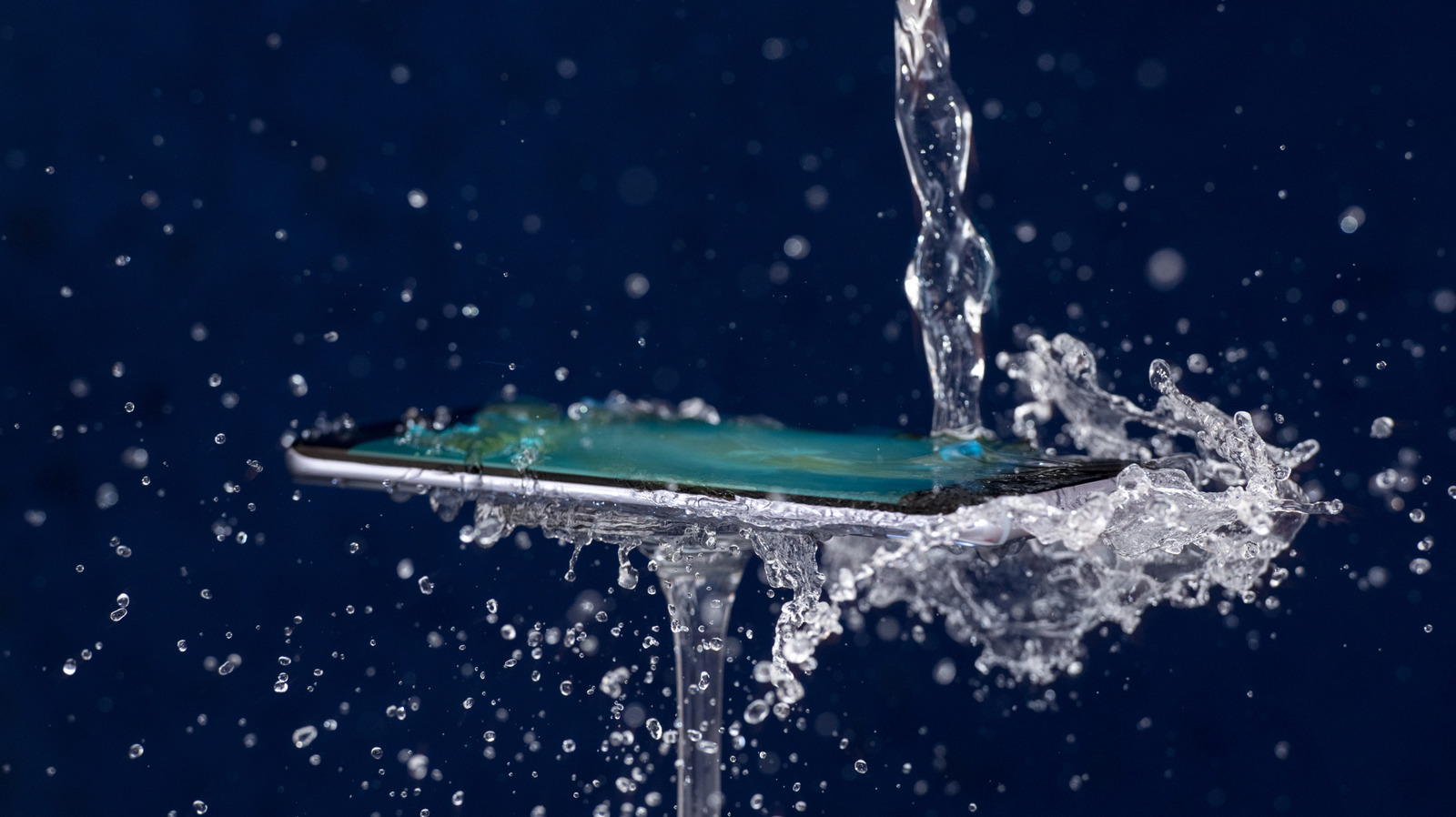
A phone with an ingress protection (IP) rating relates to its resistance against both dust and water. The rating begins with the letters “IP” and ends with either two numbers or a single number and an “X” in one of the spots. It’s important to know what this means as it will (or should) inform how and where you use your phone. There are important distinctions between one number and another. A common rating is IP68, indicating the highest level of protection against dust particles along with the ability for the phone to be submerged in a certain depth of water for a certain length of time.
Something important to note when it comes to a water-resistant rating is that it pertains to freshwater sources, such as your bathtub at home or a pool with a reasonable level of chlorine. But this rating does not protect the phone against saltwater, which can corrode electronic components. So, diving into the ocean with it will likely void the warranty. Only the highest ratings, meanwhile, address temperature and high-pressure jets. Further, water resistance degrades over time, so a phone you’ve had for years won’t be as resistant as it was when you first got it.
What do IP ratings mean?

IP is a rating set by the International Electrotechnical Commission. The first digit in the rating pertains to dust. The number “6” is the most common number, which denotes total protection against even small dust particles through a dust-tight chassis. A “5” means dust protection, while a “4” means it’s protected against particles 1mm or greater in size. Ratings of “1,” “2,” and “3” are less common, but indicate protection against larger particles of 50mm, 12.5mm, and 2.5mm, respectively. More likely, if the phone doesn’t have at least a “4,” it will have an “X” in the first spot, indicating that it hasn’t been rated. You may find this with many foldable phones that have a hinge, which makes protecting against dust more challenging. The Google Pixel 10 Pro Fold is the first dustproof model of its kind.
For the second number, an “8” means you can submerge the phone in more than a meter of water for up to about 30 minutes. If it’s a “7,” it can be immersed in the same depth, but not for extended periods of time. A “5” or a “6” confirms protection against water splashed at it, but not submersion or powerful water jets.
The highest ratings
Lately, phones come with even higher ratings from brands like OnePlus, Motorola, or even the new Oscal Tank 1. With an IP69 rating, a phone can not only handle submersion for longer periods of time, but it can also withstand close-range, high-pressure jets as well as high-temperature sprays. In its demos, for example, OnePlus shows its phones like the OnePlus 13 and the newest OnePlus 15, being run in the top rack of a dishwasher and coming out unscathed.
The OnePlus 15 adds an IP69K rating to the mix. The “K” denotes an industrial-level strength that ensures protection against even higher-pressure jets, at pressures of 80 to 100 bar, or 1,160 to 1,450 pounds per square inch at temperatures as hot as 176 Fahrenheit. Most average consumers won’t need this, as it’s mostly necessary for businesses like those found in the food and beverage or chemical manufacturing industries. But it’s an extra reassurance that a dunk in the toilet or even an epic water gun fight is no match for this phone. Overall, most people can make do with an IP68-rated phone. But keep an eye out for the number, especially when it comes to the dust rating, to ensure the successful operation of your device for years to come.