
Social media is crowded. Every brand and creator fights for attention. A few extra likes won’t change much. But authentic, natural-sounding posts can. They spark conversation. They build trust. They turn followers into loyal fans. Today, artificial intelligence is a powerful tool that’s shaping how your posts sound. Use it right, and it can help you write posts that feel like human voices and are less robotic.
AI is no longer a buzzword. It’s in caption generators, scheduling tools, analytics platforms, and chat assistants. Marketers use it to speed up writing by brainstorming ideas and tweaking tone easily. But there’s a catch: AI can make posts sound generic and stiff, without refinement. The real value is in making AI-assisted content feel authentic and human. That’s where skillful editing, user insight, and emotional intelligence come in.
This article explains how AI can improve naturalness in social media writing. It highlights the limits of AI and the importance of maintaining your voices as well, with practical tips you can use today.
Why Natural Voice Matters in Social Media
Social platforms thrive on interaction. Users scroll fast, comment slower. They stop when a caption grabs them. They ignore posts that feel flat.
Authenticity is now a metric. Algorithms favor posts that keep people engaged. Engagement signals like likes, comments, shares, and saves can boost visibility. Posts that feel human-written achieve that more often than AI-like text does.
People don’t connect with bland corporate speak. They connect with personality, humor, emotion, and personal insight. These are things AI can help suggest—but not fully create on its own. AI tools can give you a starting point. They can help reduce writer’s block. But refining awkward lines into natural phrasing still requires human judgment.
What AI Gets Right—and What It Gets Wrong
AI models are trained on huge amounts of text. They learn how people write in general. That means they can mimic familiar patterns quickly. For captions, one prompt can generate dozens of options in seconds.
But models don’t understand meaning the way humans do. They lack lived experience, context, and cultural nuance. This leads to moments where the text feels technically correct, but emotionally off. ChatGPT might generate a caption that is polite. But it might not feel warm. Or funny. Or true to your brand’s voice.
According to marketing experts, the future of AI in content is a partnership—not a replacement for human creativity.
“The future of AI isn’t human vs. AI it’s human with AI.” — Kipp Bodnar, Chief Marketing Officer, HubSpot. (dmidigitalmarketing.com)
This quote captures the essence of effective AI use in social media. You don’t hand the wheel to AI and hope for a miracle. You co-pilot with it.
AI Tools Tailored for Natural Social Media Language
AI tools for social media fall into a few key categories:
- Caption and post generators — Create draft text based on prompts.
- Tone adjusters — Rewrite text to match style guidelines or sentiment goals.
- Voice personalization — Train models on your past posts so new suggestions match your tone.
- Sentiment and analytics platforms — Help understand audience preferences and emotional engagement patterns. You can even automate some social media tasks with AI, see what we do here.
Some tools can even analyze your best posts and identify the elements that made them resonate. When AI becomes familiar with your style, it can better approximate a tone that sounds like “you.” (Vista Social)
Most importantly, AI tools allow you to experiment. You can draft multiple versions in minutes. Then, you choose and refine the one that feels most natural. Beyond text-based tools, some brands also use visual content like AI explainer videos to complement their social media strategy and simplify complex AI concepts for their audience.”
Crafting Natural Thumbnails: Tone, Style, and Timing
A caption is more than text. It’s voice, rhythm, and timing.
Short sentences often feel more natural on platforms like Instagram and X. Longer sentences may work on LinkedIn when telling a story. Successful social media writers mix lengths. They blend direct statements with personal commentary. They use humor, questions, and calls to action.
AI can suggest edits that make text concise and conversational. But it’s up to you to decide if the suggestion matches your intention. It may or may not match.
Here’s a basic workflow many professionals follow:
- Generate a draft with AI.
- Read it out loud.
- Identify awkward phrasing.
- Rewrite manually for tone and clarity.
- Insert personal insights or context.
Repeat this until the post feels natural and true to your voice.
Aligning AI Output with Your Brand Voice
Every brand has a personality, subtle or bold. AI defaults to generic language unless you guide it with examples.
One practical approach is feeding AI samples of your best posts, which will set a pattern for your desired tone and sentence flow. Some AI platforms allow storing these as a voice profile. That way, future suggestions stay closer to your brand voice. (Vista Social)
For example, a wellness coach’s posts might include soft emotional language and supportive phrases. An entrepreneurial coach’s posts might be direct, motivational, and data-driven. AI helps generate base text, but you must fine-tune it to stay authentic.
This is where tools that help you humanize AI suggestions come into play. They take mechanical output and help shape it into something that fits a real human voice.
How to Use AI Without Losing Authenticity
AI is a tool, and it needs skill to wield well, like any tool. It can improve your voice instead of replacing it if you use it thoughtfully. The key is knowing where AI helps and where human judgment must take over.
Keep a Personal Frame of Reference
AI doesn’t know your experiences, opinions, or daily realities. That’s why AI-generated posts feel so generic.
To avoid this, anchor your content in a personal context. Mention a recent project or a challenge you faced. Even a brief reference to something specific makes the post feel lived-in rather than manufactured. These details signal that a real person is behind the message.
Use Emotional Language Where Appropriate
Emotion drives engagement on social media. While AI can suggest emotionally charged words, it doesn’t truly understand tone or timing. You do. Decide when a post should feel motivating, reassuring, curious, or lighthearted. Adjust phrasing to reflect that intention. A small emotional shift, like softening a command into encouragement, can change how the message is received.
Avoid Over-Optimization
AI often pushes content toward perfect balance and symmetry. While that reads cleanly, it can also feel unnatural. Human writing isn’t always perfectly structured. Let a sentence run slightly longer. Use a fragment for emphasis. These imperfections make posts feel more conversational and relatable, especially on casual platforms.
Engage After Posting
Authenticity doesn’t stop once the post goes live. Your engagement with your audience also contributes to authenticity via replies; they’re as important as the original caption. That’s why you shouldn’t ignore them and respond to comments and ask follow-up questions in your natural voice while acknowledging the commenters’ feedback.
Your interactions will reinforce trust. It’ll remind your audience that there’s a real human behind the content.
Expert Views on AI and Authentic Communication
Experts stress balance when integrating AI with social media writing.
“AI tools should complement, not replace human creativity.” — Chad Gilbert, VP of Content Marketing, NP Digital. (dmidigitalmarketing.com)
This comment underlines that authenticity originates with humans. AI supports the effort; it doesn’t create a genuine voice by itself. It’s like a well-seasoned assistant who knows your preferences but still needs you to review the work.
Likewise, brand strategists emphasize balancing automation with authenticity. Recent discussion in marketing circles urges brands to use AI responsibly and transparently.
“Brands must figure out how they strike a balance between leveraging AI and reaching consumers in a way that still feels genuine.” — Kirk (Marketing Expert). (New York Tech)
This is really true for sensitive topics and communities that value honest connection over flashy language.
Avoiding Common AI Pitfalls
AI output can go wrong if left unchecked. Knowing the common pitfalls helps you fix them before publishing and maintain credibility.
1. Repetitive Language
AI models tend to reuse familiar phrases and sentence patterns. This can make posts feel dull or obviously automated. Always scan for repeated words, transitions, or ideas. Rewriting just one or two lines manually can restore freshness and rhythm.
2. Lack of Context
AI doesn’t fully understand cultural nuance, timing, or shared experiences. A phrase that sounds fine in isolation may feel off to your audience. Review content with context in mind, platform norms, current events, and audience expectations all matter.
3. Overly Formal Phrasing
Social media thrives on natural conversation, not corporate language. AI often defaults to formal wording. Shorten sentences. Replace stiff phrases with everyday language. If it wouldn’t sound natural when spoken out loud, it probably needs adjustment.
4. Generic Hooks
AI-generated openings can sound catchy but empty. Without personalization, hooks blend into the feed. Strengthen them with a specific insight, opinion, or question that reflects your perspective.
By recognizing these issues early, you can turn AI drafts into content that feels intentional, human, and genuinely engaging.
5. Duplicated Content
AI-generated text can mirror existing content, especially in long-form posts like LinkedIn articles. When many users rely on similar prompts, phrasing, and structure can overlap. This hurts credibility and originality. Before publishing, it’s important to personalize AI drafts with your own insights and, if possible, use an AI detector to ensure the content is clearly distinct and safe to publish.
Testing What Works: Data and Iteration
Authenticity also means learning from your audience. Use analytics to test different versions:
- A/B test captions with varied emotional tone.
- Try humorous versus direct intros.
- Compare engagement on posts with personal insight versus promotional text.
Over time, you’ll see patterns. AI helps generate options. Your data tells you what resonates.
Case Scenarios: AI That Helps Make Text Sound Natural
Let’s look at a few practical cases where AI makes writing easier and more natural:
1. When You’re Stuck With Writer’s Block
AI can suggest opening lines, hooks, or variations you might never brainstorm on your own. Start with a specific prompt and refine.
2. When You Need Consistency
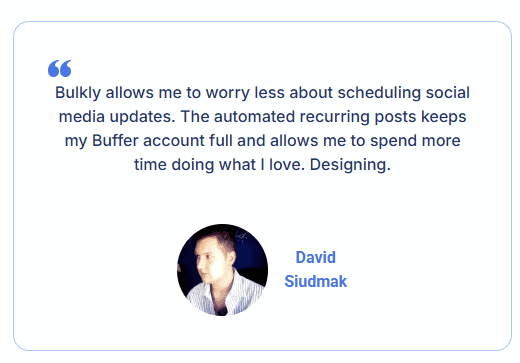
Posting regularly gets exhausting. AI can help you maintain consistency by drafting ideas you finish and polish. This calls for automation of tasks as you run your brand, and bulk.ly is good at it. That’s why we get these great testimonials from customers
3. When You Need Multiple Versions
Rewriting the same message for different platforms (e.g., TikTok vs LinkedIn) is labor-intensive. AI can produce base variations you adapt.
4. Customizing Tone Across Audiences
AI can suggest softer language for wellness audiences and sharper calls to action for business followers. But final adjustments are yours.
Ethical Considerations in AI Use
Using AI responsibly matters. Some tools generate text that sounds “too automated.” Audiences notice that quickly.
Quality and transparency build trust. Be open about your use of AI when appropriate. It’s okay to say a post was “AI-assisted and human-edited.” This can boost credibility rather than undermine it. (krailosocials.com)
Always avoid using AI to mislead. Strive for honesty, accuracy, and meaningful engagement.
The Future of AI in Natural Social Media Writing
AI will keep improving. Models are already learning from context, audience reactions, and engagement patterns. Soon, AI may tailor tone dynamically based on user behavior. But humans will always decide what feels real.
Today’s challenge for marketers is clear: balance innovation with authenticity. AI helps with volume and consistency. But the emotional connection still starts with you.
The best content isn’t the most polished. It’s the most relatable.
Final Thoughts on How AI Can Make Your Social Media Posts Sound More Natural
AI makes social media writing faster and more efficient. It helps you brainstorm ideas, experiment with phrasing, and refine tone. But AI alone doesn’t create authenticity. That comes from personal insight, context, and human judgment.
Tools that help humanize AI work will play a growing role in social content workflows. When used thoughtfully, AI amplifies your voice instead of drowning it out.
The key is balance: use AI for inspiration and muscle, but let human creativity and emotional intelligence guide the final post.
When you pair smart AI use with your real voice and insight, your social media posts won’t just be seen, they’ll be felt.