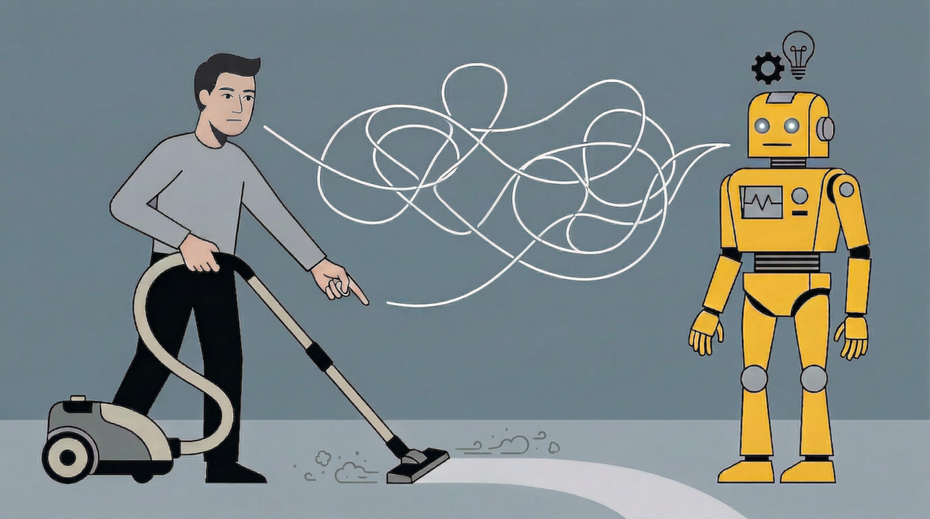
Zeus is a medical student. He lives in a hilltop town in central Nigeria. After a long day in the hospital, he returns to his studio apartment, turns on his ring light, straps his iPhone to his forehead, and begins filming his activities. He raises his hands in front of him like a sleepwalker and places a sheet on his bed. He moves slowly and carefully to make sure his hands stay within the camera’s frame.
For training robots: Gig workers for Micro1
Zeus is not only a medical student, he is also a data collector for Micro1. The company is based in Palo Alto, California, and collects real-world data to sell to robotics companies. As companies like Tesla, Figure AI and Agility Robotics race to develop humanoids – robots that move like humans and are designed to help in factories and homes – videos created by gig workers like Zeus are becoming the hottest new way to train them.
Micro1 has hired thousands of temporary workers in more than 50 countries, including India, Nigeria and Argentina, where hordes of tech-savvy young people are looking for work. They attach iPhones to their heads and film themselves folding laundry, washing dishes and cooking. The job is well paid by local standards and stimulates the local economy. However, it also raises sensitive questions about data protection and informed consent. And the work can be challenging – and strange – at times.
Zeus found the job in November when people were talking about it all over Linkedin and YouTube. “This would be a really nice opportunity to contribute and provide data that will be used to train robots in the future,” he thought. Zeus earns $15 an hour, which is a good income in Nigeria’s tough economy with high unemployment rates. But as an aspiring student who dreams of becoming a doctor, he finds ironing his clothes for hours every day boring.
“I really don’t like it that much,” he says. “I’m the type of person who…needs a technical job that requires me to think.” Zeus and all the workers interviewed by the US edition of MIT Technology Review asked to be identified only by pseudonyms because they were not authorized to speak about their work.
-
Access to all articles from
-
Magazine and MIT Technology Review in digital form
-
Reduced advertising
-
Weekly newsletter
Try for €0
Michelle works as a reporter for the US edition of MIT Technology Review. She writes about AI topics.
Top Article
${content}
${custom_anzeige-badge}
${custom_tr-badge}
${section}
${title}