What is TikTok marketing?
TikTok marketing is the practice of using the TikTok platform as part of a broader digital marketing strategy to support brand visibility, customer relationships, and commercial goals. It includes both organic and paid activity managed through a TikTok account, often alongside other social media channels.
For businesses, TikTok marketing can involve publishing video content, running ads through TikTok Ads Manager, collaborating with creators, or enabling commerce features like TikTok Shop. How these elements are combined depends on the business model, resources, and stage of growth.
At its core, TikTok marketing is about showing up on the platform in a deliberate, repeatable way that aligns with how TikTok works and how your brand operates.
What are the benefits of TikTok marketing?
TikTok marketing gives businesses a rare mix of reach, engagement, and speed that’s hard to match on other social media platforms. In practice, it’s one of the few places where a business account can still get meaningful visibility without an existing audience.
The TikTok algorithm doesn’t rely only on follower count. Instead, TikTok serves videos based on behavior, interests, and how people interact with similar videos on the For You Page. That means one well-made video can reach a wider audience, even if your TikTok presence is still new.
Usage patterns reinforce this. TikTok users spend close to an hour a day scrolling the TikTok app, mostly consuming short-form videos. For businesses, this creates more chances to test ideas, gather feedback, and refine messaging faster than on many other platforms in the social media network landscape.
When marketing on TikTok is done well, the benefits show up in concrete ways:
- Reach younger audiences more effectively: TikTok consistently outperforms other social media platforms when it comes to visibility with younger audiences that are harder to reach through traditional digital marketing, and Gen Z are 1.2x more likely to engage with a brand on TikTok when online shopping compared to other platforms.
- Drive higher engagement with video-first content: Short form videos, funny videos, behind-the-scenes clips, and authentic content tend to generate stronger interaction than static posts on other social platforms. According to our Influencer Marketing Benchmark Report, TikTok accounts with over 1M followers average 10.53% engagement versus 0.95% on Instagram, while accounts with 1k–5k followers see 15.04% on TikTok compared to 4.21% on Instagram.
- Build trust through community-led content: TikTok’s community responds well to user-generated content, brand values, and posts that feel human rather than overly produced.
- Support revenue and business growth: Tools like TikTok Shop, shoppable videos, and Spark Ads make it easier to boost sales directly inside the app, especially for an e-commerce store or product-based business.
- Strengthen your broader social media strategy: TikTok works alongside other social media channels by feeding ideas, traffic, and insights back into Instagram, YouTube, and other platforms.
Another advantage is speed. Compared to many video platforms, TikTok lets you publish, learn, and adapt quickly using TikTok analytics.
What to consider when creating a TikTok marketing strategy
TikTok can be a powerful marketing channel, but it’s not automatically the right fit for every business. Before investing time, budget, or creative effort, you need to evaluate whether TikTok aligns with your audience, your goals, and your competitive landscape.
If I want to succeed on TikTok, I always start with the same evaluation. I don’t ask, “How do I go viral?” I ask whether TikTok actually supports what I’m trying to achieve.
Before committing to marketing on TikTok, assess three core factors:
- Whether your target audience actively uses TikTok
- Whether TikTok supports your business goals
- Whether competitors are already shaping expectations in your niche
1. Identify whether your audience uses TikTok
TikTok works best when your content matches how your audience already consumes video. Before choosing content and ad formats, trends, or music for your TikTok business account, you need to confirm there’s real audience demand.
What I usually recommend starting with:
- Review TikTok audience demographics and compare them to your buyer personas
- Check whether your existing customers overlap with typical TikTok users or relevant subgroups
- Confirm that there is interest by searching for similar videos, creators, or keywords in your niche
The goal isn’t to reach everyone. It’s to confirm that the TikTok audience you can realistically reach is large enough and relevant enough to justify the effort.
2. Align TikTok with your business goals
Audience fit matters, but it’s only half the equation. TikTok also needs to support a clear business outcome.
Before building a TikTok marketing strategy, get specific about what success looks like. For example:
- Are you trying to build awareness for a new brand or product?
- Are you aiming to drive traffic to other platforms or an e-commerce store?
- Are you testing content formats before scaling paid TikTok ads?
It’s easy to struggle when TikTok is treated as an experiment without defined goals. Clear objectives make it much easier to choose the right content types, posting frequency, and success metrics later on.
3. Analyze your TikTok competitors
Competitor analysis helps you understand both opportunity and risk. If competitors are active on TikTok, their content shows what already resonates with the TikTok community in your industry.
When I review my competitors, I always look at:
- What content formats consistently perform well for them
- How they balance organic content and paid promotion
- Where their content feels repetitive, unclear, or overly promotional
“TikTok has an amazing keyword and topic researcher built right into its app. All you have to do is start typing, and then all of these words pop up, and then it goes one step further and shows you the related terms people are searching for,” advises Alex Cattoni, copywriter, marketer, and the founder of the Copy Posse.
If competitors aren’t active yet, that can be an advantage. It gives you more control over how your category shows up on the platform and how your brand values are communicated early.
Either way, competitor insights help you avoid guesswork and build a more deliberate TikTok presence from the start.
10 tips for building your TikTok marketing strategy
Building a strong TikTok presence takes consistency, experimentation, and patience. Results rarely happen overnight, but the brands that see steady growth usually get the fundamentals right early.
The tips below focus on practical actions you can apply immediately, whether you’re launching a new TikTok account or refining an existing strategy.
1. Optimize and brand your TikTok business account
Start with a TikTok business account that clearly communicates who you are and why someone should follow you. Use a recognizable profile image, a short bio that explains what you offer, and a link that supports your main objective, such as driving traffic to a website, TikTok Shop, or another platform.
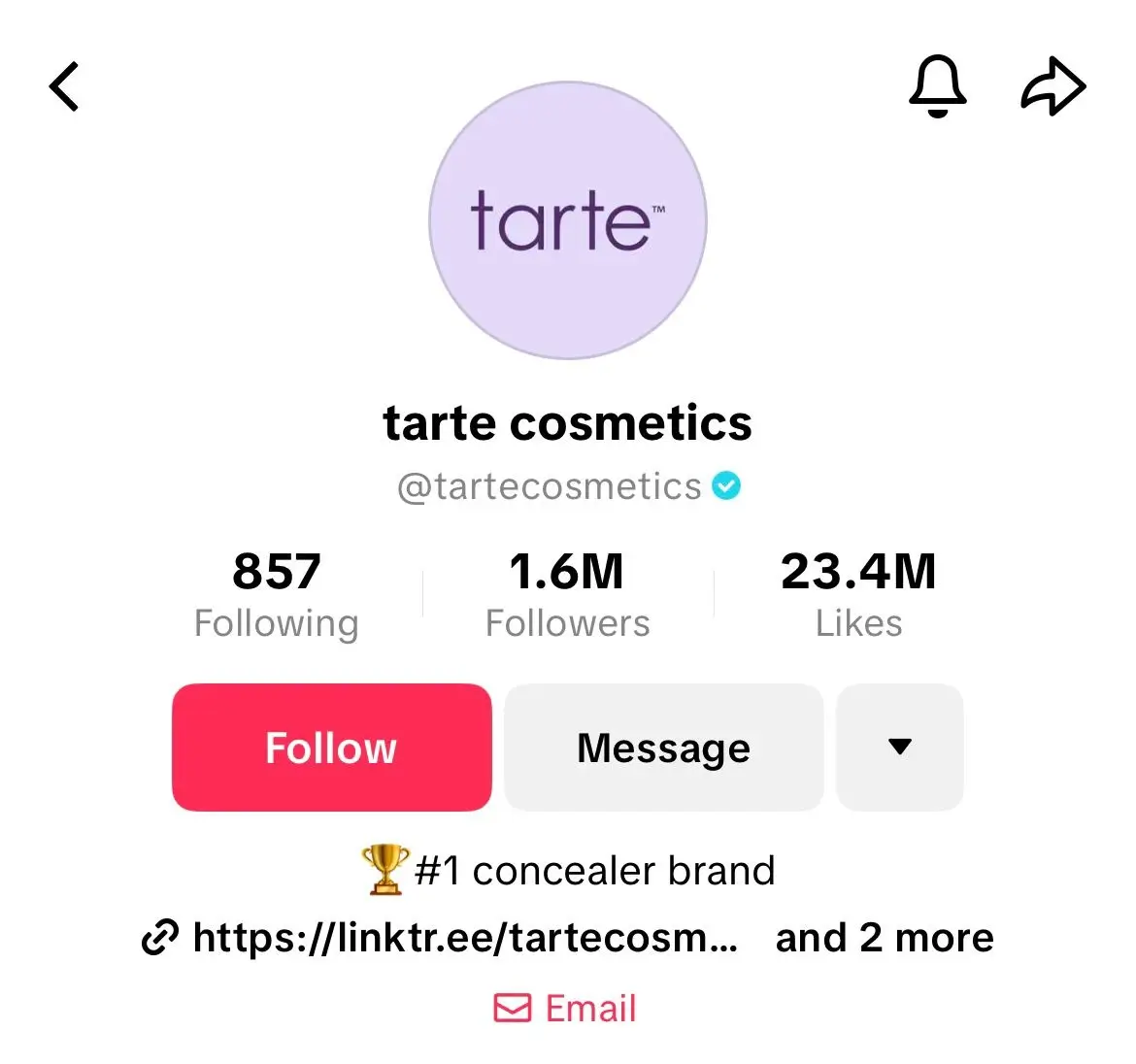
A complete, easy-to-understand profile builds trust and helps users decide within seconds whether your content is relevant to them.
2. Define your TikTok audience and positioning
TikTok rewards clarity. Instead of trying to appeal to everyone, focus on a specific TikTok audience and build content around their interests, problems, and habits.
I’ve noticed that accounts that grow consistently are very clear about who they’re speaking to and what type of content viewers can expect to see in their feed. This clarity makes it easier to choose topics, formats, and trends that actually resonate.
3. Clarify your primary goals and success metrics
Decide what TikTok should achieve for your business before you post consistently. Your marketing objectives might be brand awareness, community building, website traffic, or boosting sales through TikTok Shop.
Once your goal is clear, define how you’ll measure progress, whether that’s watch time, engagement rate, clicks, or conversions. This keeps your content focused and prevents random posting that doesn’t support business growth.
4. Learn TikTok culture before committing to a schedule
TikTok doesn’t behave like other social media platforms. Trends move fast, humor is informal, and overly polished brand videos often underperform. Spend time studying popular videos, trending sounds, and how other creators communicate with their audience.
Understanding how TikTok content feels and flows helps you avoid wasted effort and makes your early posts more effective.
“The most popular content on TikTok is playful and unpredictable, and it’s values-based. So be you, be weird, be silly, break the rules, have some fun,” says Alex Cattoni.
5. Create hook-first, short-form videos
Most TikTok videos are decided in the first few seconds. Strong hooks give people a reason to stop scrolling and keep watching. Since the TikTok algorithm prioritizes watch time, engagement, and relevance, each video should focus on one clear idea and get to the point quickly.
Practical best practices to follow:
- Open with a clear hook, visual change, or bold statement
- Keep videos concise and easy to follow
- Match captions, sounds, and visuals to your target audience
6. Mix content formats to stay engaging
Relying on one content format usually leads to plateaus. A healthy TikTok presence combines different types of videos that serve different purposes, from education to entertainment to social proof.
Formats that tend to work well include:
- Educational tips, tutorials, and how-to videos
- User-generated content and testimonials
- Short series built around one topic
- Behind-the-scenes clips and relatable moments
Light, funny videos tied to current trends