In a world where customers scroll past hundreds of images every day, visual consistency is no longer just “nice to have”. Rather it’s how small businesses get remembered. A strong visual identity makes your brand recognizable in a split second, even before someone reads a single word.
A 2023 Nielsen report found that brand recall is the biggest driver of brand lift in emerging media (38.7%), even more than baseline brand awareness. One of the fastest ways to strengthen recall is a consistent and memorable visual identity across every touchpoint.
AI image generators now give small businesses access to the kind of visual power that used to require big budgets, agencies, and frequent photoshoots. The key is learning how to use AI not just to make “pretty pictures,” but to build a cohesive brand visual identity that works across social, email, web, and ads.
This guide walks through how to build and maintain a consistent visual identity using AI-powered brand management.
What is brand visual identity?
Why AI is a game-changer for small business branding
Steps to perfect brand visual identity with AI
What is brand visual identity?
Your brand visual identity is the collection of visual elements that express who you are as a business, and how you want people to feel about you. It’s much more than a logo. It includes:
- Color palettes
- Typography (fonts and how they’re used)
- Imagery style (photo vs illustration, realistic vs abstract, etc.)
- Graphic elements and patterns
- Layout rules (how things are placed on the page)
These elements work together to create instant recognition. Strong brands — like Nike with its dynamic athlete photography, or Patagonia with its nature and adventure inspired imagery — maintain visual consistency while adapting to different platforms and cultures.
For small businesses, this kind of consistency:
- Signals trust and stability
- Makes your brand look more premium
- Helps teams and partners work faster and more aligned
- Keeps your brand recognizable even as you adapt to new markets and channels
Why AI is a game-changer for small business branding
Traditionally, maintaining a cohesive visual identity across social posts, ads, presentations, and website banners required:
- Brand strategists
- Designers
- Photographers
- Multiple review and approval cycles
Modern AI platforms change this dynamic. Tools like Narrato and Typeface are designed specifically for brand-conscious content creation, turning brand guidelines into active systems that:
- Understand your brand’s visual rules
- Generate on-brand images and variations at scale
- Help non-designers stay visually consistent without deep design expertise
Instead of starting from scratch for each asset, you train AI on your brand, then use it to create consistent visuals in minutes.
Steps to perfect brand visual identity with AI
Step 1: Get your brand foundations in place
AI is powerful, but it can’t fix an undefined brand identity. Before you plug into any AI image generator, make sure you’ve clarified:
1. Core brand values and personality
Ask yourself:
- What do we stand for?
- Are we bold and edgy, calm and trustworthy, fun and playful, or premium and minimalist?
These choices directly influence your visuals: colors, photography, illustration style, layouts, and more.
2. Audience preferences
Who are you trying to reach?
- A Gen Z fashion brand might lean into vibrant, experimental imagery.
- A B2B SaaS company may favor clean, minimal, and information-focused design.
With AI platforms like Typeface, you can connect audience insights to image creation, tailoring visuals to match the tastes and expectations of your ideal customers.
3. Basic visual guidelines
At minimum, define:
- Primary & secondary colors (with hex or RGB codes)
- Typography: your main heading and body fonts
- Logo versions: primary, secondary, icons, and usage rules
- Preferred imagery style:
e.g., “natural light product photos,” “flat vector illustrations,” “soft pastel lifestyle scenes,” or “high-contrast, dramatic close-ups”
If your brand identity is inconsistent today (different colors, fonts, styles everywhere), tighten this up first. That ensures AI becomes an accelerator and not a source of more chaos.
Step 2: Turn static brand rules into a dynamic AI Brand Kit
Most small businesses store brand rules in PDFs, random folders, or worse, in mental notes. AI works best when those rules live in a central, structured system.
Platforms like Typeface offer a Brand Hub that converts static guidelines into intelligent Brand Kits. These Brand Kits act as a living visual identity system that:
- Centralizes logos, fonts, color palettes, and design patterns
- Stores image styles and photography preferences
- Learns and adapts to your brand over time
- Applies your rules automatically during content creation
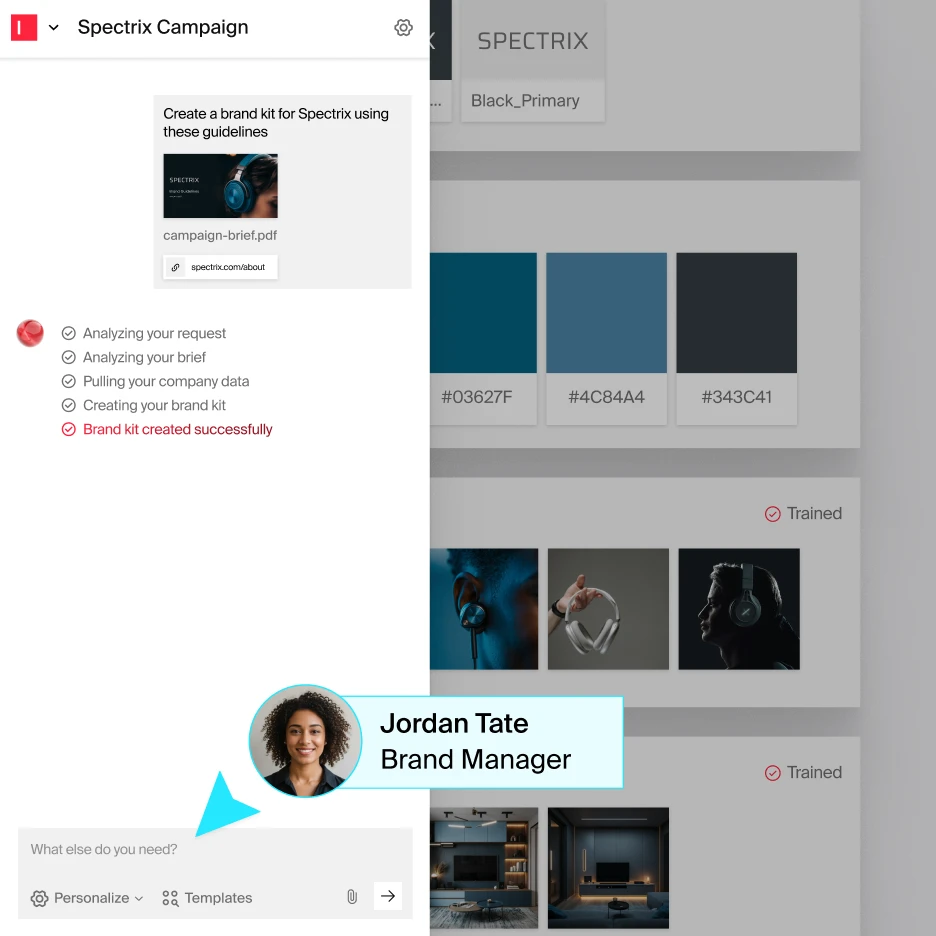
For a small business, this is like having a built-in brand manager inside your content tools.
What to store in your Brand Kit
When setting up a Brand Kit (e.g., in Typeface), include:
- Logos: all versions plus clear usage rules
- Color palettes: primary, secondary, accent, and neutrals
- Typography: headings, body text, and fallback font options
- Image style examples: your best photos/illustrations that represent the brand
- Text style guidelines: tone of voice, do/don’ts, and reusable phrases
Once these are in place, every AI-generated asset can be guided by your Brand Kit rather than random image prompts.
Step 3: Train AI on your visual style for consistent outputs
Generic AI tools often produce generic imagery. To maintain a cohesive visual identity, you want AI to mimic your style, not the internet’s.
With platforms like Typeface, you can:
- Upload existing on-brand visuals
- Social posts that performed well
- Product photos you love
- Website heroes and banners
- Campaign images
- Organize them into styles
Group by product line, campaign, theme, or use case. - Train AI on these image styles
The system learns your specific:- Color usage
- Lighting and mood
- Composition and framing
- Textures and backgrounds
These become reusable image style presets. Next time you want new visuals, you simply:
- Select the relevant brand kit
- Describe the scene or purpose in a short prompt
- Generate fresh images that feel like they belong to the same brand family
This removes the need for complex prompt engineering and helps non-designers create consistent visuals with confidence.
Step 4: Streamline visual content creation with AI
Once your brand is embedded into your AI platform, you can dramatically cut production time.
From days and weeks to hours
Instead of:
- Planning photoshoots
- Setting up studios or locations
- Coordinating designers for every asset
You can use AI to:
- Generate multiple product images in varied settings
- Create properly sized social media variants for each platform
- Produce website banners, promo graphics, and email headers from a single concept
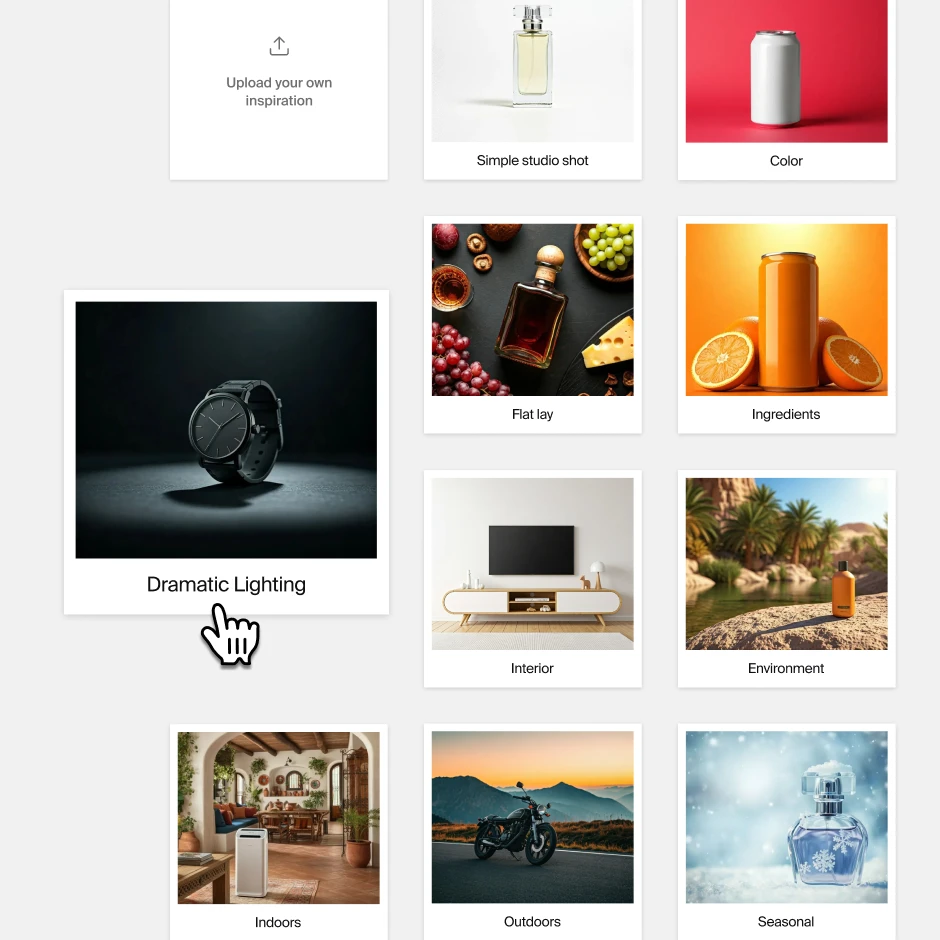
Typeface’s AI Visual Inspiration Studio provides:
- A large library of preset scenes and styles
- The ability to insert your products into these scenes
- Easy customization of mood, season, and context
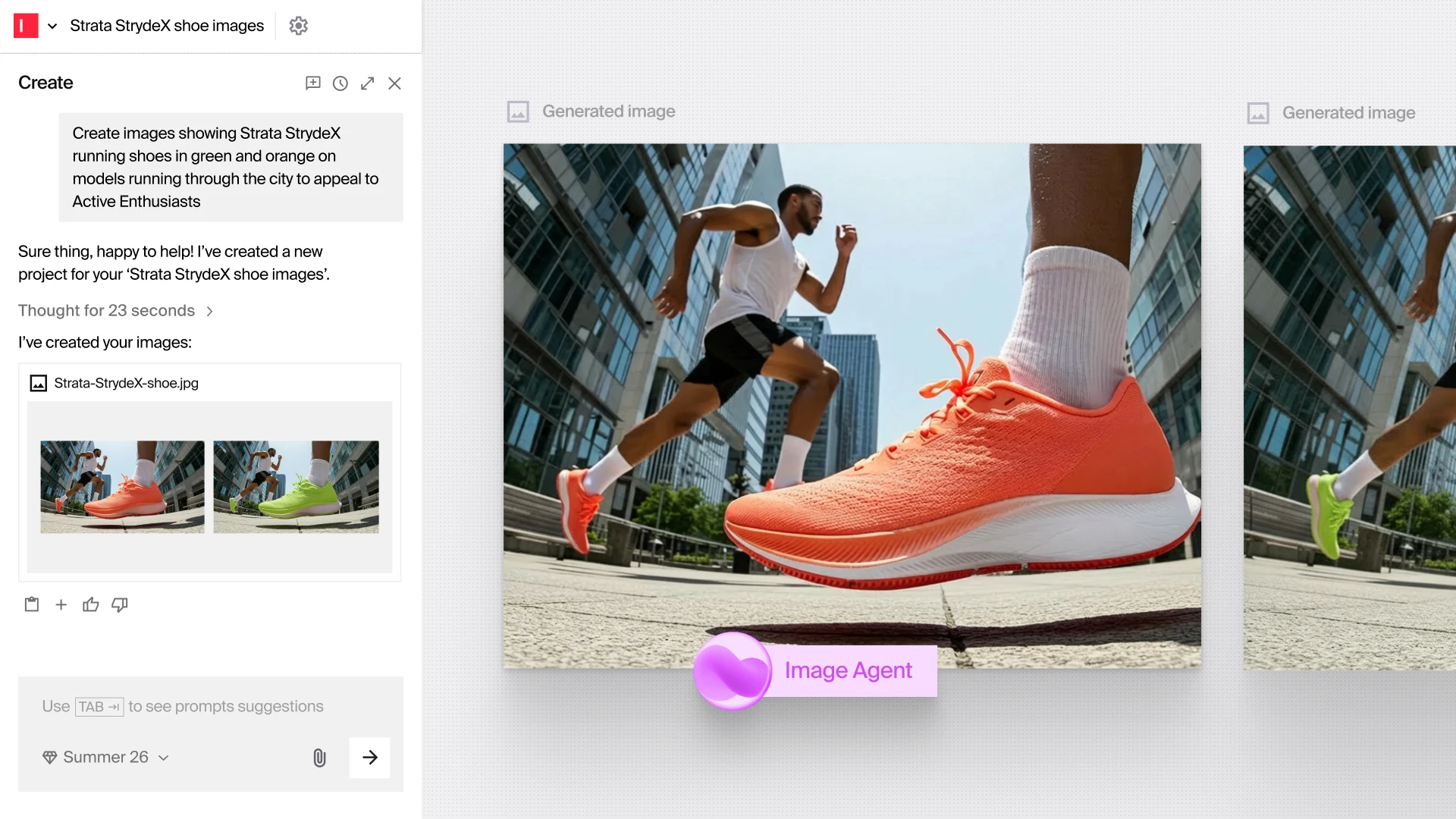
Its Image Agent lets you:
- Place your product and props in a desired layout
- Add a simple prompt
- Get agent help on improving your description with the right modifiers for high-quality output
For small businesses, this translates into:
- Faster campaign turnaround
- Lower production costs
- More room to A/B test different creatives
All while staying within your brand’s visual boundaries.
Step 5: Build a scalable, template-first design system
Visual consistency doesn’t come from designing everything from scratch. It comes from reusing and adapting what already works.
Create a template-based system
Start by creating or importing a small set of core templates, such as:
- Social post templates (promotions, testimonials, launches)
- Email header and banner templates
- Website hero image templates
- Ad templates for key channels (Meta, Google, LinkedIn, etc.)
Then:
- Bake in your logo placement, color combinations, and typography hierarchy
- Save them into your AI platform or Brand Hub
Tools like Typeface’s Ad Agent can then:
- Adapt one approved design across different channels and formats
- Localize versions for different audiences or regions
- Maintain core design and messaging while changing only what needs to change
This approach, sometimes called strategic content multiplication, lets you scale visual output without losing coherence.

Step 6: Make AI images look truly professional
A common concern is: “Will AI images look fake or low quality?” Poor visual quality directly impacts brand perception and trust.
To address this, look for tools with advanced visual capabilities such as:
Product preservation
The AI should:
- Maintain accurate product proportions
- Preserve your logo, labels, text, and intricate details
- Recreate materials (glass, fabric, metal, etc.) realistically
Image harmonization
The AI should:
- Match lighting, shadows, reflections, and color temperature between product and background
- Integrate your product naturally into the scene
Typeface, for example, uses product preservation and image harmonization to create photorealistic visuals that look like they were shot in a studio or on location, not awkwardly pasted onto a background.
This is especially valuable for:
- E‑commerce product catalogs
- Seasonal or thematic campaigns
- Lifestyle imagery that would otherwise require costly shoots
Step 7: Keep everyone on-brand as your team grows
Even small teams quickly run into a familiar problem: multiple people creating content, each with a slightly different style.
Without guardrails, you get:
- Inconsistent fonts and colors
- Off-brand filters or illustration styles
- Visual clutter across channels
Use a centralized Brand Hub
By storing all brand assets and rules in one platform:
- Team members always pull from the same logos, fonts, and color palettes
- Agencies and freelancers can access approved templates and assets
- New hires understand the brand quickly
Use AI as a brand style guide
Tools like Typeface’s Brand Agent take this further by:
- Automatically checking visuals and copy against your brand rules
- Flagging issues (wrong colors, inappropriate tone, off-style imagery) before publishing
- Suggesting corrections that bring content back on-brand
This lets you distribute content creation across your team without sacrificing brand integrity.
Step 8: Adapt for different markets while staying consistent
If you serve multiple locations, languages, or demographics, you need visuals that are locally relevant but still clearly you.
AI helps you:
- Reuse master templates and layouts
- Localize images, language, and cultural cues
- Preserve your core brand elements (logo, colors, style)
With a tool like Ad Agent in Typeface, you can:
- Start from one global campaign
- Automatically generate variations for different markets and channels
- Keep your brand recognizable everywhere it appears
This balance of consistency and flexibility is what strong global brands rely on—and AI now brings that capability to small businesses too.
Step 9: Test, measure, and evolve your visual identity
Your brand identity isn’t static. As trends and customer expectations shift, your brand needs to evolve while staying recognizable.
To keep improving:
- Test AI-generated vs. traditional creatives
Run A/B tests on ads, emails, and landing pages. Monitor click-through rates, conversions, and engagement. - Track brand consistency and recall
Look at whether people recognize your brand without seeing the logo. Over time, consistent use of colors, fonts, and style should strengthen recognition. - Continuously retrain your AI Brand Kit
Update your Brand Kit when:- You launch new products
- You refine your brand palette or typography
- You discover a new visual direction that performs better
Because Brand Kits in platforms like Typeface are dynamic, they can keep learning from your latest campaigns and content.
Quick readiness checklist for small businesses
Use this to gauge how prepared you are to build a strong AI-powered visual identity:
Brand clarity
- [ ] We’ve defined our brand values and personality
- [ ] We understand our target audience and what appeals to them
Visual foundations
- [ ] We have a clear color palette with defined color codes
- [ ] We have chosen 1–2 main brand fonts
- [ ] We have a logo and basic usage rules
AI readiness
- [ ] We can gather our best existing visuals as training examples
- [ ] We’re ready to store assets and rules in a centralized Brand Hub
- [ ] We’re willing to test, measure, and refine AI-generated visuals
If most of these are checked, you’re ready to start using AI image generators to build and maintain a consistent visual identity.
Bringing it all together
For small businesses, AI doesn’t replace human creativity. It amplifies it.
When you combine:
- A clear, thoughtfully defined visual identity
- A centralized, intelligent Brand Kit (like Typeface’s Brand Hub)
- AI tools that generate, multiply, and police your visuals
…you get a system that creates consistent, professional, and on-brand content at scale, without needing a large in-house creative team.