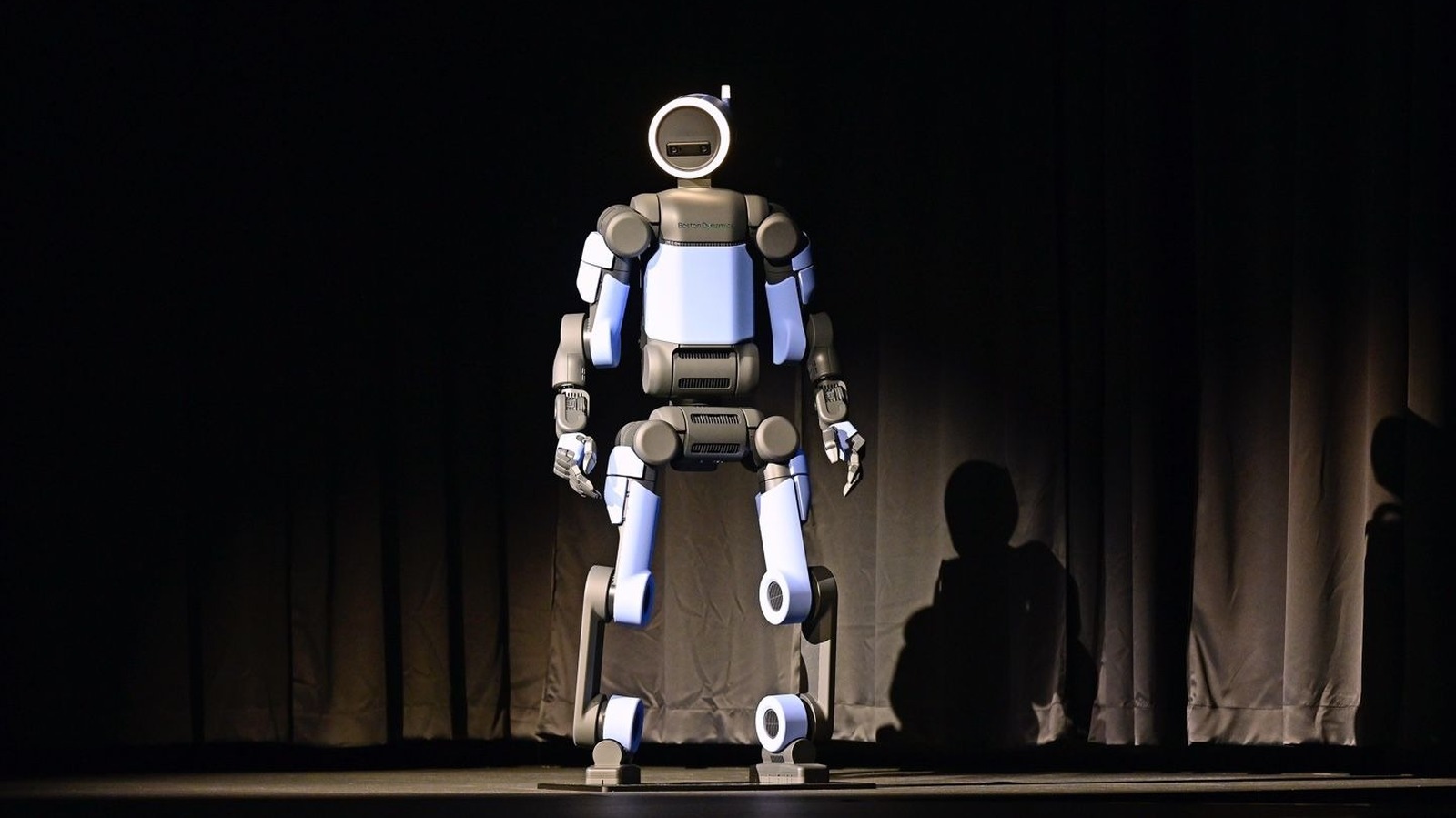
Hyundai subsidiary Boston Dynamics unveiled the new Atlas humanoid robot at CES 2026 in early January. The Atlas robot announcement was a focal point of Hyundai’s CES event. The carmaker also revealed that its Hyundai Motor Group Metaplant America in Savannah, Georgia, will employ a fleet of Atlas robots starting in 2028. The humanoid robot is already seen as a threat by Hyundai Motor’s union, which believes “employment shocks” will follow the introduction of humanoid robots into the workforce. According to Reuters, the union warned the automaker not to deploy Atlas to Hyundai factories without union approval. Korea JoongAng Daily reported that union leaders also criticized the initial investor excitement around the Atlas news.
It’s unclear how many Atlas robots would be used at the Georgia factory in 2028, but Boston Dynamics said last April that Hyundai would deploy tens of thousands of robots in its factories. In August, Hyundai announced it would invest $26 billion in the U.S. through 2028, including a robotics factory capable of manufacturing 30,000 robots per year. At CES, Hyundai mentioned that figure in connection with the Atlas humanoid robot announcement, but the carmaker said the robotics plant will be set up by 2028. The initial fleet of Atlas robots will be produced at Boston Dynamics’s Boston headquarters, with the 2026 capacity reserved for Hyundai’s Robotics Metaplant Application Center (RMAC) and Google DeepMind. The latter is a new strategic partner for Boston Dynamics and Hyundai, having developed its own Gemini AI models for robots.
Will Atlas replace human workers?
It’s unclear from Hyundai’s announcements so far whether the Atlas robots will replace humans. The company said that Atlas will only handle parts sequencing in 2028. By 2030, Hyundai intends to move Atlas to component assembly. The humanoid robots will also “take on tasks involving repetitive motions, heavy loads, and other complex operations.” Beyond that, Hyundai may scale the adoption of Atlas robots, depending on their initial performance.
The Hyundai union fears that robots would help Hyundai cut labor costs. believing that Atlas robots could work without interruption, requiring only maintenance costs. According to Korea JoongAng Daily, the union suggested a scenario where Hyundai would have to hire three people to match the 24-hour schedule of a humanoid. At an average salary of 100 million won ($68,000), Hyundai would have to spend 300 million won to cover three shifts. It’s unclear how much one Atlas will cost or what the maintenance and energy costs would amount to.
The Boston Dynamics humanoid robot made for Hyundai factories may have convinced investors, but it has limitations. The robot is tall (6.2 feet) and heavy (198 pounds). It can operate for about four hours, thanks to two battery packs installed in its torso. The Atlas can swap out its own batteries in about three minutes, with spent batteries recharging in about an hour and a half. Battery life drops to two hours for tasks involving continuous heavy lifting. Energy is not the only potential problem, as Atlas may need advanced AI to understand context and surroundings to safely replicate the complex workflows of humans on production lines.