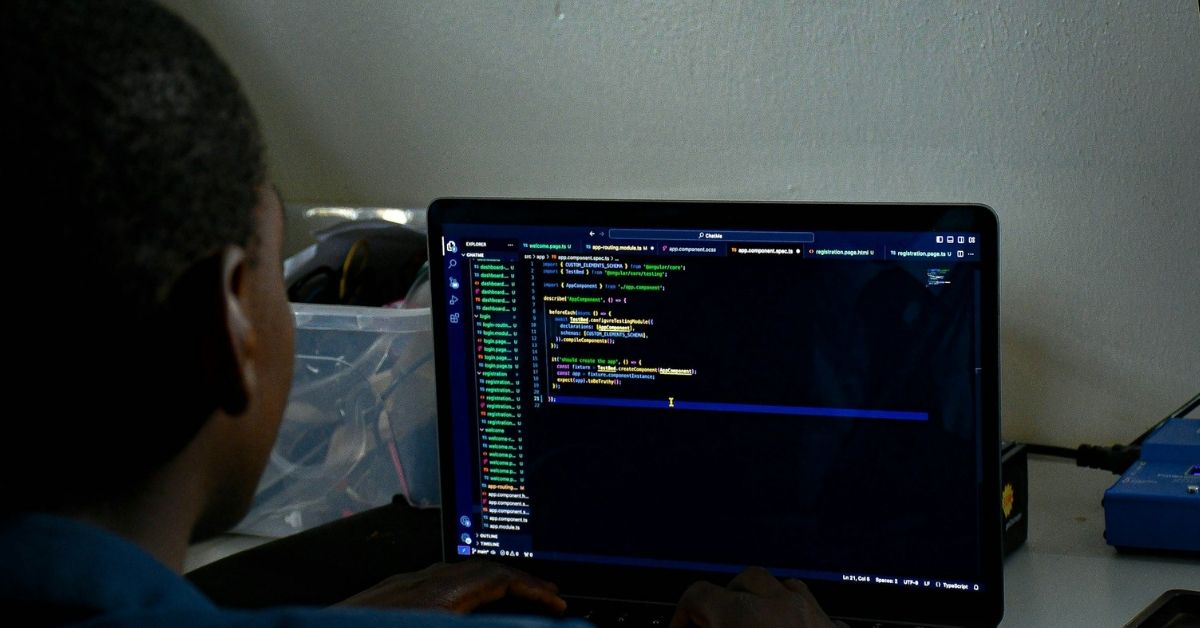
It was an overcast January morning in 2025 the day I decided to delete my operating system.
The Ubuntu installer warned me that it would remove everything on my hard drive, permanently wiping the entire Windows 10 installation I’d been running for years at that point. I hesitated for a second — maybe I should just dual-boot? No, I’m going all in! Finally, I hit the button to install Linux. One year later, I still don’t regret that choice. I even resurrected an old Windows 10 laptop by installing Linux on it.
My decision to try out Linux was driven by a growing dislike for modern Windows more than anything else. However, I’ve come to appreciate Linux as more than just an escape from Windows. Linux hasn’t been as intimidating as it’s often made out to be, and I’ve found a lot to love about it, despite (and sometimes because of) its challenges.
The hard-earned lessons of Linux
My first night on Linux was rough. Getting all my apps installed and set up was exhausting, especially because I had no experience using the command line. For those who haven’t stared into the dark void of a Linux terminal before, it’s where most system management happens — installing apps, running updates, and the like. It’s an unavoidable part of the Linux experience, even with more App Store-like platforms popping up, like the Snap Store and Flathub.
After so long on Windows, it was also a shock to my system trying to learn how to navigate Ubuntu (although I luckily didn’t have any mouse issues like my colleague and fellow Linux user Nathan Edwards). I couldn’t figure out how to get a second SSD connected properly that first night, and ended up just rage quitting and going to bed, thinking I’d probably have to reinstall Windows the next day.
But in the morning, I logged back into Ubuntu and realized what was wrong with my SSD. I hadn’t created an entry for the drive in my file systems table, or “fstab,” which is where you configure how disks and storage devices are mounted to your PC’s file system. After fixing it, I started to think maybe this whole Linux thing isn’t so bad after all.
Linux isn’t especially complicated on a daily basis, but you have to be willing to solve your own problems
It’s mostly been smooth sailing ever since. I’ve rarely run into issues on Linux, and when I have, they’ve never been apocalyptic. They’re always little things that are annoying, but fixable with some research and trial and error, like a Flatpak app not working because I need to change its permissions, or an AppImage refusing to run because I’m missing a library.
If anything, that first night on Linux prepared me for one of the biggest takeaways from this year: Linux isn’t especially complicated on a daily basis, but you have to be willing to solve your own problems when they come up.
I’ve spent dozens of hours combing through Reddit threads, analyzing old Stack Overflow solutions, and, in times of true desperation, asking AI chatbots like Mistral’s Le Chat and Anthropic’s Claude for help deciphering error messages. Luckily, the Linux community is also very supportive. If you’re willing to ask for help, or at least do a little troubleshooting, you’ll be able to work out any problems that come your way.
Linux has also helped me become more confident in my own troubleshooting skills. The issue that crushed me that first night on Ubuntu would be a quick and easy fix for me now. Learning how to make changes to my “fstab” file even once helped me get my PC out of emergency mode after a rare crash. On Windows, I might have just been stuck with a BSOD.
Everything I want and nothing I don’t
I stayed on Ubuntu for the first few months after leaving Windows, but eventually switched to Fedora, and it’s been my daily driver ever since. I use it for work, gaming, photo editing, recording and editing videos, and a little bit of coding for Arduino projects. I’ve also hopped between a few different desktop environments, including Hyprland (with ML4W Dotfiles), Cinnamon, and currently KDE Plasma.
1/4Image: Stevie Bonifield / The Verge
Every morning, I’m greeted by the calming, Nordic blue desktop I have set up in KDE, cobbled together from a mix of themes and icon packs. It’s one of my favorite desktop setups so far, but if I ever want to completely change how my homescreen looks, I can. I’ve spent whole afternoons just playing around with UI themes, pivoting from a retro Windows XP theme to a macOS-inspired look to neon-infused themes like something from Tron. Linux doesn’t care if my desktop theme is ugly, glassy, or outdated.
Customizing every visual element of my desktop has become one of my favorite parts of using Linux. It doesn’t offer any performance boost or practical benefit; it’s just fun. I’ve also customized my terminal to make it look cleaner and more colorful using Kitty, Z Shell (“Zsh”), Oh My Zsh, and Powerlevel10k. I’m not alone in this — there’s a whole subreddit (with an unfortunate name) where users share screenshots of their most impressive Linux homescreen customizations.
Image: Stevie Bonifield / The Verge
I’ve also appreciated having complete control over what is and isn’t on my PC. Until recently, Windows wouldn’t even let you uninstall Copilot. In contrast, Linux won’t stop you if you try to use a command that deletes every file on your PC (“sudo rm -rf /”).
I haven’t had to give up much for that level of control, either. There are some apps that aren’t natively supported on Linux, like Adobe apps, but I’ve been able to completely replace those with free, open-source alternatives, like LibreOffice instead of Microsoft Office and RawTherapee instead of Adobe Lightroom. In a pinch, some Windows apps will also work through tools like Wine, which I used to run iTunes when I was trying to revive an old iPod.
Gaming has been largely effortless as well. Everything in my Steam library runs great with Valve’s Proton compatibility layer, and I have yet to encounter issues with any of my numerous mice, keyboards, controllers, headsets, and mics. Occasionally, I have to tweak my Proton or launch settings for certain games, but that’s about it. I even got World of Warcraft running by adding the launcher to my library as a non-Steam game, allowing it to run through Proton (which is great, except now I don’t have an easy excuse to cancel my WoW subscription).
Is this the year of Linux for you?
I’ll admit, I didn’t really know what I was getting into when I switched to Linux. The learning curve was worth it, though. Linux has been great for my needs and a deep breath of fresh air compared to Windows. I can customize literally everything, control what’s installed on my PC, and run all the games I like with smooth and stable performance.
I love Linux. But I can’t recommend it for everyone. There are sacrifices if you switch, including some understandable deal-breakers. For instance, the majority of competitive multiplayer games requiring anti-cheat can’t run on Linux. I don’t play these types of games, so that didn’t matter to me, but I can see why it would matter to fans of Fortnite or Valorant. Likewise, if the idea of typing in a command to install apps is headache-inducing, Linux probably isn’t for you.
But if you want a little more freedom and a little less Copilot, if you want to test your troubleshooting skills, if you’re not afraid to try something new, or if you have some old hardware that can’t run Windows 11, maybe 2026 is the year of Linux.
Since joining The Verge in October, I’ve started using a MacBook for work and recently retired my 9-year-old personal laptop I revived with Linux (in favor of another MacBook), but I still use my Linux-powered gaming PC for everything else. MacOS is nice, but Linux is still drastically better for gaming. Up until recently, I was operating completely on Linux. While that isn’t the case anymore, I don’t plan on leaving Linux or returning to Windows anytime soon.