Brady Snyder / Android Authority
It’s no secret that the North American smartphone market is far smaller than the rest of the world. I have a drawer full of Android phones I’ve purchased or reviewed over the years, but they’re all made by the same handful of companies.
Apple and Samsung dominate the US smartphone industry, with Google and Motorola being the only other brands with significant market share. To be even remotely competitive with these giant players, small phone brands need to think outside the box. That means giving users something the big conglomerates can’t. It could be a niche feature, novelty design, or clever value proposition.
Right now, the intriguing options in the US come from Nothing and Fairphone. Nothing handsets are fun, but after using the latest Fairphone 6, it’s apparent that Fairphone’s approach is what the US smartphone market really needs.
What feature would make you most likely to switch to a smaller phone brand?
88 votes
Why Nothing phones fail to pull me away

Brady Snyder / Android Authority
Aside from the transparent design, there’s not much tying the Nothing lineup together. Some Nothing phones, including the Phone 3a and Phone 3a Pro, make value and affordability their primary selling points. Others, such as the Nothing Phone 3, are priced like flagship phones without flagship-caliber hardware. That makes quirkiness and vibes the selling point for models like the Phone 3 — you’re buying one because you think the design is cool, or because of the Glyph Matrix, not because of features or an enticing value proposition.
There’s a big jump from the value-focused Phone 3a and Phone 3a Pro to the flashy and overpriced Phone 3. The one thing tying the lineup together is the phones’ design. The problem is that the transparent look is simply a facade.

Brady Snyder / Android Authority
It’s a carefully-curated window that doesn’t reveal the true internal components of a smartphone. Compared to Nothing phones and their Glyph Interface lights or Glyph Matrix display, other brands nail the novelty feature segment better.
I’ve considered importing the Asus ROG Phone 9 Pro because, in addition to the striking chassis and mini-LED display on the back, it offers real functionality with dual USB-C ports and a headphone jack. The new Redmagic 11 Pro’s liquid cooling loop is both awesome to look at and helps keep the Qualcomm Snapdragon 8 Elite Gen 5 cool. I recently bought a TCL NXTPAPER phone for its paper-like display modes. All this is to say that I love a good novelty smartphone feature, but it has to be both cool and functional to earn my money.
That’s where the Fairphone 6 excels. I tested the version sold by Murena, which is officially available in the US. It takes the Fairphone 6’s repairable, ethical hardware and adds Murena’s e/OS system for enhanced privacy and a de-Googled Android experience.
Using it made me realize it has the same drawbacks as Nothing phones, while offering features I find more beneficial. It’s similarly overpriced and underpowered, but it also lets you replace 12 components with a single screwdriver while prioritizing your privacy. To me, that’s a lot more impressive than a few fancy lights or a tiny dot matrix display.
Fairphones are all about substance, not style

Brady Snyder / Android Authority
Nothing phones constantly leave me wanting more. When I look at my Nothing Phone 3a or Phone 3a Pro review units, I can see the screws holding the smartphone together, but there’s a sheet of Panda Glass between them and me. How nice would it be if Nothing’s transparent, industrial design was more than just a gimmick, and if you could use it to repair your devices?
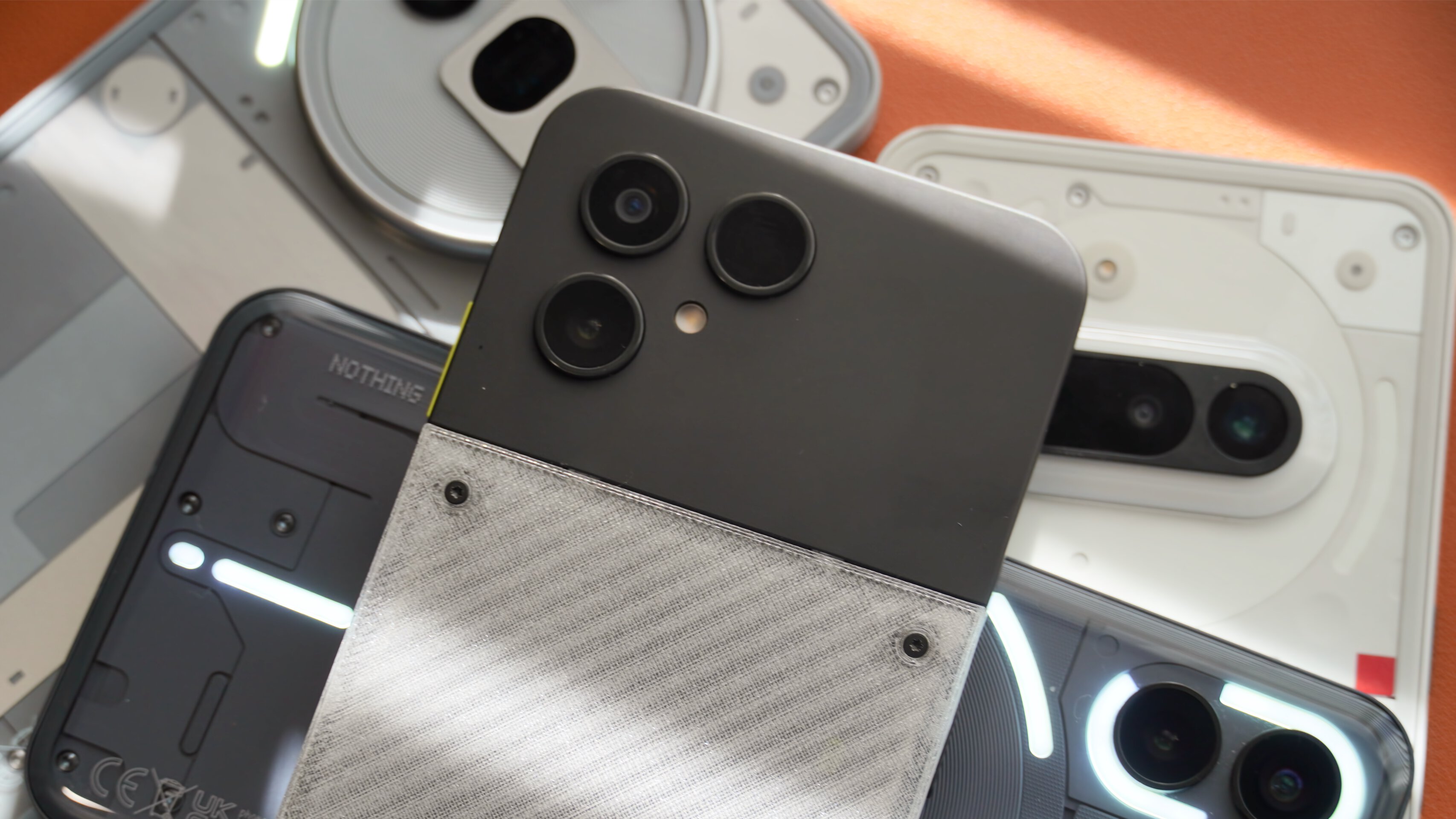
The Fairphone 6 is a preview of what that would look like. It’s not quite the looker that Nothing phones are, but the design appeals to the practical tech enthusiasts. The bright yellow slider, the subtle indentation on the back of the phone, the recycled composite chassis material, and the two exposed screws are clever yet functional. Those two screws attach a modular back cover to the Fairphone 6, and when you remove it, the fun begins.

Brady Snyder / Android Authority
The back cover is completely modular, and you can swap it with first-party accessories like a finger loop cover or a card wallet cover. There’s even a lanyard that screws directly through the back cover into the chassis for stability. The third-party and custom accessories are even more exciting, and you can make them at home if you have a 3D printer; people have already made a LEGO-compatible backplate, and I printed a translucent replacement cover in under an hour.
Nothing briefly tried this concept with the CMF Phone 1, which supported modular backplates, but it lasted just one generation before being removed on the CMF Phone 2 Pro. I can’t imagine why, because I haven’t had as much fun with a phone in a while as I’ve had creating custom modular accessories for the Fairphone 6.

Brady Snyder / Android Authority
Of course, the real benefit of the Fairphone 6’s modularity is repairability. You can replace the battery, display, cameras, USB-C port, and more with a single included Torx T5 screwdriver. A replacement battery costs roughly $47 and can be swapped in minutes while only needing to remove seven total screws. The Fairphone 6’s $840 retail price becomes more appealing when you consider its repairability and multi-year warranty.
It can essentially last as long as you want it to. With a microSD card slot supporting up to 2TB of expandable storage, you won’t run out of space. The biggest concern here is the Qualcomm Snapdragon 7s Gen 3, which is unimpressive and a bit sluggish at times, although usable. The way I see it, Nothing phones ship with similarly under-spec processors for the price, but without the repairability benefits of the Fairphone 6.
The Fairphone 6 is what the US smartphone market needs

Brady Snyder / Android Authority
Think about who Nothing and Fairphone are designing their phones for. It’s the same answer for both brands — tech enthusiasts who want to break from the common phone brands and get a unique device that offers value, unique features, and custom software. All too often, Nothing phones fail to meet the real needs of enthusiasts and professionals while also failing to appeal to the average consumer.
I like what Nothing stands for, and agree that we need more smartphone choices, especially in the US. However, it’s a tough sell to ask buyers to pay a premium for gimmicky features and underpowered hardware simply because Nothing phones look cool. The Murena Fairphone 6 is just as expensive as the Nothing Phone 3 in the US, but the value proposition makes much more sense. Fairphone 6 users can keep their phone running for years with a cheap battery upgrade when Nothing Phone 3 owners are getting ready to buy an entirely new device.
Between Nothing and Fairphone, it’s clear to me which is doing things right.
I’ve spent money on phones from Apple, Samsung, Google, Motorola, and TCL over the years, but I can’t see myself ever buying a Nothing phone as they currently stand. The Fairphone 6, however, makes a strong argument for being worth your money.
More smartphones in the US is a good thing, and I hope Nothing sticks around as another option. But between it and Fairphone, it’s clear to me which is doing things right.
Don’t want to miss the best from Android Authority?


Thank you for being part of our community. Read our Comment Policy before posting.