The Rise of Vibe-Coding
For decades, software engineering felt like an exclusive club. It was a careful, hands-on process in which every line of code was costly, and every change carried significant risk. We followed a ‘measure twice, cut once’ mindset because rework was expensive. Now, that old way is being dismantled. A new approach is taking shape: Vibe-Coding. This isn’t just a better tool, it’s a whole new way of building software. Instead of writing code line by line, developers guide the system using natural language. They focus on results, not the details behind the scenes. We’re heading toward a world where you shape software by reacting to what you see, not by planning everything in advance.
For example, imagine a team needs to update its e-commerce checkout process. Traditionally, this would involve writing specs, updating backend and frontend code, and running rounds of reviews and manual testing. With Vibe-Coding, a developer simply tells the AI, “Make the checkout flow more intuitive and minimize wait times.” Within minutes, the system generates a new version, which the developer can interact with and adjust by providing direct feedback, such as “Move the address field higher” or “Make payment responses feel faster.” The process is more like tuning a live performance than following a step-by-step construction plan. Experienced engineers no longer have to fight boilerplate or anticipate every edge case upfront; they continually guide the outcome as they see and feel it in real time.
The Economic Singularity: When Implementation Becomes Free
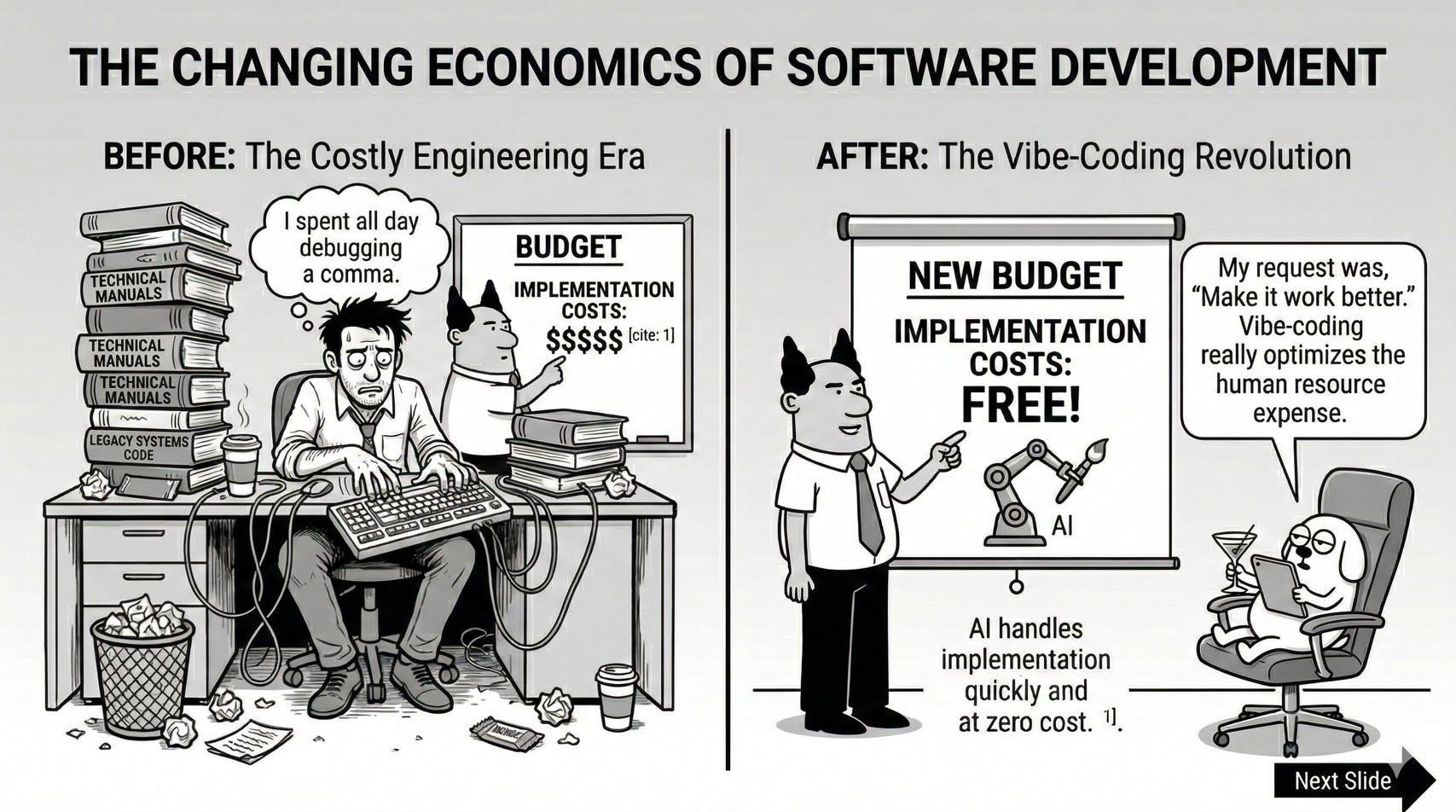
Old software development methods were designed to reduce the cost of expensive human effort. When coding took a lot of time and money, teams spent months planning to minimize future changes. Vibe-coding changes this by making production almost free.
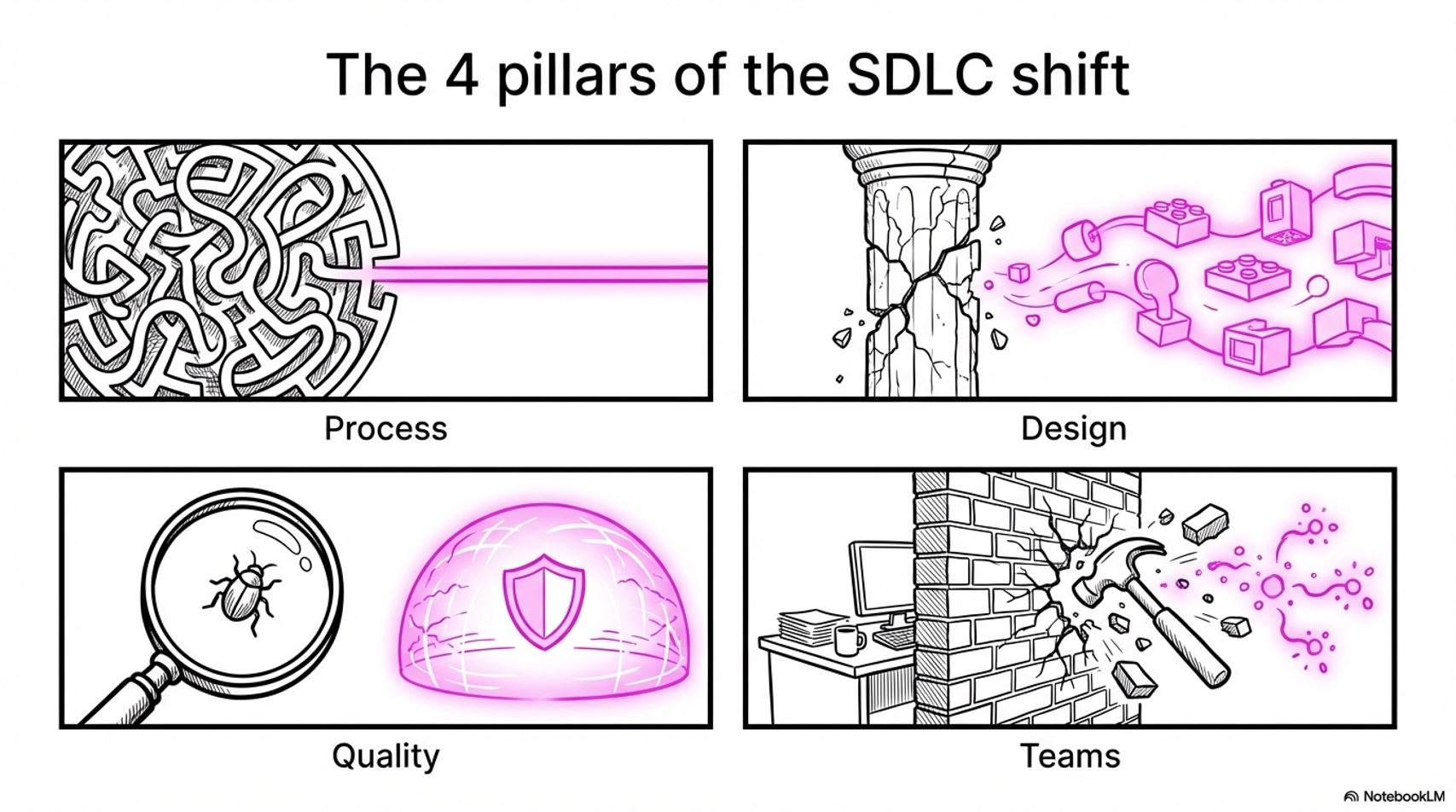
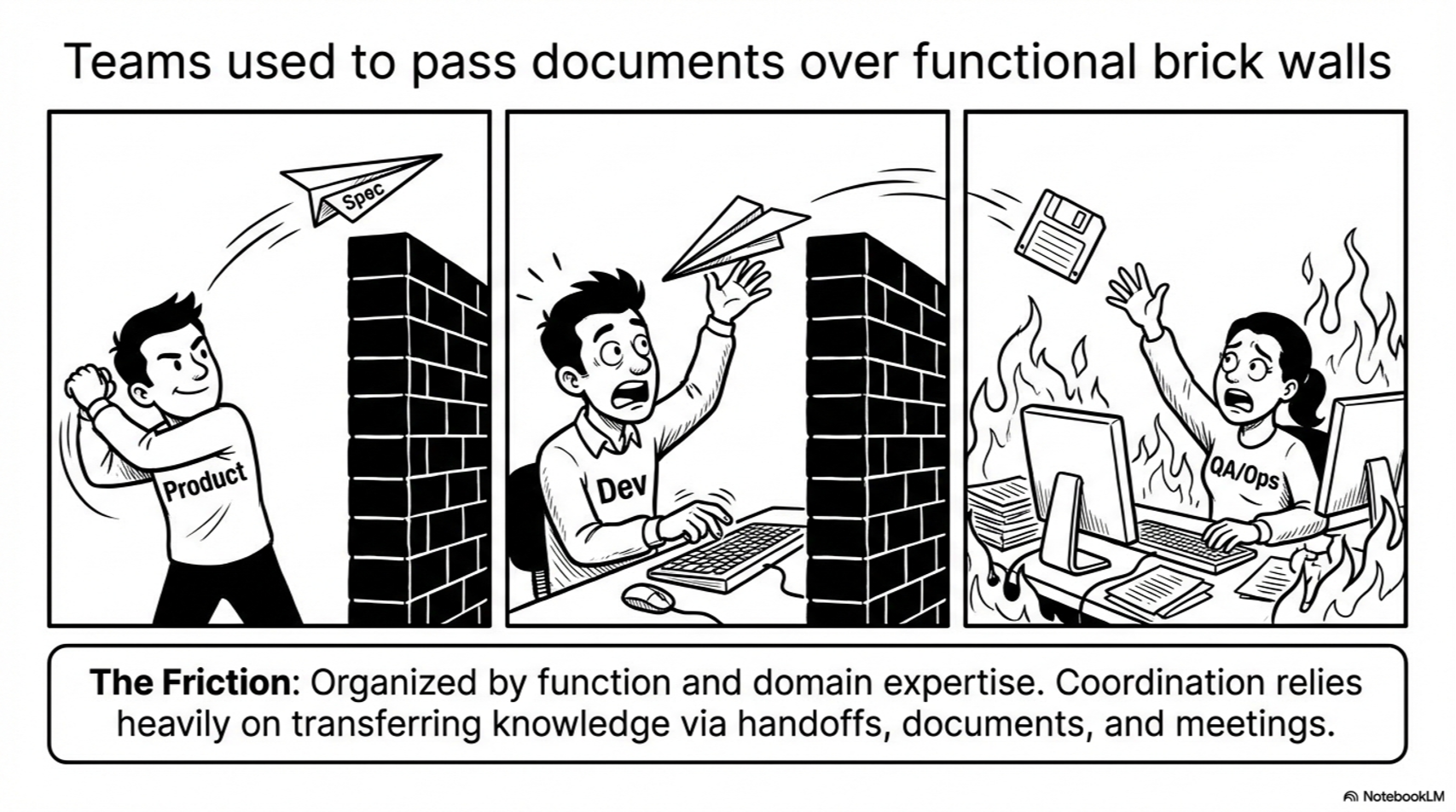
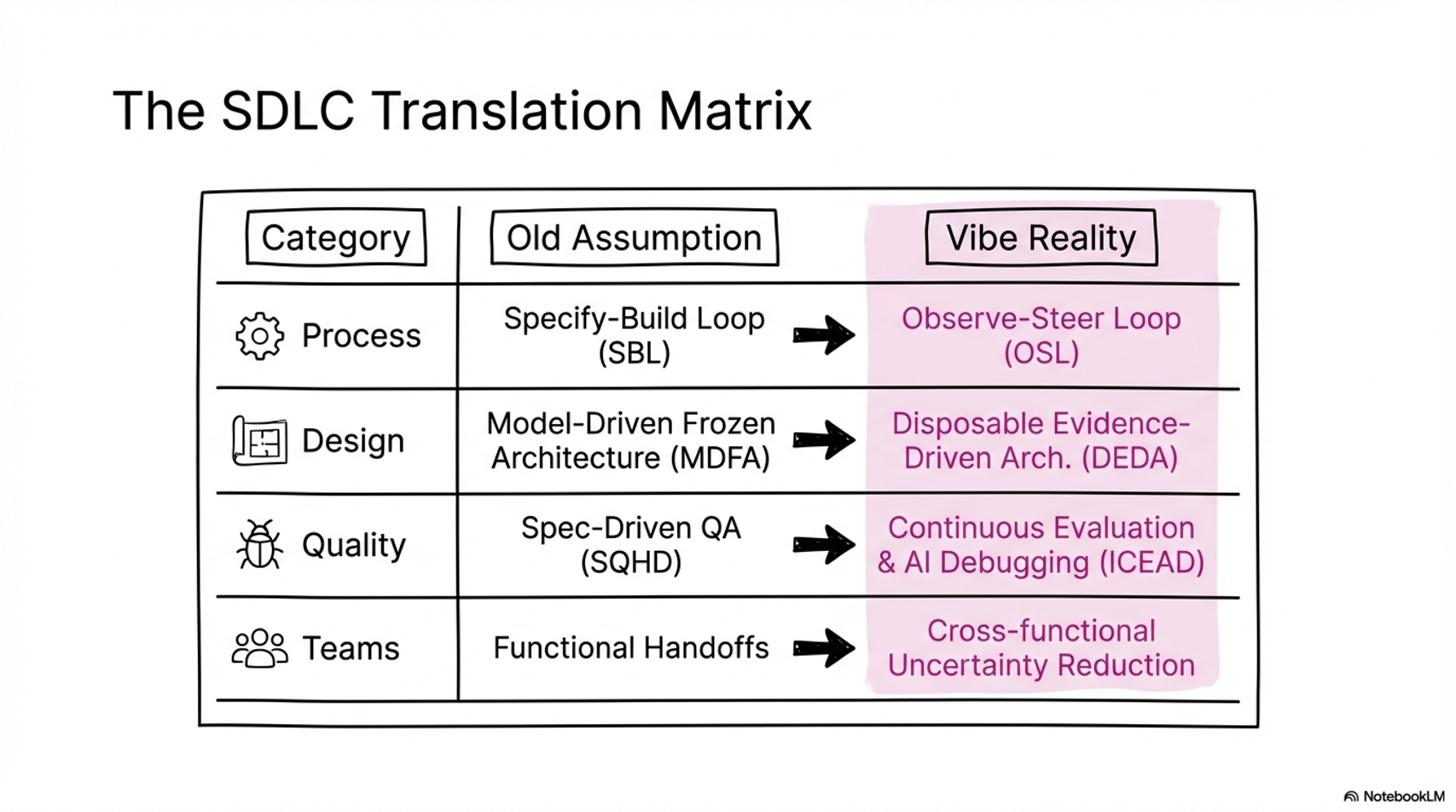
n Now, code- the thing we once treated as a craft becomes less important. With Vibe-Coding, making or changing code, config files, tests, or documents costs almost nothing because AI can handle these tasks instantly. When making changes is free, the old habit of fearing expensive rework holds us back. If you canrewrite a whole feature in seconds, there’s no reason to worry about redoing the work. Code isn’t something to protect anymore; it’s just a temporary result of your goals. This change means our old ways of planning, designing, and testing don’t just seem outdated; they actually get in the way. The changing reality forces us to reexamine our core assumptions about what constitutes “good” and “bad” practice across the software development lifecycle (SDLC), particularly in processes, software design, quality assurance, and team composition.
From Imagination to Observation: The Rise of the Steer Loop
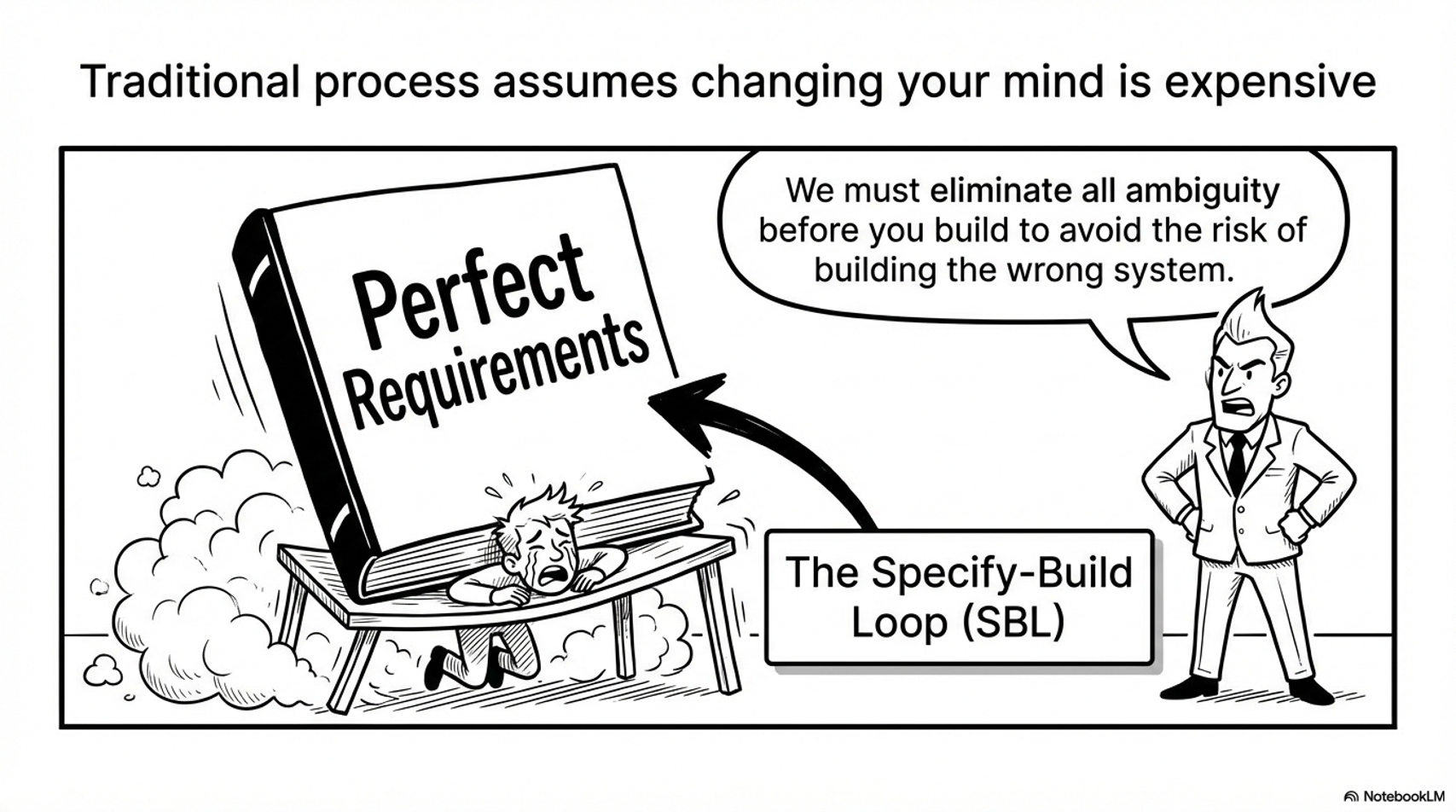
Traditional development uses the Specify–Build Loop (SBL). This means people have to imagine and define requirements before anything runs, keeping a complicated mental picture of the system. Often, this approach falls apart when tested in real life.
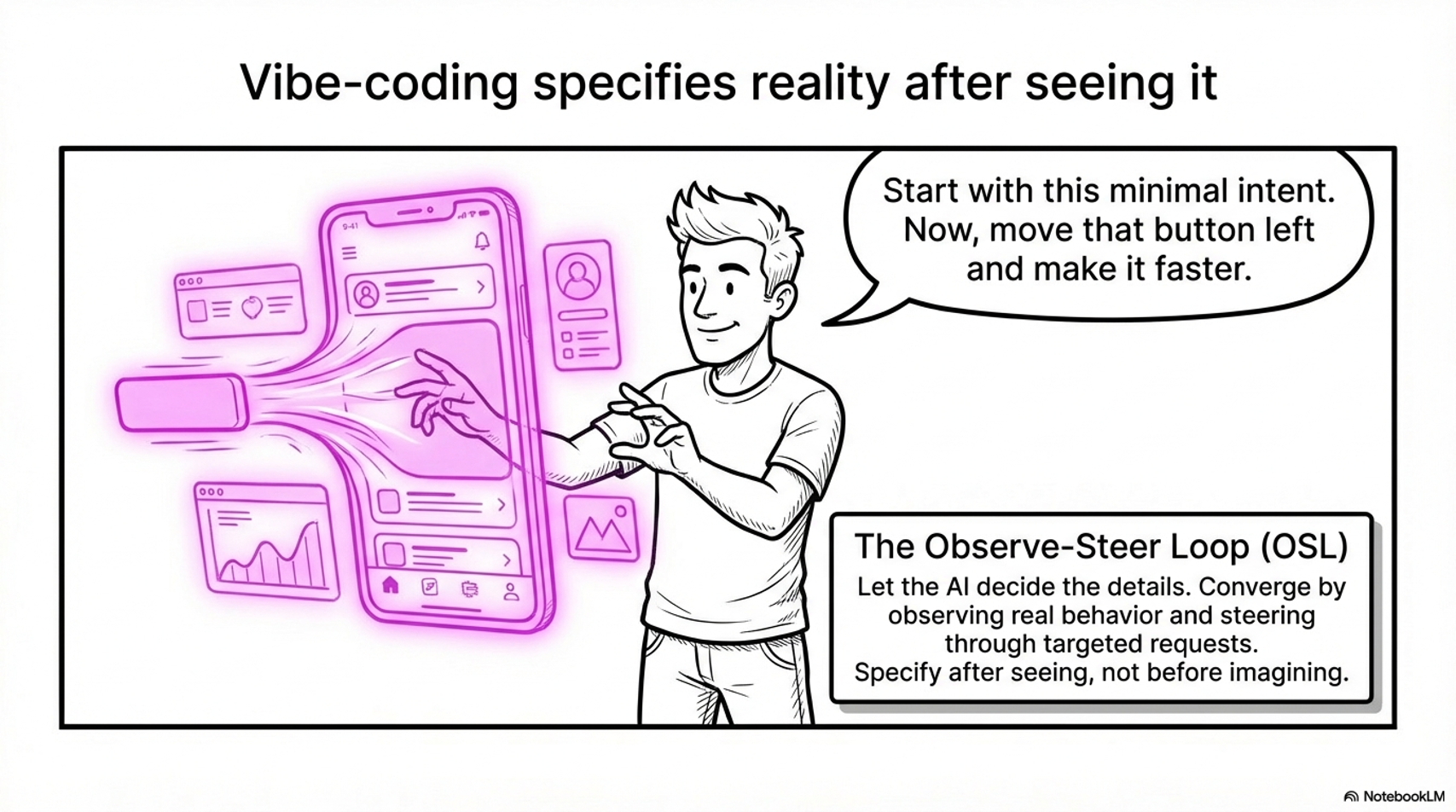
Vibe-coding uses the Observe–Steer Loop (OSL) instead. Developers provide just enough direction, and the AI quickly creates an initial version. Then, by observing how the system works, developers guide changes with simple natural-language requests. It’s much easier to look at a live app and say, “The checkout flow feels sluggish; make it more proactive,” than to write a long technical document. We’ve replaced the stress of starting from scratch with the clarity of observation-based feedback.
The Death of the Blueprint: Why Architecture is Now a Disposable Byproduct
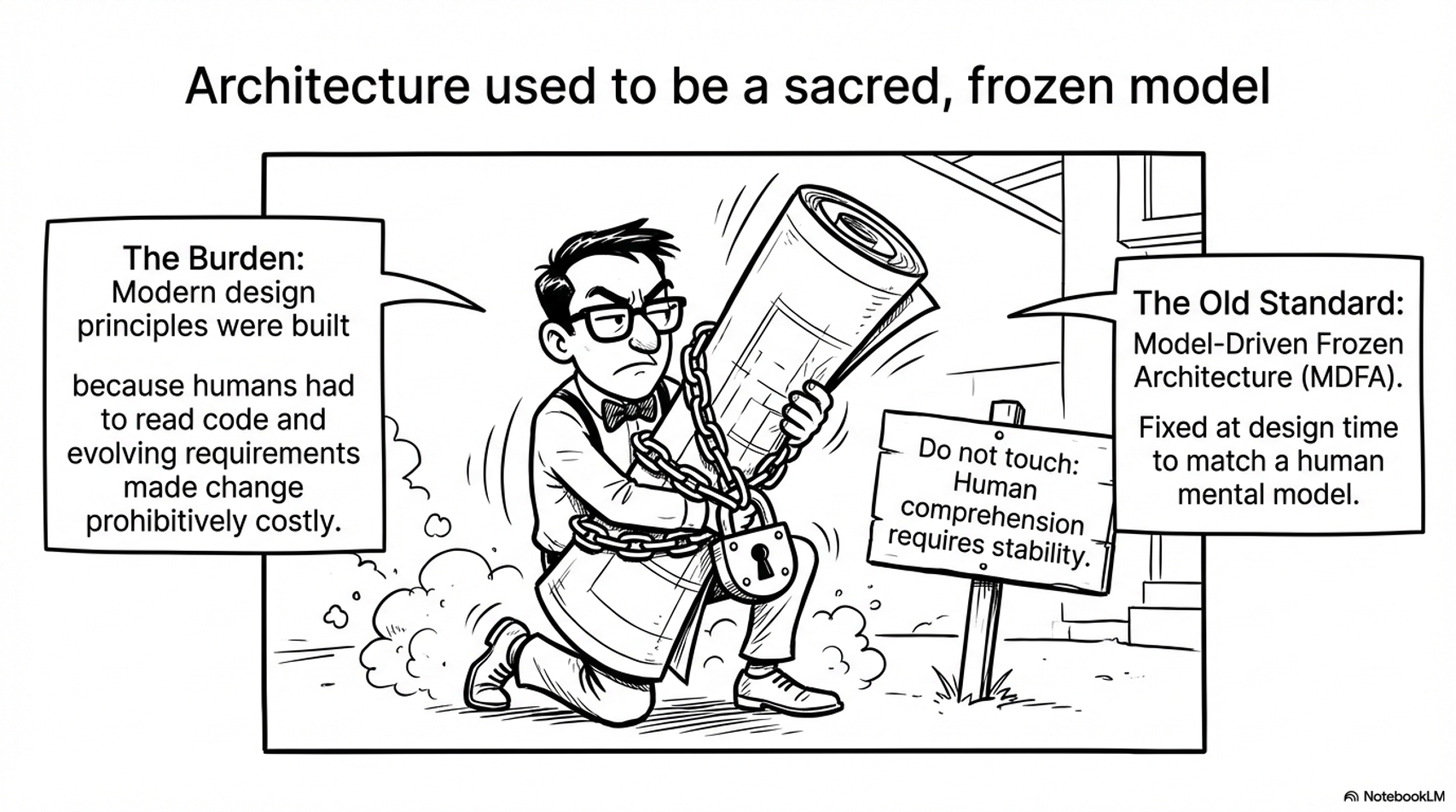
One of the biggest changes is letting go of “Clean Code” and permanent architecture. For years, we built systems for people to read and maintain over time, since changing the basics was expensive.
Press enter or click to view the image in full size
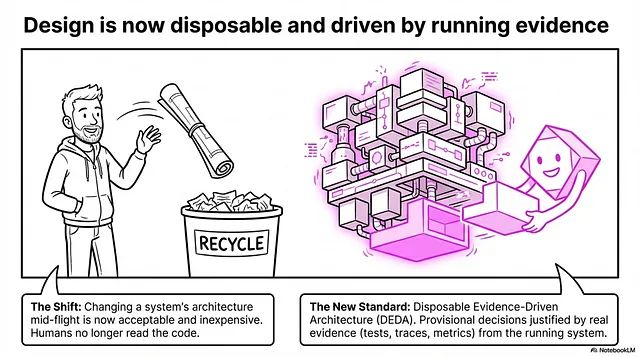
With Vibe-coding, people aren’t the main readers or editors of code anymore. This leads to Disposable Evidence-Driven Architecture (DEDA). Since AI can change a system’s core while it’s running, architecture decisions are temporary. We don’t need structures that fit a developer’s way of thinking. Instead, architecture is based on evidence like tests, traces, and metrics. If data shows a new setup works better, the AI replaces the old one. The blueprint isn’t sacred — it’s just a temporary plan, shaped by what works best right now.
Post-Bug Engineering: Shifting from Debugging to Uncertainty Management
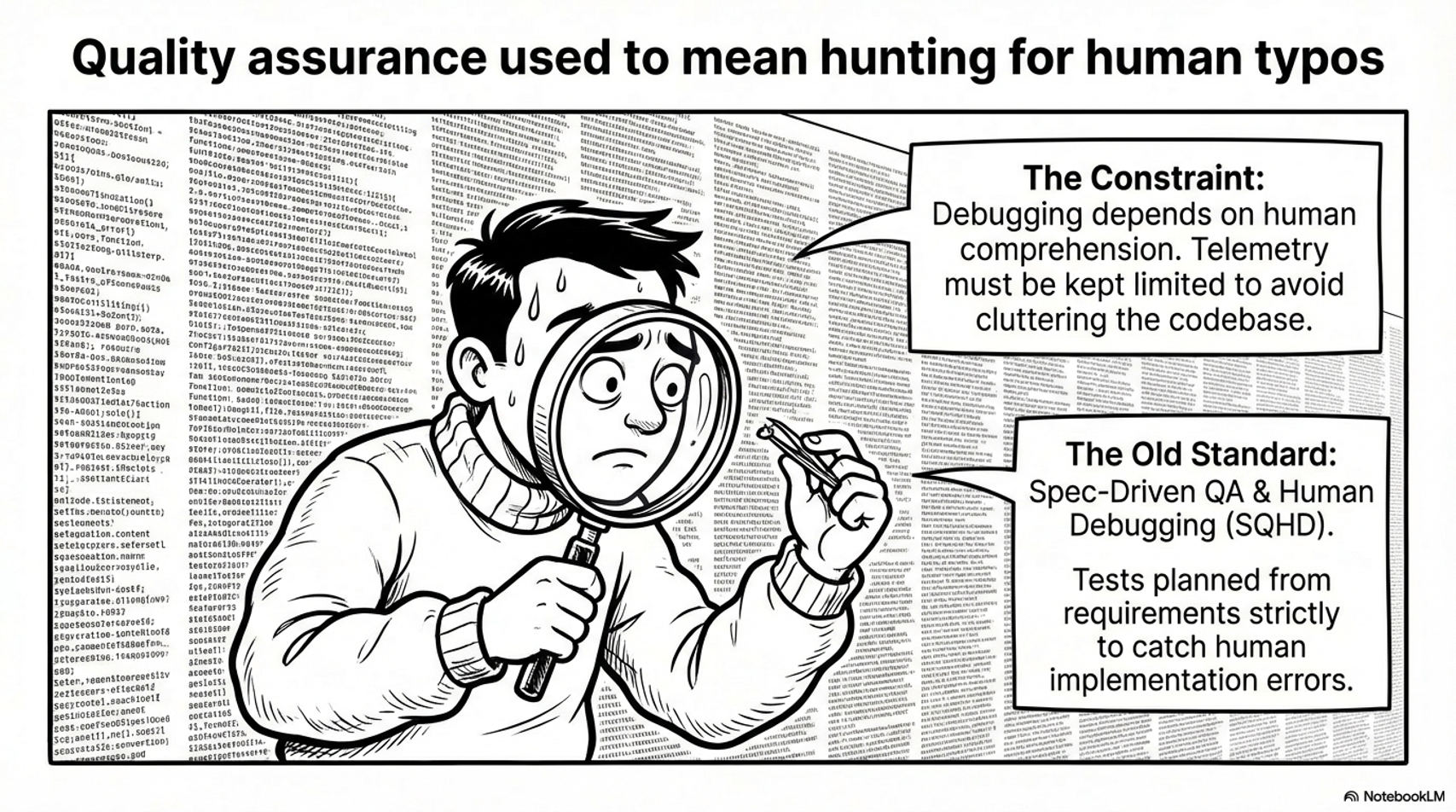
In the past, Quality Assurance meant writing tests to catch human mistakes and keeping monitoring simple so things stayed easy to read. But when AI can rebuild code in seconds, fixing bugs isn’t the main problem anymore. The real challenge is managing uncertainty in how the system behaves. This means moving to Intent-Inferred Continuous Evaluation & AI Debugging (ICEAD). In Vibe-coded systems, quality isn’t about passing fixed tests; it’s about strong monitoring and being able to replay what happened. If you can’t or don’t want to read the code, you need to replay the system to see where things went off track. The AI figures out your intent, creates large, risk-focused test suites, and uses lots of data to decide what to change. Debugging is now about improving the evidence, not just finding typos.
Consider a practical example: An online payment system built with Vibe-Coding suddenly starts showing a higher-than-normal rate of failed transactions. Instead of digging through logs or reading through thousands of lines of generated code, the team uses ICEAD. The system automatically detects the spike, replays several transaction scenarios, and highlights a pattern: most failures occur when a particular payment provider is selected. The AI surfaces this finding, proposes a modification, and rolls out a test version in minutes. Team members verify the change by replaying real user flows and checking the evidence the AI presents. Debugging has shifted from manual code tracing to orchestrating what evidence needs to be collected and how the system should react when something falls outside expected behaviors.
The New Engineering Guard: Managing Impact, Not Artifacts
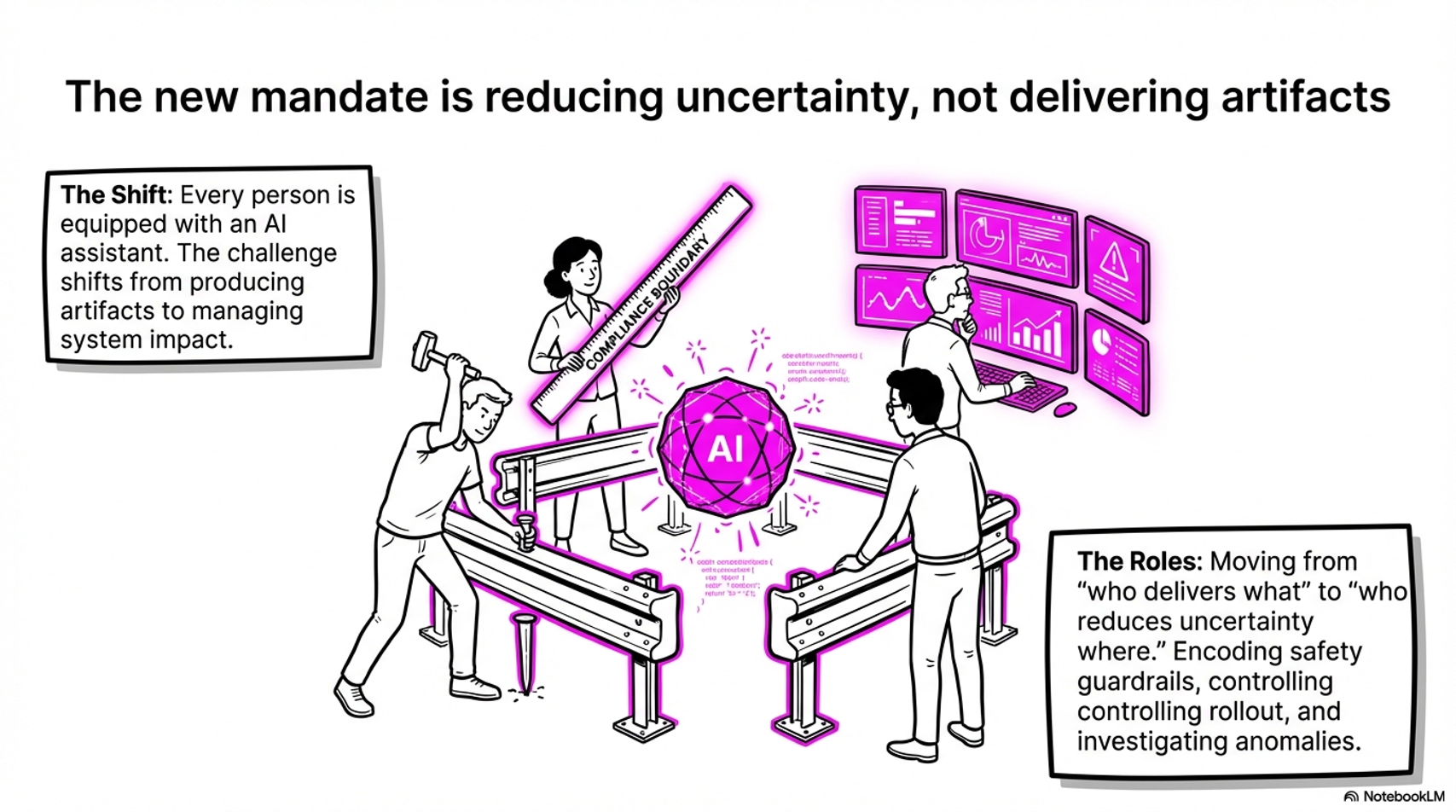
If technical skills are now something you can get from an AI prompt, what does a developer actually do? The job is shifting from delivering code to reducing system uncertainty. Picture a Vibe-coder on a regular afternoon.
They’re not fighting with a compiler or arguing over names. Instead, they design tests, identify where things might go wrong, and ensure the outcome is correct. Their main jobs now include:
-
Defining Invariants: Articulating the “north star” rules the AI must never violate.
-
Building Evaluation Frameworks: Creating the “evidence” that justifies a DEDA shift.
-
Encoding Safety Guardrails: Defining the blast radius and compliance boundaries within which the AI is free to innovate.
-
Investigating Anomalies: Using high-fidelity replays to understand unexpected behaviors and feeding those insights back into the “steer” part of the loop.
The Future of Intentional Software
The time of building everything by hand is coming to an end. Now, engineers guide the process with clear intent instead of just typing code. Software is becoming a flexible, temporary result of our goals, always changing and improving as AI learns what we want, even when our direction changes often.
As code becomes just a temporary tool, we have to ask ourselves: If the technical ‘how’ is free, do you really know what you want to build? The future will favor those who can master this new way of working. In the Vibe-Coding world, it’s not about guessing solutions ahead of time, but about “specifying after seeing, not before imagining.”