This week, I spent most of my time speaking to carbon credits experts at the Africa Tech Summit in Nairobi because over the last fortnight, it became clear that there is a specific kind of financial tragedy that occurs when a company’s primary asset is not a thing but a permission.
One investor, who did not want me to quote him directly, made a very interesting point, that most businesses sell widgets or software. If you sell widgets and the government hates you, it might tax your widgets or regulate the materials used to make them, but you still have a warehouse full of widgets. But if your entire business model is “I will give away stoves for a small fee today in exchange for a promise that the government will let me sell the absence of smoke tomorrow,” you aren’t really in the stove business but a “sovereign permission” business.
And in the sovereign permission business, the government is not your regulator but a counterparty. When it stops playing, you lose more than your business.
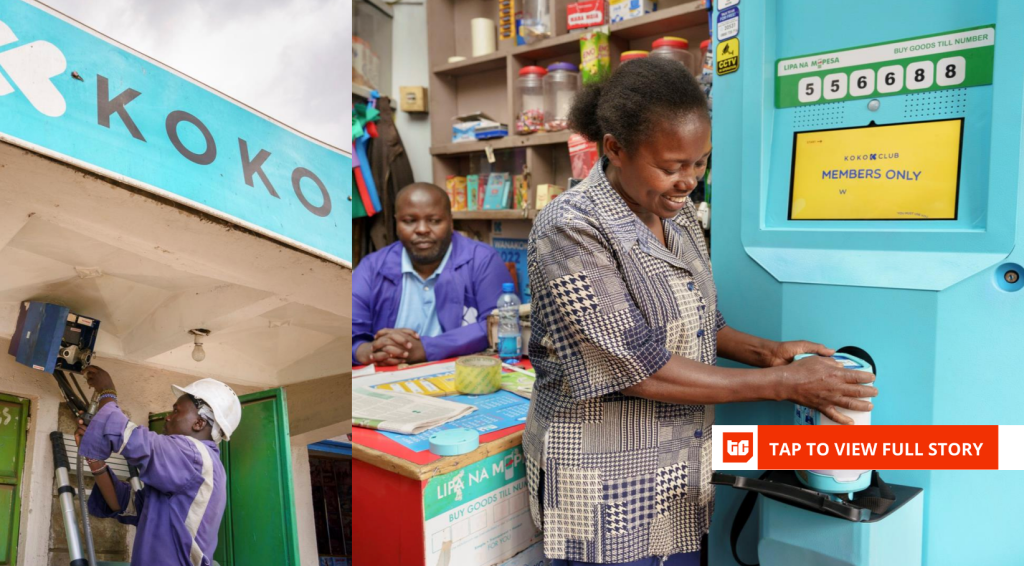
Last week, Koko Networks, the World Bank-backed clean cooking startup, filed for administration. It had 1.5 million customers, 700 employees, and $300 million in sunk capital. It also had a gaping hole where its revenue used to be because the Kenyan government declined to issue the Letters of Authorisation (LoA) Koko needed to sell its carbon credits into the high-priced compliance markets.
Kenya’s Trade Cabinet Secretary, Lee Kinyanjui, offered a defense that sounds, at first blush, but a monopoly defense nonetheless. Kinyanjui claimed that if Kenya gave Koko the credits it wanted, Koko would mop up the country’s entire national carbon quota, leaving nothing for other players.
It is a fascinating argument, with another investor saying that it is almost certainly a legal fiction designed to mask a much simpler reality, that Kenya realized it had sold its atmosphere too cheaply and wanted a do-over.
Scarcity
To understand why this is a monopoly argument, you have to understand Article 6 of the Paris Agreement.
Under Article 6, carbon credits are Internationally Transferred Mitigation Outcomes (ITMOs). When a company in Kenya sells an ITMO to a company in another country, that company uses it to meet its home country’s climate goals. But, and this is the catch, Kenya must then subtract that reduction from its own national ledger. It’s called a corresponding adjustment.
This makes carbon a sovereign resource, so, if Kenya has a goal to reduce emissions by 100 tons, and it lets Koko sell 90 tons of reductions to Europe, Kenya now has to find 90 more tons of reductions somewhere else to meet its own target.
The government’s argument is that Koko was trying to corner the market on Kenya’s ability to export its climate progress.
“If we took up all the carbon credits that Kenya would get and gave only one company, what would we tell the 10 or 20 other companies that are also eligible for the same, including those in agriculture and manufacturing that would also want to claim?” Kinyanjui asked.
This is a clever bit of framing that treats the national carbon quota like physical grazing land and casts Koko as the greedy rancher trying to fence it all off. If you believe the atmosphere is a finite pool of exportable credits, then Koko was indeed a monopolist.
Next Wave ends after this ad.
Monopoly that isn’t there
But does the monopoly point actually stand up to scrutiny? Not really, because in a functional market, you don’t prevent a monopoly by refusing to let the most efficient producer produce. You prevent it by having a price.
If Koko was mopping up the quota, it was because Koko was actually doing the work. They had 1.5 million households switching from charcoal to bioethanol. Those aren’t theoretical emissions but actual tons of carbon not entering the atmosphere. If a farmer or a manufacturer wanted a piece of the quota, the solution wasn’t to kill Koko but to find a way to reduce emissions more cheaply or effectively than Koko did.
The monopoly argument falls apart for three reasons:
1. Carbon credits aren’t a buried mineral you dig up. You create them by doing green things. If Koko creates more credits, Kenya’s total pool of potential credits doesn’t necessarily shrink. The country just becomes greener. The limit the government refers to is its Nationally Determined Contribution (NDC), a goal it set for itself. If they overachieved that goal, they could sell the surplus.
2. The government didn’t actually help those other firms by blocking Koko to make room for them. It just signaled to every climate investor on earth that their rights to their own carbon reductions are subject to the whims of a cabinet secretary’s feelings about fairness.
3. Behind the scenes, the government also questioned Koko’s math, pointing to reports that the avoided deforestation was exaggerated. This is the D-rating defense from agencies like BeZero. If the credits were fake, the government should have denied them on integrity grounds, not monopoly grounds. Calling it a monopoly is what you do when you want to avoid a technical debate about sugarcane ethanol versus charcoal.
Sovereign risk is not a bug
The real story here is about political risk insurance.
Koko was smart and knew it was in the sovereign-permission business, so it bought a $179.6 million policy from MIGA (the World Bank’s insurance arm). This policy specifically covers breach of contract by a government.
This creates a hilarious, circular financial flow. Kenya signs a framework agreement with Koko in 2024 > Koko builds a $300 million business based on that agreement > Kenya refuses to sign the final papers, citing monopolies > Koko dies > MIGA pays Koko’s investors $180 million > MIGA (the World Bank) goes to the Kenyan Treasury and asks for its $180 million back.
In the end, the Kenyan taxpayer might end up paying $180 million for the privilege of not having 1.5 million people use clean stoves.
When a government says a private company is taking up too much space, what it usually means is the private company is capturing too much of the rent. In 2023, Kenya introduced new regulations requiring 25% of carbon revenue to go to the state. Koko’s older agreements likely didn’t reflect these new, hungrier terms.
You can kill a carbon business by withholding a signature, but you can’t kill the math. If you want a diversified market of carbon players, you build a transparent registry and a clear price. You don’t starve your biggest player to death in the name of fairness and then hand the bill to the taxpayer.
Kenn Abuya
Senior Reporter,
Thank you for reading this far. Feel free to email kenn[at]bigcabal.com, with your thoughts about this edition of NextWave. Or just click reply to share your thoughts and feedback.
We’d love to hear from you
Psst! Down here!
Thanks for reading today’s Next Wave. Please share. Or subscribe if someone shared it to you here for free to get fresh perspectives on the progress of digital innovation in Africa every Sunday.
As always feel free to email a reply or response to this essay. I enjoy reading those emails a lot.
TC Daily newsletter is out daily (Mon – Fri) brief of all the technology and business stories you need to know. Get it in your inbox each weekday at 7 AM (WAT).
Follow on Twitter, Instagram, Facebook, and LinkedIn to stay engaged in our real-time conversations on tech and innovation in Africa.


![[Video Podcast] Building Resilient Event-Driven Microservices in Financial Systems with Muzeeb Mohammad](https://res.infoq.com/podcasts/building-resilient-event-driven-microservices/en/card_header_image/muzeeb-mohammad-twitter-card-1770737843194.jpg "[Video Podcast] Building Resilient Event-Driven Microservices in Financial Systems with Muzeeb Mohammad")