Windows 11 has had a difficult journey since its launch. Not so much because of the lack of news (that too), but because of something deeper: the persistent feeling that Microsoft’s operating system has moved forward in fits and startswith disputed design decisions, features cut from previous versions, and a pace of updates that has not always lived up to the stability that many users expect from a mature platform. Maintaining an operating system that works on hundreds of millions of different devices has never been an easy task, and when the balance between innovation and reliability is broken, the result is often evident to those who use it every day.
In this context, Microsoft has published a statement signed by Pavan Davuluri, head of Windows and devices, in which explains the new approach that the company will follow to raise the quality level of Windows 11 this year. The strategy revolves around three main pillars: performance, reliability and crafta term that Microsoft uses to refer to the degree of polish, consistency and care in the user experience. According to the company, the coming months will be marked by technical and structural changes aimed at improving the system’s response, its stability and the consistency of its interfaces.
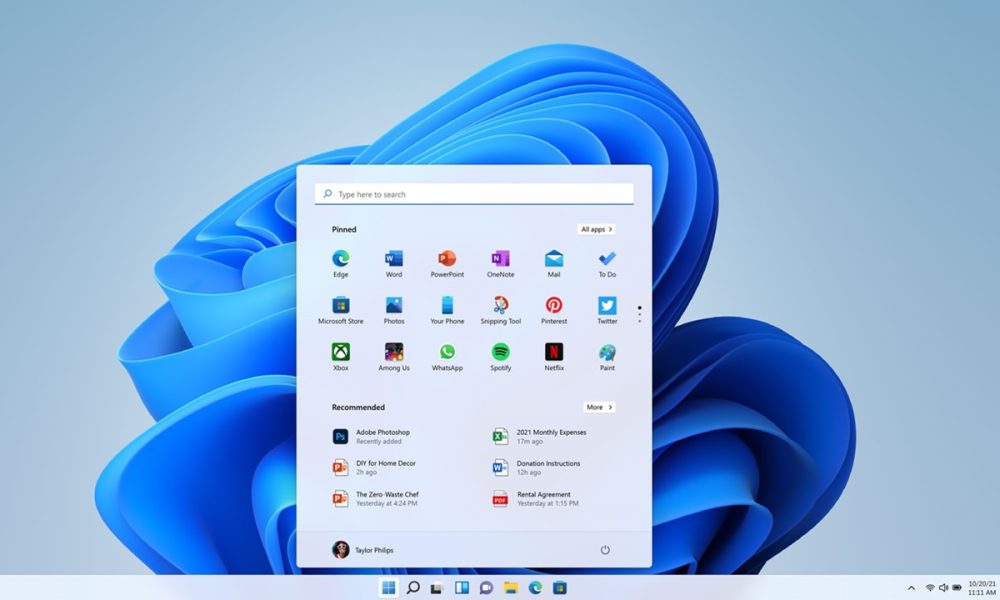
Among the most visible changes to the user, the return of a highly requested feature stands out: lAbility to move the taskbar to different positions on the screenincluding the top and sides. Windows 11 initially removed this flexibility present in previous versions, prompting criticism from advanced users. Microsoft will also expand the customization options in this area and will review the behavior of the Start menu to improve the relevance of the recommendations section. In parallel, the company will reduce the presence of Copilot in certain system applications, such as Snipping Tool, Photos, Widgets or Notepad, in an attempt to integrate artificial intelligence in a more selective and less intrusive way.
Another important front will be Windows Update, one of the most criticized components of the Windows ecosystem for years. Microsoft promises a more predictable and less disruptive experience. Among the measures announced include the ability to skip updates during initial computer setup, shut down or reboot the system without being forced to install updates at that time, and expanded control over update pauses. Furthermore, the objective is reduce automatic reboots and concentrate the reboot cycle into a single monthly time, which should minimize interruptions during everyday use of the system.
System performance will also receive special attention. Microsoft says it is working to reduce Windows’ base resource consumption, with the goal of freeing up more capacity for applications. Part of these improvements will come from optimizations in memory management and system infrastructure. The company also plans to reduce interaction latency by moving more interface components to WinUI 3, which should improve the responsiveness of key elements like the Start menu. In parallel, File Explorer will receive specific improvements aimed at speeding up its launch, reducing interface flickering and improving the reliability of operations such as searching, browsing or copying large files.
Overall system reliability is the third pillar of the plan. Microsoft wants reduce failures at the operating system level, improve the quality of drivers and reinforce the stability of applications within the Windows ecosystem. This includes improvements in connectivity with Bluetooth devices, fewer problems with USB connections, greater consistency in waking the device from sleep mode, and improvements in the operation of cameras and audio devices. There will also be advances in Windows Hello, with faster and more reliable facial recognition and fingerprint authentication, as well as optimizations in the Windows Subsystem for Linux (WSL), which seeks to improve file access performance, network compatibility and the initial configuration experience.
After reading the statement, it is difficult not to interpret this announcement as something more than a simple roadmap update. In a way, Microsoft seems to recognize that Windows 11 needs more than just new features: you need to consolidate your foundations. If the promised improvements materialize over the next few months, we could see progress in the right direction. The problem is that there are already so many promises that have come to nothing, it’s better not to get your hopes up.