OpenAI Group PBC has signed a multibillion-dollar deal with the artificial intelligence chipmaker Cerebras Systems Inc. to secure much-needed compute capacity for its large language models.
The AI company said today it will use Cerebras’ chips to power its ChatGPT. It has agreed to purchase up to 750 megawatts of computing power over the next three years in an agreement that’s valued at more than $10 billion, according to anonymous sources who spoke to the Wall Street Journal.
The deal is a big boost for Cerebras, and will enable the chipmaker to diversify its revenue base from its major customers, the United Arab Emirates-based AI firm G42, which accounted for 87% of its sales in the first half of 2024.
Cerebras is the creator of a large, dinner plate-sized processor that’s designed to train and run LLMs at scale. It’s widely considered to be one of the most intriguing challengers to Nvidia Corp., which dominates the AI industry, selling massive amounts of graphics processing units to cloud providers such as Amazon Web Services Inc. and Microsoft Corp. The deal is notable because OpenAI Chief Executive Sam Altman personally invested in Cerebras during its early years, and explored a partnership with the chipmaker as early as 2017.
OpenAI desperately needs as much computing capacity as it can get its hands on, as it prepares itself for a new phase of growth. The company said ChatGPT currently has more than 900 million weekly users, and it’s facing a drastic shortage of compute capacity to keep up with the chatbot’s growth.
It’s not just capacity that’s an issue for OpenAI, though. The company also wants to find cheaper and more efficient alternatives to Nvidia’s GPUs, which are some of the most expensive chips on the market today. Last year, the chatbot maker revealed it was working with Broadcom Inc. on the development of a customized AI processor, and has also signed a deal with Advanced Micro Devices Inc. to use that company’s upcoming M1450 chips.
The partnership with Cerebras has been in the pipeline for a while. Cerebras CEO Andrew Feldman told CNBC that his company has been working with OpenAI for the last couple of months to ensure that its open-weight gpt-oss models run perfectly on its processors. During that optimization work, the companies’ engineering teams began having “technical conversations” that led to a term sheet being signed last year, just before Thanksgiving, the CEO said.
According to Feldman, Cerebras has more than enough capacity to cater to OpenAI’s needs. He said the company has multiple data centers in the U.S. and globally, and is continuing to expand its footprint both at home and abroad. OpenAI reportedly first looked at using Cerebras’ chips as early as 2017, shortly after Altman first invested in the chipmaker, but it’s not clear why it chose not to do so at the time.
Cerebras has raised $1.8 billion in funding to date, with its most prominent investors including G42, Benchmark, Fidelity Management & Research Co. and Atreides Management. However, it’s looking to raise much more than that. Just yesterday, a report by The Information claimed that the company is currently holding discussions over a new $1 billion raise that would lift its valuation to more than $22 billion.
Although it has raked in tons of cash from investors, Cerebras has struggled to make much of an impact on Nvidia’s dominance of the AI industry. When it first filed to go public in September 2024, it disclosed that the vast majority of its revenue came from a single customer, G42.
Cerebras ultimately decided to abandon its listing plans and instead raised $1.1 billion in a private funding round, but there are reports that it’s now looking to file for an initial public offering once again, perhaps in the next few months. During the last year, Cerebras has reportedly expanded its customer base quite a bit, signing deals with IBM Corp., Meta Platforms Inc. and Hugging Face Inc.
The deal with OpenAI will help make a Cerebras IPO look even more attractive, although some analysts have raised concerns about the AI model maker’s ability to pay for all of the computing resources it has committed to buying. Last year, it generated revenue of approximately $13 billion, but that number is dwarfed by the $600 billion in cloud contracts it has signed with Amazon, Microsoft, Oracle Corp. and others. Altman has pointed out that the deals are phased over time, and will be paid for with future revenue growth.
However, it will probably be investors that end up footing the bill, at least for the foreseeable future. Last month, reports emerged that OpenAI is seeking to raise at least $10 billion, if not more, from Amazon.com Inc., in a round that could lift its value to a staggering $830 billion.
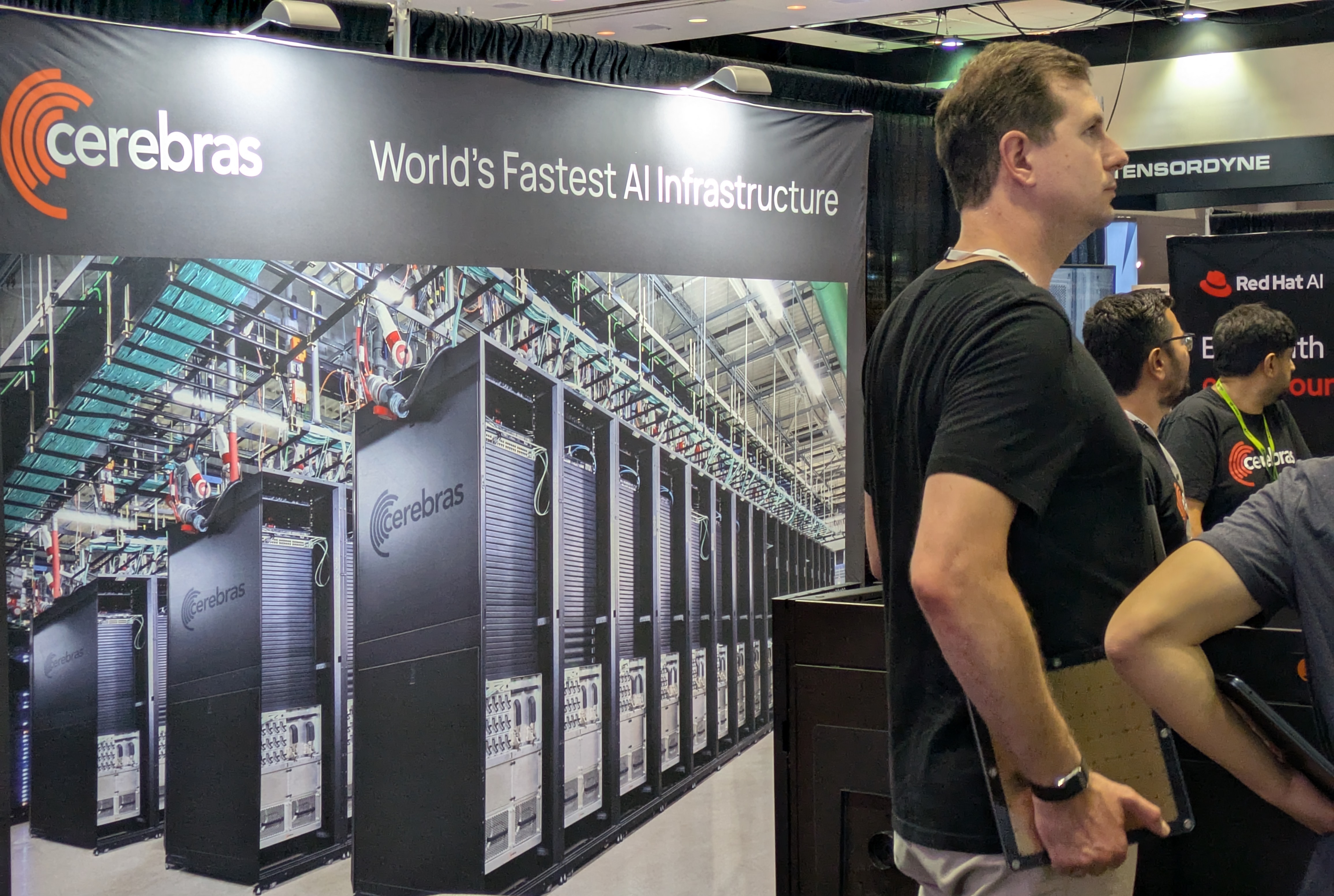
Photo: Robert Hof/ News
Support our mission to keep content open and free by engaging with theCUBE community. Join theCUBE’s Alumni Trust Network, where technology leaders connect, share intelligence and create opportunities.
- 15M+ viewers of theCUBE videos, powering conversations across AI, cloud, cybersecurity and more
- 11.4k+ theCUBE alumni — Connect with more than 11,400 tech and business leaders shaping the future through a unique trusted-based network.
About News Media
Founded by tech visionaries John Furrier and Dave Vellante, News Media has built a dynamic ecosystem of industry-leading digital media brands that reach 15+ million elite tech professionals. Our new proprietary theCUBE AI Video Cloud is breaking ground in audience interaction, leveraging theCUBEai.com neural network to help technology companies make data-driven decisions and stay at the forefront of industry conversations.