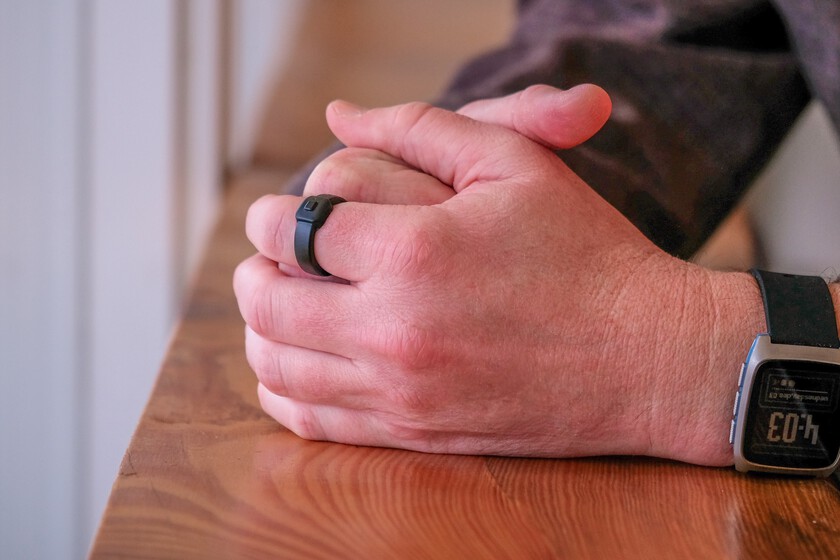
There are everyday moments when a fleeting idea crosses our mind and we know that if we don’t save it instantly, it will probably disappear without a trace. It can happen while we are cycling, cooking or simply walking with our hands busy, when taking out the cell phone is inconvenient or outright impossible. That feeling of losing something that seemed important has led some companies to explore an unexpected solution: turning the index finger into a place to capture quick thoughts before they escape.
The fear of forgetting what is important. For Pebble, the challenge is not just in coming up with an idea out of the moment, but in how often it happens. Its founder states that it happens to him between five and ten times a day, and that the most frustrating thing is not the idea itself, but the subsequent certainty of having forgotten something without being able to recover it. That recurring sensation is what, according to the company, justifies finding a more direct mechanism to record brief thoughts before their context is lost.
A notepad ring. The device proposed by Pebble, the Index 01, takes the form of a compact ring, built in stainless steel and equipped with a physical button and a microphone. By pressing it, the user can capture a short voice note immediately. It is available in various colors and sizes, and has water resistance to withstand continued use. Its main function is to offer a quick entry point to save information without depending on the phone at the exact moment it arises.
From finger to app: Each recording begins with a press of the button, which activates the ring microphone and saves the audio to its internal memory, without any additional processing. When the phone is nearby, the recording is transferred via Bluetooth and that’s where all the work happens: the Pebble app converts voice to text using a recognition model that works locally, and then an LLM that also runs on the phone itself determines whether to create a note, set a reminder or add an event to the calendar.
It never plugs in, but it runs out: Pebble opts for a silver oxide battery similar to what hearing aids use, allowing the ring to run for years without needing to be recharged. According to the company, an average use of between ten and twenty daily recordings of a few seconds is equivalent to about twelve or fifteen hours of accumulated audio, enough to achieve that long autonomy. When the stack nears the end, the app notifies the user, who can purchase another ring and send the previous one for recycling.
The approach means that the battery cannot be replaced or recharged, something Pebble openly acknowledges. When the end-of-life notice arrives, the user must purchase a new ring. As we say, the company offers the possibility of sending the old device for recycling, but does not mention discounts, replacement programs or return compensation, so the replacement apparently works as a separate purchase.
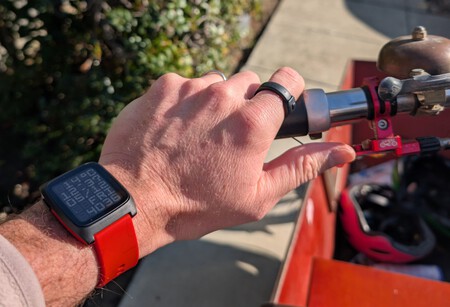
Pebble insists that the ring is designed to process information locally and limit its scope to what is strictly necessary. The connection between the device and the mobile is encrypted, and both the speech-to-text conversion and the classification using a language model occur on the phone itself and, by default, do not require sending the data to external servers, although the company offers an optional cloud backup system for recordings that is still in development and plans to offer encryption. The ring does not listen continuously or record health data, and it does not integrate a speaker or vibration. Its operation is limited to the moment in which the user keeps the button pressed.
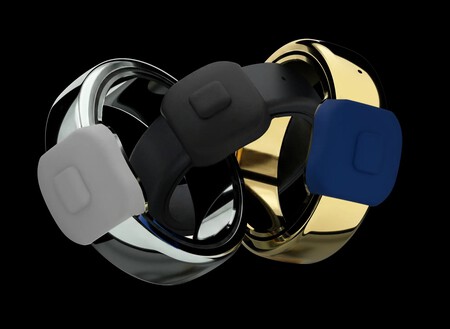
When memory lets itself be hacked. Beyond recording notes, Pebble allows you to configure the ring to perform additional actions with single or double presses, from controlling music to taking a photo or activating home automation routines. The app supports sending reminders to services like Notion and offers support for over 99 languages. The company also describes an action system based on MCP, small extensions that run on the mobile itself and that, according to its roadmap, should expand what the device can do without depending on a central server.
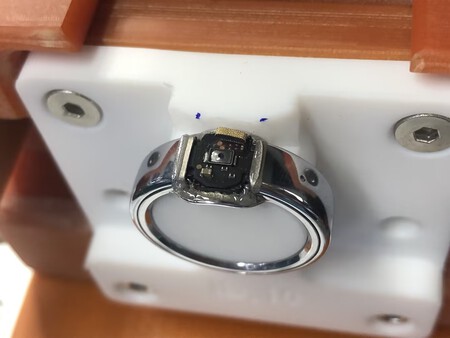
From watch to ring: Pebble is going through a relaunch phase in which it seeks to expand its catalog beyond smartwatches. After recovering its brand and shipping its new Pebble 2 Duo, it is preparing the arrival of Pebble 2 Time with a significant level of prior demand. In this scenario, Index 01 appears. The founder himself summarizes his bet by stating that the ring has stopped being a technological device and has become “an extension of the brain”, a phrase that reflects the ambition with which the company presents this project.

Price and availability of Index 01. The company puts the starting price at $75 during pre-sale, with a rise to $99 when the first units begin shipping globally from March 2026. The device is in the design validation phase and is produced in the same plant that works with Pebble Time 2, where the current prototypes are assembled. Shipments will depart from Asia under a DDP system, so taxes and duties will be handled prior to delivery.
Images | Pebble
In WorldOfSoftware | We have tested the new Google glasses with Gemini: AI and today’s technology drive the dream that Glass promised