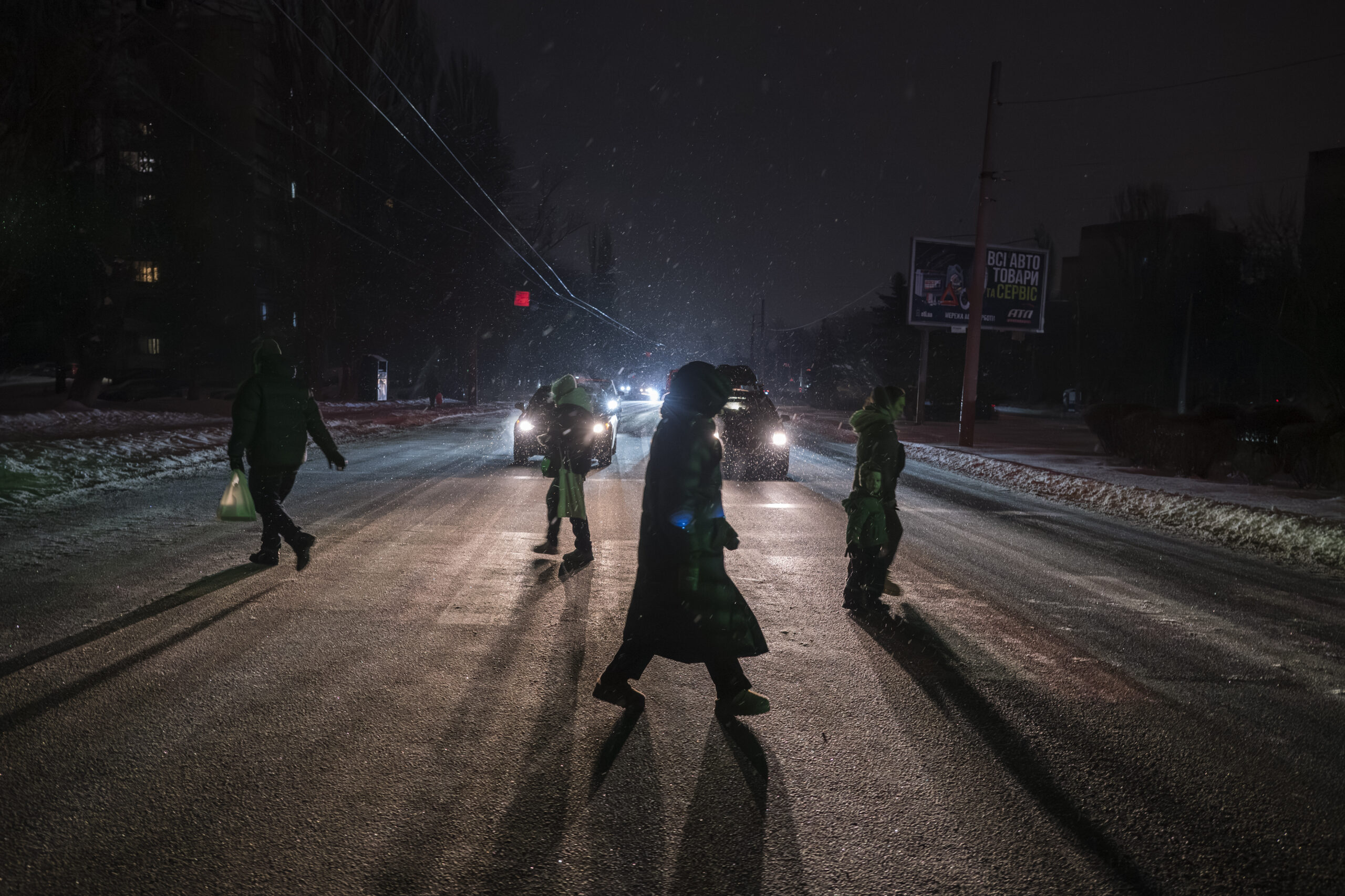
Russia is “going all in” to destroy Ukraine’s power system, Ukrainian Deputy Energy Minister Mykola Kolisnyk said on January 13 following the latest in a series of major bombardments targeting civilian energy infrastructure in cities across the country. “Today, Russia launched an attack just five days after the previous bombardment, using drones and ballistic missiles. We see that the enemy is going all in, deploying its forces to destroy Ukraine’s energy infrastructure,” he commented.
The current wave of attacks have hit the Ukrainian capital Kyiv particularly hard. “The Russians are trying to disconnect the city and force people to move outside Kyiv,” Ukrenergo CEO Vitaliy Zaichenko told the Kyiv Independent. According to Zaichenko, around 70 percent of the Ukrainian capital’s approximately 3.5 million residents were left without electricity on Tuesday. Meanwhile, large numbers of apartments also had no heating amid subzero winter conditions.
Kyiv is one of multiple Ukrainian population centers currently facing rolling blackouts that in many cases can last for over 24 hours. Russia’s air offensive has also struck energy infrastructure supplying Odesa, Kharkiv, Dnipro, Zaporizhzhia, Sumy, Chernihiv, and many other major cities.
Teams of engineers are working around the clock to repair damaged facilities, fix power lines, and reconnect Ukrainian homes and businesses to the electricity grid. However, repeated Russian attacks are making it increasingly difficult to patch up battered equipment and find the necessary replacement component parts.
The bombing campaign appears to have been timed to coincide with the coldest period in over a year, with temperatures plummeting to minus fifteen Celsius (five degrees Fahrenheit) for extended periods of time. “ They deliberately waited for freezing weather to make things worse for our people. This is cynical Russian terror specifically against civilians,” stated Ukrainian President Volodymyr Zelenskyy.
This is not the first time Russian President Vladimir Putin has attempted to weaponize winter in his war against Ukraine. Russia launched a major air offensive against Ukraine’s civilian energy infrastructure in October 2022, establishing a pattern that would be repeated each year as the cold season approached. While this tactic is not new, the present destruction of the Ukrainian power grid is widely recognized as the most severe of the entire war.
In Kyiv and other cities, the Ukrainian authorities have established so-called Points of Invincibility in heavily populated areas featuring heating and internet access along with electricity sources that can be used to charge up personal devices and power banks. Visitors can also expect hot drinks and a warm welcome.
Throughout Ukraine the buzz of generators has become the background noise of the winter season. Many Ukrainians have installed backup power sources in their homes, which are typically able to provide electricity for a limited period of time. Portable gas stoves are also a common feature as people adapt and improvise in the extreme conditions caused by Russia’s bombardment.
With millions of Ukrainian civilians at risk of being trapped in freezing darkness for days at a time, the potential for a humanitarian catastrophe is obvious. Kyiv Mayor Vitali Klitschko has already urged residents of the Ukrainian capital to temporarily leave the city if they are able to and move to less affected areas where power and heating are more readily available. With the present cold snap set to last for at least another week and further Russian attacks widely expected, fears are now mounting over a possible winter exodus to neighboring EU countries.
That may be exactly what Putin has in mind. Since the start of the full-scale invasion, Russia has repeatedly targeted Ukrainian civilians in a bid to break Ukraine’s resistance and depopulate large parts of the country. In addition to attacks on energy, heating, and other critical infrastructure, Russia has also launched large-scale drone strike campaigns designed to make entire towns and cities unlivable. A recent United Nations probe into Russia’s campaign of drone attacks throughout southern Ukraine’s front line regions concluded that Moscow’s actions amounted to the crimes against humanity of “murder and forcible transfer of population.”
Eurasia Center events

As Russia attempts to freeze Ukrainians into submission, Kyiv desperately needs a wide range of international support. This includes alternative energy supplies to replace domestic gas production damaged in Russia’s attacks, along with spare parts to mend the country’s power stations and associated infrastructure.
Ukraine also urgently requires additional air defense systems and interceptor missiles. At present, Ukraine’s existing air defenses are struggling to cope with the dramatically increased intensity of Russia’s aerial attacks, which now routinely feature hundreds of drones along with dozens of cruise and ballistic missiles.
Most of all, Ukraine needs to be able to strike back. However much Ukraine’s network of air defenses improves, the sheer scale of the Russian bombardment means that a percentage of missiles and drones will inevitably reach their targets. The only truly effective defense is deterrence. In other words, Russia’s attacks will continue until Putin is restrained by the knowledge that Ukraine has the capacity to reply in kind.
The next few weeks will be among the most challenging of the war for Ukraine’s civilian population that will test the country’s famed resilience to the limit. “I think the Russians want to break us. They want to make Ukrainians angry and unhappy. They think this will make us go out on the streets and protest but that won’t happen,” Kyiv resident Valentina Verteletska told Britain’s Guardian newspaper. “This makes us tougher and more determined. War doesn’t make people bad or good but it amplifies who you are. It allows people to show who they are inside and we have seen a lot of people volunteering to help their neighbors.”
Many believe Russia’s wintertime bombardment of Ukraine’s civilian infrastructure now represents Putin’s best chance to achieve some kind of breakthrough at a time when his army is struggling to advance on the battlefield. Russia gained less than one percent of Ukrainian territory in 2025 despite suffering hundreds of thousands of casualties, and is still fighting over villages located within walking distance of the front lines at the start of the invasion in February 2022.
Despite this lack of progress, Putin remains committed to his original invasion objective of extinguishing Ukrainian independence and forcing the country permanently back into the Kremlin orbit. He clearly has no qualms about targeting millions of Ukrainian civilians in pursuit of this criminal goal. “You can see with your own eyes what is going on,” commented Kyiv building manager Oleksandr Matienko. “They are trying to kill us. They can’t win any other way. So they are willing to do anything to destroy Ukraine.”
Peter Dickinson is editor of the ’s UkraineAlert service.
The views expressed in UkraineAlert are solely those of the authors and do not necessarily reflect the views of the , its staff, or its supporters.

The Eurasia Center’s mission is to enhance transatlantic cooperation in promoting stability, democratic values, and prosperity in Eurasia, from Eastern Europe and Turkey in the West to the Caucasus, Russia, and Central Asia in the East.
Image: People cross a street during a power outage caused by recent Russian missile and drone attacks that hit critical civilian infrastructure, amid Russia’s attack on Ukraine, in Kyiv, Ukraine, on January 11, 2026. (Photo by Maxym Marusenko/NurPhoto)