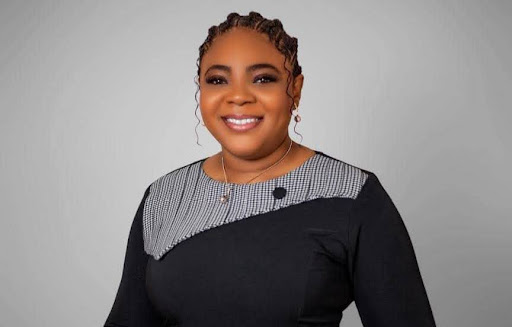
Yvonne Ige is a technology and fintech leader with 15+ years of experience driving product strategy, market expansion, and large-scale solution delivery across financial services, public sector, and enterprise technology in Africa.
She is currently Head of Partnerships at the Nigeria Inter-Bank Settlement System (NIBSS), the country’s critical national payments switch, where she supports ecosystem collaboration across banks, fintechs, other switches, and payment service providers within Nigeria’s financial infrastructure.
Previously, Yvonne served as Chief Commercial Officer at Appzone (now Qore), leading product commercialisation and pan-African market expansion. She took fintech products from ideation through build, launch, and scale, working closely with product, engineering, and regulatory stakeholders to onboard financial institutions and drive adoption across multiple African countries. Her leadership was key to expanding Appzone’s footprint beyond Nigeria and positioning its products for continental relevance.
She also held the role of Vice President of Business and Solution Delivery at Softcom, where she led high-impact public sector initiatives for the Federal Government, Oyo State Government, and the National Identity Management Commission (NIMC), focusing on digital identity, biometrics, payroll audits, and payments. She managed engagements end-to-end and delivered technology-enabled programmes for private sector and development partners, including MTN, Coca-Cola, and the Rockefeller Foundation.
Yvonne has extensive experience working with banks and financial institutions, aligning product strategy, regulatory requirements, and commercial execution. She holds an MSc in International Business, Energy, and Petroleum from the University of Aberdeen, a BSc in Finance (Cum Laude) from Oral Roberts University, and has completed executive education in Product Strategy at the Kellogg School of Management.
- Explain what you do to a 5-year-old.
I help people use computers and phones to make life easier. I work with banks and other big companies to help them send money safely and quickly. I also help the government use technology to keep good records of people. My job is to help people work together so everyone can use technology better.
- You studied accounting and finance and began your career as a KPMG intern. Did you ever actively plan or see yourself playing such a key role in payment infrastructure when you were younger?
Not in a linear way, no. When I studied Accounting and Finance and interned at KPMG, what I was really drawn to was understanding how systems work, how money moves, how organisations make decisions, and where things break when they scale. At the time, I thought that would probably lead me deeper into consulting or finance, but I didn’t yet have a language for things like payments infrastructure or financial rails.
Back then, Ngozi Okonjo-Iweala, who was the first Nigerian woman to serve two terms as Finance Minister of Nigeria, was someone I deeply admired. Watching how she worked on debt relief, public finance reform, and economic policy made me want to be close to the systems that shape how a country functions. As my career evolved, I realised I kept gravitating toward the backbone of those systems; whether it was government payrolls, digital identity, banking platforms, or fintech products. So while I didn’t set out saying “I will work in payments infrastructure,” I did know I wanted to work on high-impact systems that quietly make economies work, and that is exactly what I am doing.
- Across your career—public sector, fintech, and now national infrastructure—what perspective changed the way you think about building technology in Africa?
What really changed my perspective was seeing the same people and institutions show up in completely different ways depending on the system they were inside. In the public sector, I saw how policy, identity, and trust shape whether technology works at all. In fintech, I saw how speed, incentives, and user experience drive adoption. And now, in national infrastructure, I see how everything depends on whether those layers can talk to each other reliably at scale.
It taught me that in Africa, you don’t win by building the smartest technology in isolation, you win by building technology that understands how people actually live, get paid, are identified, and are regulated. The real work is not just writing code, but designing systems that work in environments where infrastructure is uneven. Trust has to be earned, and failure has real economic consequences. That shift from “what can we build?” to “what will truly work here?” changed everything about how I approach technology.
- At NIBSS, what’s one part of Nigeria’s payments infrastructure most people misunderstand or overlook?
We are an enabler, not a consumer brand, and that’s what most people miss. People think payments are about the apps they see: their bank app, a fintech wallet, a PoS terminal, but none of those work on their own. What makes them work is the shared national infrastructure underneath, which allows all these different institutions to connect, trust each other, and move money safely.
At NIBSS, our role is to make sure that banks, fintechs, switches, and payment providers can plug into one reliable system and compete and innovate on top of it. We don’t try to own the customer; rather, we enable everyone else to serve them. When that foundation is strong, the entire ecosystem grows faster, safer, and more inclusive.
- What’s the biggest trade-off you’ve had to manage when building fintech products versus running national payments systems?
In fintech, you are rewarded for moving fast by testing ideas, launching quickly, and iterating based on what users want. You can afford to fail small and fix things as you go.
In national payments infrastructure, you are responsible for everyone. A single change can affect millions of people, thousands of businesses, and the entire financial system. So the priority shifts to resilience, trust, and predictability. You don’t get to “move fast and break things” when you are the backbone of the economy.
Having worked on both sides, I’ve learned that neither approach is better as they need each other. Fintech brings speed and creativity, while infrastructure provides the stable rails that make that innovation safe at scale. My role has been learning how to bridge those two worlds so innovation can happen without putting the system at risk.
- What’s a risky decision in your career that paid off, and what did it teach you about scaling financial technology in Africa?
One of the riskiest decisions I made was leaving a more predictable corporate path to join a startup, where I moved much closer to the ground, building real systems for large enterprises, SMEs, and governments. At the time, it meant giving up a lot of certainty for complexity: complex public-sector environments, long sales cycles, and the pressure of delivering technology that actually had to work in the real world.
But that risk completely changed how I understand scale in Africa. Working on projects like nation-wide training and employment programmes, state-wide biometric enrollment, payroll systems, and national identity integrations showed me that you can’t scale financial or digital technology without first solving trust, identity, and institutional readiness. You learn very quickly that great software is useless if the people, processes, and incentives around it are broken.
That experience taught me that the fastest way to scale in Africa is not always through startups and apps; it’s through infrastructure, partnerships, and institutions. It’s why everything I’ve done since then, from fintech to national payments systems, has focused on building the rails that allow technology to work for millions, not just early adopters.
- From working with regulators, banks, and fintechs, what’s one lesson the private sector could learn from working with public infrastructure, and vice versa?
One thing the fintechs learn when working closely with the national infrastructure is the importance of standards and interoperability. In fintech, it’s tempting to build closed systems that optimise for your own growth. But when you plug into national infrastructure, you realise that scale only happens when everyone speaks the same language, the same formats, rules, and protocols. That discipline is what allows millions of users across different banks and apps to interact seamlessly.
On the other hand, working with fintechs teaches a different lesson: innovation doesn’t come from perfect planning, it comes from experimentation. Startups test, fail, learn, and iterate in ways large institutions often struggle to. When public infrastructure creates safe spaces for that experimentation, like sandboxes, APIs, pilot programmes, it allows the ecosystem to evolve without compromising stability.
Together, those two lessons create a system that is both open and strong; standardised enough to scale, and flexible enough to keep improving.
- If you were starting your career today, what part of Africa’s tech ecosystem would you bet your money on, and why?
Most of the ideas I have had or businesses I created were around technology whether in payments, beauty, and health. If I had to pick an area right now, it’s exactly where I am, which is payments and financial infrastructure, because that is where technology touches the most people in the most meaningful way. Payments are not just about moving money, it is about whether someone can participate in the economy at all. If you can get paid, save, send money, or accept payments, you can work, trade, build a business, and plan for the future. If you can’t, you are effectively invisible.
What draws me to this space is that it sits right at the intersection of people and systems. Every transaction represents a real human story, a salary being paid, a market trader buying stock, a family sending money home or paying a medical bill, a small business collecting revenue. When the infrastructure works, those everyday moments become easier, safer, and more reliable. When it doesn’t, it creates friction, exclusion, and real hardship.
For someone like me who cares deeply about people, payments is one of the highest-impact places to work. You’re not just building technology; you’re building access, trust, and economic dignity at scale. And when you combine that with national infrastructure, you’re not helping a few users; you’re helping entire communities, industries, and countries move forward.
- Five years from now, what would success look like for Nigeria’s payments ecosystem, and how do you hope to contribute?
Five years from now, success for Nigeria’s payments ecosystem would mean that payments are no longer something people think about, they just work. Whether you are a market trader, a fintech startup, a large corporation, or a government agency, moving money should be instant, affordable, reliable, and fully interoperable. Cash should no longer be the default, not because it was banned, but because digital payments are simply better; safer, easier, and more trusted.
It would also mean that payments are deeply linked to identity, data, and credit, so that once someone is part of the system, they can do much more than just send money. They can access loans, receive government support, run a formal business, and build a financial history. That is how payments stop being just transactions and start becoming real economic inclusion.
My hope is to contribute by helping build and steward the national rails that make all of that possible, ensuring they are neutral, open, resilient, and designed for the long term. I want to keep being a bridge between banks, fintechs, regulators, and innovators, so that Nigeria’s payments infrastructure doesn’t just grow, but grows in a way that serves people, competition, and the future of the economy.