When DeepSeek R1 was presented a year ago, it caused a real earthquake in the technological world. What was surprising was not its capabilities, but that China had managed to reach that level despite the blockades and setbacks of the United States. DeepSeek was proof that AI can be done without the United States and now it is Europe that needs to replicate this success.
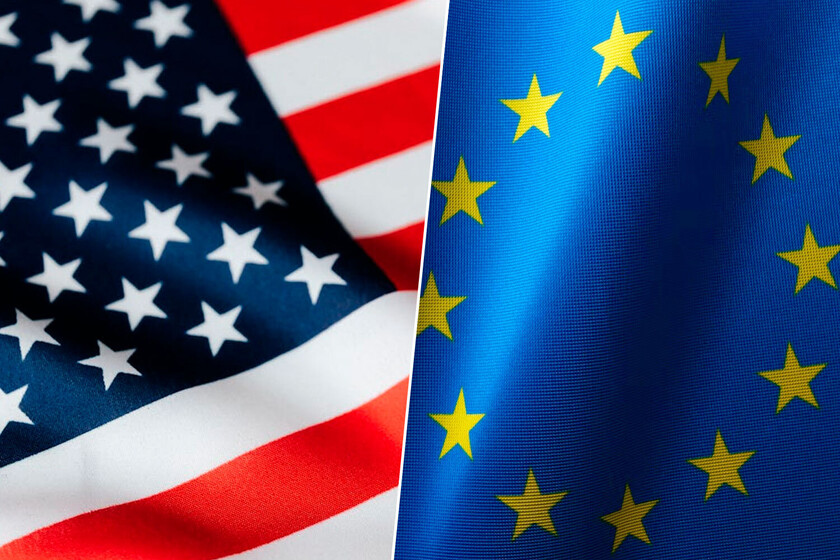
Tensions and dependence. Relations between the United States and Europe are going through their worst moment. Trump’s obsession with taking control of Greenland and the response of several European countries that have sent their troops to the region have caused an unprecedented clash. Amidst the threats of invasion, the deployment of troops and tariffs, there is also the issue of technological war, a war in which Europe is in a position of strong disengagement from the US.
The US executed and Europe regulated. Far behind. If China is behind the US in AI, Europe is light years ahead. While American companies were developing the models and infrastructure to train their AI models, in Europe regulation was reinforced with the AI Act. The European Union itself understood that this approach was leaving them behind in the AI race and recently greatly simplified the regulations. It was late, the technological gap was already enormous.
Dependence. The United States not only controls the language models, it also controls the chips to train them, the data centers and, above all, the investment to get all this going. Miguel De Bruycker, head of the Brussels Cybersecurity Center, is very forceful: “Europe has lost the internet (…) If I want my information to be 100% in the EU… keep dreaming,” he told the Financial Times. In the current context, this dependency puts Europe in a very vulnerable position and becomes a major strategic risk. The US could use its dominance as a pressure point in negotiations or, in the worst case, restrict access to its services.
A sovereign AI. They say in Wired that the concern to create a European AI is growing and there are already several projects underway to achieve it. The best known model is the French Mistral, but there are others such as Apertus in Switzerland or ALIA in Spain. In Germany they are developing SOOFI, a project that aims to launch an open source language model with 100 billion parameters designed specifically to reduce European dependence on the US.
Chinese inspiration. The US seemed unattainable, but DeepSeek showed that it was possible to achieve competitive results without having the best GPUs or the largest data centers. The fact of betting on open source also gives an advantage since it allows creating a larger user base in less time, in addition to more actors can participate in the advances. There is also talk that Europe could encourage its companies to use its own AI, a strategy similar to that followed by China with the use of national chips.
Imagen | Karola G, Pexels. Engin Akyurt, Unsplash
In WorldOfSoftware | The ASML-Mistral alliance reveals the European plan B: if we cannot manufacture chips, at least we will control how they are manufactured