By using this site, you agree to the Privacy Policy and Terms of Use.
Accept
World of SoftwareWorld of SoftwareWorld of Software
  • News
  • Software
  • Mobile
  • Computing
  • Gaming
  • Videos
  • More
    • Gadget
    • Web Stories
    • Trending
    • Press Release
Search
  • Privacy
  • Terms
  • Advertise
  • Contact
Copyright © All Rights Reserved. World of Software.
Reading: Tech Odyssey Series: They 3D-Printed Every Employee’s Ears to Make 3D Audio Feel More Real · TechNode
Share
Sign In
Notification Show More
Font ResizerAa
World of SoftwareWorld of Software
Font ResizerAa
  • Software
  • Mobile
  • Computing
  • Gadget
  • Gaming
  • Videos
Search
  • News
  • Software
  • Mobile
  • Computing
  • Gaming
  • Videos
  • More
    • Gadget
    • Web Stories
    • Trending
    • Press Release
Have an existing account? Sign In
Follow US
  • Privacy
  • Terms
  • Advertise
  • Contact
Copyright © All Rights Reserved. World of Software.
World of Software > Computing > Tech Odyssey Series: They 3D-Printed Every Employee’s Ears to Make 3D Audio Feel More Real · TechNode
Computing

Tech Odyssey Series: They 3D-Printed Every Employee’s Ears to Make 3D Audio Feel More Real · TechNode

News Room
Last updated: 2026/03/19 at 4:07 AM
News Room Published 19 March 2026
Share
Tech Odyssey Series: They 3D-Printed Every Employee’s Ears to Make 3D Audio Feel More Real · TechNode
SHARE

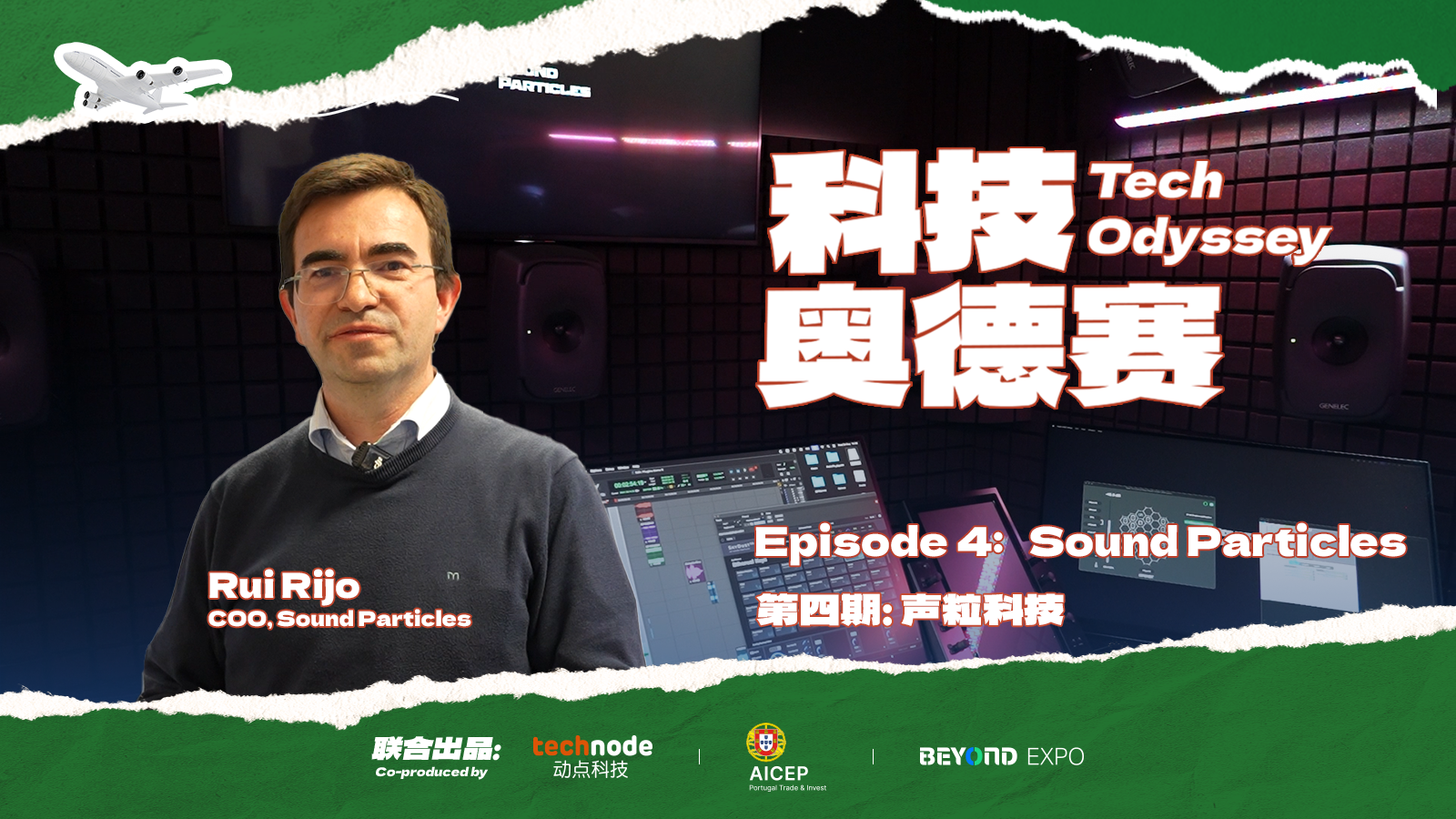
In the previous episode, we looked at how Bhout turned one founder’s dream into a business. This time, we turn to a lower-profile but technically rigorous company: Sound Particles.

When audiences hear the roar of a sandworm in Dune or feel the force of a blast wave in Oppenheimer, few would imagine that part of the technology behind those immersive soundscapes comes from a 17-person company based in Lisbon, Portugal. Founded in 2016, Sound Particles has earned its place in the high-end film, game, and music production pipeline by bringing a core idea from computer graphics into audio.

Its core, genre-redefining concept is to treat individual sounds like particles in a 3D environment. Instead of building complex soundscapes one layer at a time, creators can place sounds in virtual space, give them defined position and movement, and shape the final listening perspective through virtual microphones. That fundamentally changes how immersive audio is made. During our visit, the team showed how a small number of base samples could be adjusted into thousands of distinct variations, making dense, complex scenes feel far more natural, while reducing the need for endless manual edits.

What stood out to us most during our visit, even more than the core technology itself, was the team’s focus on acoustic realism. In its office, rows of 3D-printed ears, heads, and torsos—all modeled on the company’s employees—are used for granular acoustic testing. The logic is simple: every person’s ears are structurally unique, and sound is shaped not only by where it comes from, but also by how it interacts with each listener’s ears and body. That is why the team has gone beyond printing ears alone, and started recreating full heads and torsos to capture even more nuanced acoustic details.

This work connects directly to the company’s biggest next ambition. Traditional immersive audio depends heavily on multi-speaker theater setups, but most people listen to audio through everyday headphones. Sound Particles has spent years developing personalized binaural audio technology, using the unique shape of a listener’s head and ears to simulate how sound travels and interacts with the body. The goal is to bring a more convincing, theater-quality 3D audio experience to ordinary users, no room full of speakers required.

The company has also expanded far beyond professional audio tools. Its product lineup now includes plugins for digital audio workstations, industry-first immersive synthesizers, and a dedicated 3D sound library. At the same time, it has started applying the same spatial audio technology to artificial intelligence, generating audio datasets with precise spatial labels and realistic environmental noise to train neural networks for speech recognition, smart vehicle environment detection, and related systems.

What makes Sound Particles interesting is not just the market it has entered, but the way it has grown. It started with one difficult, foundational question—how sound should exist in 3D space—and kept pushing that question further, from film production to consumer headphones, and even into AI training. For a small team based in Lisbon, that quiet, consistent focus on a single core question has already taken them a long way.


Related

Sign Up For Daily Newsletter

Be keep up! Get the latest breaking news delivered straight to your inbox.
By signing up, you agree to our Terms of Use and acknowledge the data practices in our Privacy Policy. You may unsubscribe at any time.
Share This Article
Facebook Twitter Email Print
Share
What do you think?
Love0
Sad0
Happy0
Sleepy0
Angry0
Dead0
Wink0
Previous Article I Tried Internxt, an Encrypted, Secure Cloud Storage Built for the Post-Quantum Era I Tried Internxt, an Encrypted, Secure Cloud Storage Built for the Post-Quantum Era
Next Article Where Do Humans Fit in AI-Assisted Software Development? Where Do Humans Fit in AI-Assisted Software Development?
Leave a comment

Leave a Reply Cancel reply

Your email address will not be published. Required fields are marked *

Stay Connected

248.1k Like
69.1k Follow
134k Pin
54.3k Follow

Latest News

M5 Max 16-inch MacBook Pro review: Portable Mac Studio power
News
AI has yet to hurt SME jobs despite massive adoption
News
Ordinary Mornings Turn Deadly | HackerNoon
Computing
Let Your Foot Flex and Roll in the Best Barefoot Shoes
Gadget

You Might also Like

Ordinary Mornings Turn Deadly | HackerNoon
Computing

Ordinary Mornings Turn Deadly | HackerNoon

12 Min Read
How Ceros Gives Security Teams Visibility and Control in Claude Code
Computing

How Ceros Gives Security Teams Visibility and Control in Claude Code

14 Min Read
Linux 7.1 Should See Working HDMI Support For The Lichee Pi 4A RISC-V Board
Computing

Linux 7.1 Should See Working HDMI Support For The Lichee Pi 4A RISC-V Board

2 Min Read
Why data protection has become Africa’s default AI policy tool
Computing

Why data protection has become Africa’s default AI policy tool

9 Min Read
//

World of Software is your one-stop website for the latest tech news and updates, follow us now to get the news that matters to you.

Quick Link

  • Privacy Policy
  • Terms of use
  • Advertise
  • Contact

Topics

  • Computing
  • Software
  • Press Release
  • Trending

Sign Up for Our Newsletter

Subscribe to our newsletter to get our newest articles instantly!

World of SoftwareWorld of Software
Follow US
Copyright © All Rights Reserved. World of Software.
Welcome Back!

Sign in to your account

Lost your password?