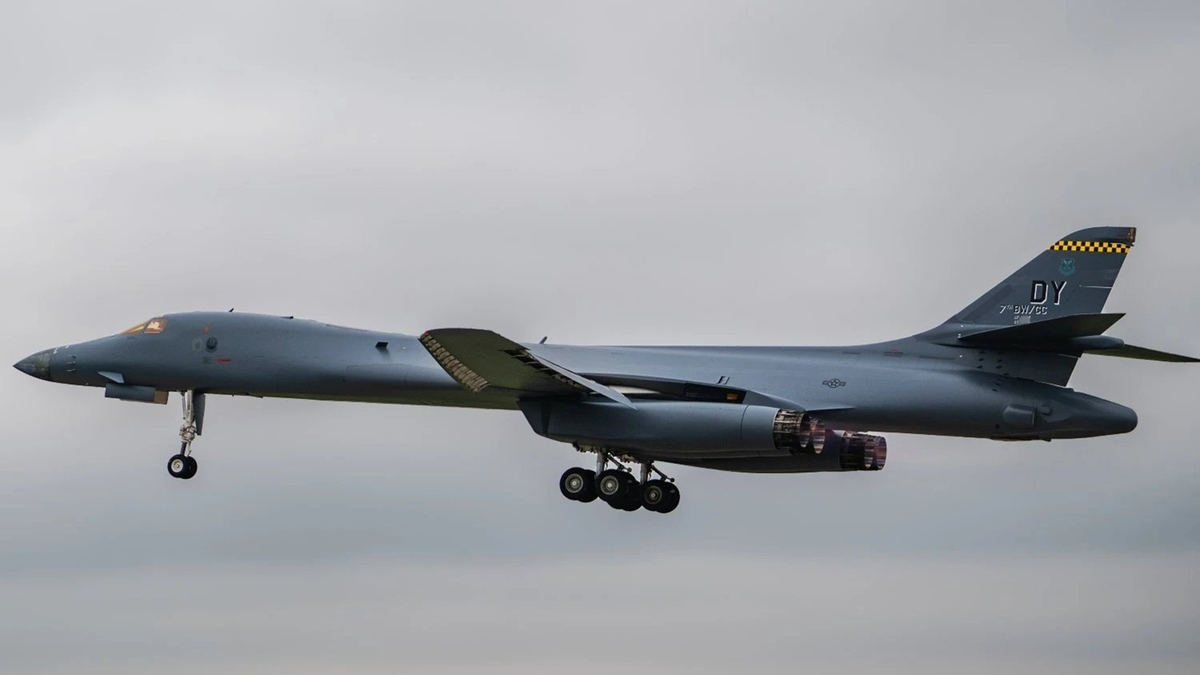
It’s a story of resurrection. A American B-1B Lancer bomberwhich was thought to be dismantled for its parts in the famous aircraft cemetery Boneyard of Arizona, was brought out of his forced retirement.
After a titanic regeneration process carried out at the Tinker base in Oklahoma, the device, formerly known as the Ragehas returned to service on the front line.
It now flies under the name Apocalypse II and was designated as the flagship of the 7th Bomb Wing (7th Bomber Wing) at Dyess Air Force Base, Texas, symbolizing a major change in strategy for the Air Force.
How can a scrapped bomber be brought back to life?
The resurrection of a device like the B-1B Lancer is the result of a colossal industrial effort. The plane, initially placed in type 2000 storage (a condition that allows for potential reactivation), was transferred to the Oklahoma Logistics Complex.
There, it underwent heavy and comprehensive maintenance of rare intensity, marking a true rebirth. In total, more than 500 major components have been replaced, ranging from onboard systems to deep structural repairs.
After functional test flights carried out in a bare metal livery, the aircraft was declared fit for service before receiving his painting and his new name.
Why was this B-1B bomber renamed “Apocalypse II”?
The new device name, Apocalypse IIis a direct homage to the crew of a World War II B-24 Liberator bomber nicknamed Apocalypse that was shot down over Burma in 1942.
This aircraft belonged to the 436th Bombardment Squadron, the direct ancestor of the 436th Training Squadron today based at Dyess, where the B-1B has just found its new home.
This baptism forges a powerful bond between generations of pilots and technicians. THE ” nose art » (painting on the nose of the aircraft) was the final touch of this transformation, sealing the heritage of the old B-24 on the high-tech cabin of the B-1B.
Is this return of a B-1B an isolated case?
The reactivation of Apocalypse II is part of a broader trend in the US Air Force. It is actually the second B-1B Lancer known to have been released from the Boneyard to re-enter active duty.
Another device nicknamed Lancelot had already been recalled to replace a bomber heavily damaged by an engine fire in 2022. This strategy is not limited to the B-1B: bombers B-52 as Wise Guy or Ghost Rider have also come out of retirement in recent years.
These decisions respond to a pragmatic necessity: maintaining a sufficient number of operational devices to meet congressional requirements and strategic needs.
The loss of a B-1B in a crash in January 2024 and the need to replace another aircraft under costly repair made the regeneration option faster and less risky. This demonstrates that the aircraft “graveyard” remains a strategic reserve.
What is the future of the B-1B fleet in the face of the new B-21 Raider?
While all eyes are on the future B-21 Raider stealth bomberthe B-1B Lancer saw its career significantly extended. Plans now call for keeping it in service at least until 2037well beyond the withdrawal date initially envisaged.

And the budget $342 million is even allocated to the modernization of the remaining 44 aircraft. This strategic decision speaks volumes about the perceived value of the B-1B.
With its largest conventional payload capacity in the American arsenal, the B-1B remains an indispensable asset. Its intensive participation in recent operations, such as Epic Fury in Iran, highlighted its relevance.
The decision to extend its operational life, while developing the B-21, shows that the US Air Force is playing on two fronts: next-generation stealth and the massive strike power of existing platforms.