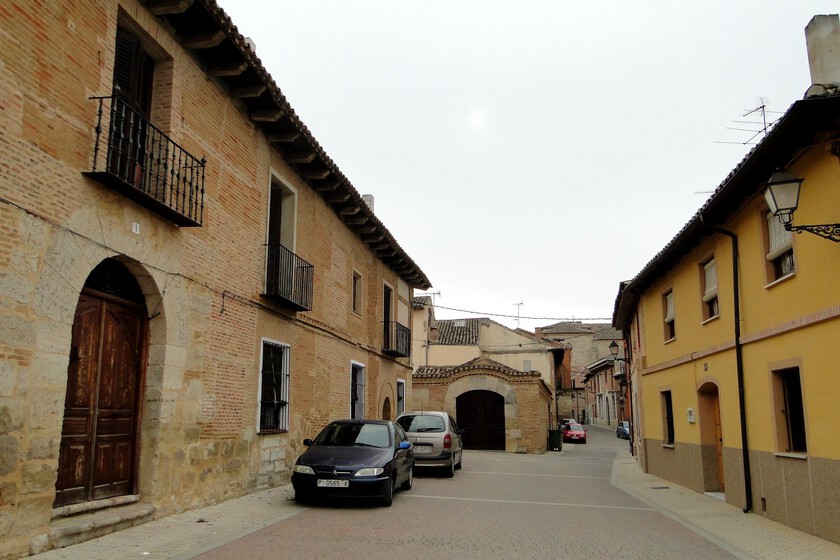
Until recently Paredes de Nava (Palencia) was a remote town known above all for its heritage and being the birthplace of the poet Jorge Manrique and the painters Pedro and Alonso Berruguete. That was until not long ago, we say. In recent days, the name of this town in Tierra de Campos has grabbed headlines throughout the country for a different reason: against all odds, it has become proof that ’emptied Spain’ and the rural peninsula do not have to resign themselves to losing population. In Paredes they have certainly worked a miracle.
The most curious thing is that he has done it with a fairly obvious recipe.
Looking at the INE. Although its tables are basically made up of figures, percentages and rates, from time to time the INE gives us the odd mystery. It happens in Paredes de Nava, Palencia. If we take a look at its census we observe a curious phenomenon: although its region (Tierra de Campos) has spent the last few decades losing population density, in line with much of rural Spain, in recent years Paredes has gained neighbors.
In 2023, 1,985 people were registered in the town, just one year later there were 1,911 and in 2025 the observatory already counted 1,927.
Is it that curious? Yes. It may not be spectacular growth, but it is striking if two factors are taken into account. First, it breaks the negative trend that Paredes had experienced in recent times, accustomed to losing about 25 residents every year. Second, the town had not moved in its current population data for quite some time. We have to go back to 2018 to find a better result and the town hopes to reach the psychological barrier of 2,000 registered this year, a figure it has not managed since 2013.
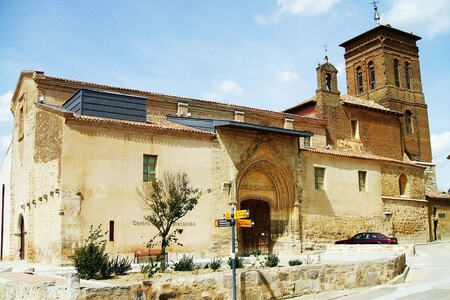
And how is it possible? If the case of Paredes has attracted attention beyond Palencia or Castilla y León, it is because this increase in population is neither coincidental nor the result of chance. On the contrary. It responds to a strategy that has already sparked the interest of other towns and is based on two legs: immigration and affordable housing.
To understand it, we have to go back to 2024, when the town’s mayor, Luis Calderón, contacted TuTecho, a Spanish SOCIMI that seeks solutions to “homelessness and lack of housing.” The entity works in several fields at the same time, but in rural areas its commitment basically consists of recovering empty houses to convert them into “accessible” homes for “vulnerable families.”
Objective: home… and roots. In practice, this means that they acquire homes and then rent them to the City Council so that they end up being rented to new residents in an initiative with a marked social focus. In Paredes, for example, 75% of the beneficiaries are foreigners, especially Latinos.
Since the idea is for newcomers to the town to put down roots, it is facilitated for them to establish roots in different ways. As? Through contracts of leasing for those who need a vehicle or rentals with option to own.
And the work? The councilor assures that there is no shortage of vacancies in the province. In addition to the Renault factory, livestock and agriculture, there is a project to open an olive oil refining factory. “There are plenty of jobs, there are more than 1,200 unfilled, that’s without taking into account the socio-health needs and those of Renault,” guarantees Calderón, who optimistically awaits the opening of the new oil refining factory: “We are going to need many more houses.”

“The solution, in rural areas”. The demographic pulse of the town is not new. It started after the pandemic, when a special office focused on repopulation opened. Years ago he decided to welcome 200 Ukrainian mothers and their children, in 2024 he contacted TuTecho and today he boasts that the town has managed to attract 150 new inhabitants. Of them, a third (49) have arrived thanks to TuTecho, which has in turn acquired 11 homes in the Palencia municipality. Initially the company had acquired only four.
“The solution to the country’s main problems, housing and immigration, is in rural areas,” the councilor defended a few days ago in statements collected by The Newspaper. The truth is that Paredes’ experience seems to have encouraged other people. Those responsible for TuTecho explain that they have already made the leap to a dozen towns, in which they also collaborate with the town councils to articulate a residential rental offer that makes possible what for a long time seemed a chimera in emptied Spain: “Repopulate.”
“A bridge between both”. The founder of Tutecho, Blanca Hernández, sums it up clearly: “Depopulation is a challenge, homelessness another. We realized that we can be a bridge between the two,” she tells The Confidential. “It’s about matching the profiles of inhabitants that the town needs with the families that meet those requirements and need a home.”
In the case of Paredes, they have even managed to ensure that the school, which until not so long ago seemed on a tightrope, faces the future with some peace of mind. Not bad if you take into account that, as stated in a recent EY report, 48% of the Spanish territory does not reach the European density threshold (12.5 inhabitants per km2) and 80% of small rural municipalities are losing population.
Images | James Lopez-Pastor (Flickr) and Wikipedia
In WorldOfSoftware | Empty Spain is now officially one of the quietest places on the planet. There is no risk that it will cease to be