By using this site, you agree to the Privacy Policy and Terms of Use.
Accept
World of SoftwareWorld of SoftwareWorld of Software
  • News
  • Software
  • Mobile
  • Computing
  • Gaming
  • Videos
  • More
    • Gadget
    • Web Stories
    • Trending
    • Press Release
Search
  • Privacy
  • Terms
  • Advertise
  • Contact
Copyright © All Rights Reserved. World of Software.
Reading: Nuclear waste is a problem, so Germany is looking for the solution in a Jurassic rock in Switzerland
Share
Sign In
Notification Show More
Font ResizerAa
World of SoftwareWorld of Software
Font ResizerAa
  • Software
  • Mobile
  • Computing
  • Gadget
  • Gaming
  • Videos
Search
  • News
  • Software
  • Mobile
  • Computing
  • Gaming
  • Videos
  • More
    • Gadget
    • Web Stories
    • Trending
    • Press Release
Have an existing account? Sign In
Follow US
  • Privacy
  • Terms
  • Advertise
  • Contact
Copyright © All Rights Reserved. World of Software.
World of Software > Mobile > Nuclear waste is a problem, so Germany is looking for the solution in a Jurassic rock in Switzerland
Mobile

Nuclear waste is a problem, so Germany is looking for the solution in a Jurassic rock in Switzerland

News Room
Last updated: 2026/03/22 at 4:00 PM
News Room Published 22 March 2026
Share
Nuclear waste is a problem, so Germany is looking for the solution in a Jurassic rock in Switzerland
SHARE

Nuclear energy is capable of generating clean electricity, continuously and in large quantities. A marvel except for two small details: the risk of a possible leak and what to do with its waste. The most widespread solution is to bury them in a nuclear cemetery and wait. How much? Well, it depends, but it could be hundreds of thousands of years, until they are no longer dangerous. The million dollar question is where. An international research team led by Germany has begun drilling into a Swiss mountain to try to answer it.

The project. Her name is DEBORAH (Deep borehole to resolve the Mont Terri Anticline Hydrogeology), stands for deep drilling to understand the hydrogeology of the Mont Terri anticline and is exactly what it does. Your goal? Document in great detail the layers that exist and their properties. There is a particularly interesting material: Opalinus Clay.

This deep experiment involves the German Geosciences Research Center GFZ and the German Federal Institute for Geosciences and Natural Resources (BGR), the Nuclear Waste Service (NWS) of the United Kingdom and Swiss researchers from the University of Bern.

Why is it important. Because it can be the ideal rock to build a radioactive waste deposit. As GFZ details, Switzerland has already made the decision, but Germany and the United Kingdom (the other parties to the project) have not yet. The key is what the analysis of the drilling says: details such as how much water it allows to filter, at what speed or where it will be key to making the decision. It is not trivial: a leak, no matter how slow and small, can contaminate aquifers.

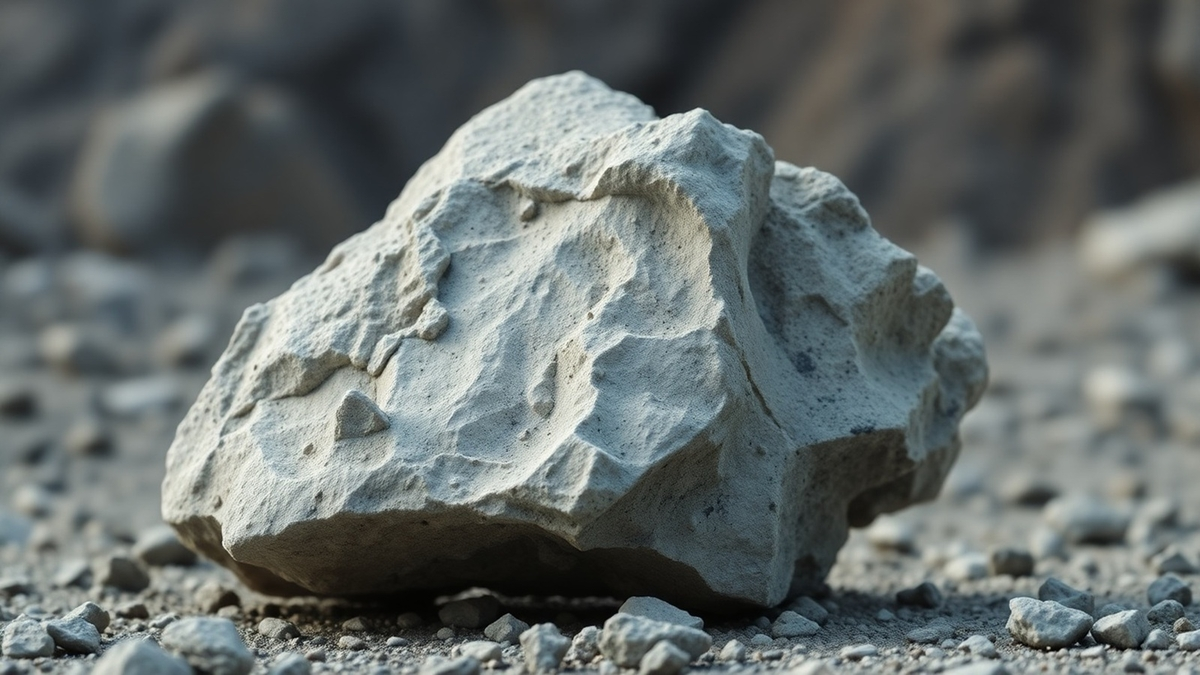
What’s special about it. Opalinus is a clay rock dating back to the Middle Jurassic, with an estimated age of approximately 175 million years. Simply put, it is clay that has been compacted into rock. And it has a property that makes it a good candidate for nuclear storage: its very low permeability.

Context. The study of Opalinus is not new by any means: GFZ has been on their radar for 30 years because, in addition to its very low permeability, it has properties such as its plasticity (under pressure, it deforms instead of breaking, something convenient if it works as a radioactive deposit) or its ability to retain certain radionuclides. Switzerland has already chosen it, but it remains to be known how it behaves in the conditions that exist in much deeper areas, where, for example, temperature or pressure change significantly.

How they do it. In the Swiss canton of Jura, near the municipality of Saint-Ursanne, there is that Mont Terri. In its bowels there is an underground laboratory that is accessed through the security gallery of a highway tunnel, about 150 – 200 meters underground. A drilling platform works continuously there, advancing meter by meter, until reaching a depth of 800 meters.

The drill uses a hollow crown that allows extracting intact rock columns, the sample that is later analyzed in the laboratory. Each advance works as a witness insofar as it reveals the age, the composition, the fractures and the differential quality: how it behaves with water. In addition, they use seismic and gravimetry techniques to obtain a complete X-ray of what is hundreds of meters deep.

In WorldOfSoftware | Ships have been damaging the oceans with noise for centuries. Germany is working on silent propellers to solve it

In WorldOfSoftware | 700 tons of nuclear waste have arrived in Germany from England. The Germans are not entirely happy

Portada | Ilja Nedilko and Evangelos Mpikakis

Sign Up For Daily Newsletter

Be keep up! Get the latest breaking news delivered straight to your inbox.
By signing up, you agree to our Terms of Use and acknowledge the data practices in our Privacy Policy. You may unsubscribe at any time.
Share This Article
Facebook Twitter Email Print
Share
What do you think?
Love0
Sad0
Happy0
Sleepy0
Angry0
Dead0
Wink0
Previous Article Tonight on TV, this film almost gave birth to one of the greatest extended universes in cinema Tonight on TV, this film almost gave birth to one of the greatest extended universes in cinema
Next Article 'Marshals' Release Schedule: When Episode 4 Hits Paramount Plus 'Marshals' Release Schedule: When Episode 4 Hits Paramount Plus
Leave a comment

Leave a Reply Cancel reply

Your email address will not be published. Required fields are marked *

Stay Connected

248.1k Like
69.1k Follow
134k Pin
54.3k Follow

Latest News

Court documents: Did 23andMe allow itself to be blackmailed?
Software
Conversation techniques: How to convince skeptics
News
MIT has found the key to economical lithium extraction, the end of Chinese control?
Computing
Two architects fled the chaos of New Delhi to build a mud house in the Himalayas. Now it’s an Airbnb
Gaming

You Might also Like

the screen of the Xiaomi 17T Pro impressed us on this point
Mobile

the screen of the Xiaomi 17T Pro impressed us on this point

7 Min Read
thousands of fake FIFA sites flood the Internet
Mobile

thousands of fake FIFA sites flood the Internet

8 Min Read
The CNIL is alarmed by connected glasses, Meta adds more with an AI collar
Mobile

The CNIL is alarmed by connected glasses, Meta adds more with an AI collar

3 Min Read
How is RED by SFR shaking up the telecoms market?
Mobile

How is RED by SFR shaking up the telecoms market?

4 Min Read
//

World of Software is your one-stop website for the latest tech news and updates, follow us now to get the news that matters to you.

Quick Link

  • Privacy Policy
  • Terms of use
  • Advertise
  • Contact

Topics

  • Computing
  • Software
  • Press Release
  • Trending

Sign Up for Our Newsletter

Subscribe to our newsletter to get our newest articles instantly!

World of SoftwareWorld of Software
Follow US
Copyright © All Rights Reserved. World of Software.
Welcome Back!

Sign in to your account

Lost your password?