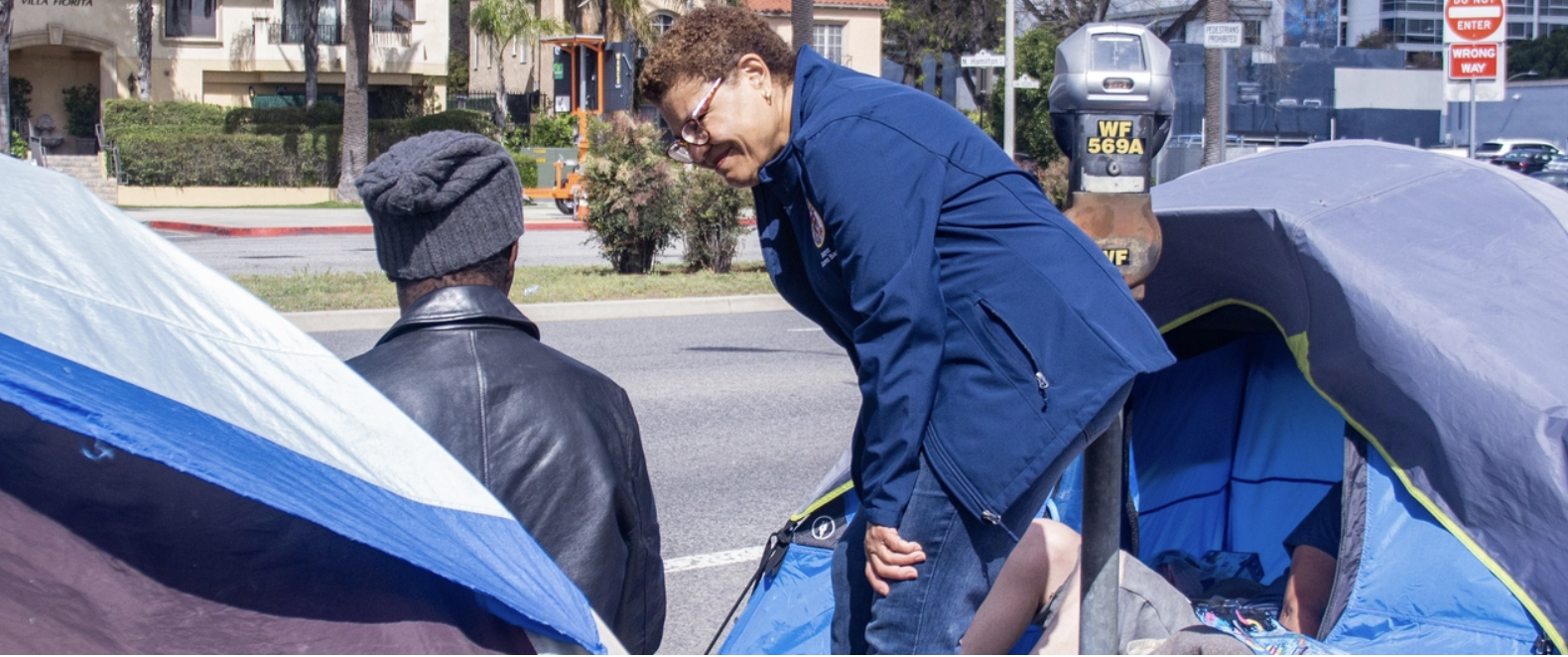
When the trucks rolled up that dawn in March 2024, the light hit my tent like a searchlight. I remember thinking, with the same dull, incredulous ache I feel now, that the city had learned a new way to be gentle: it would hand me a tent and a citation in the same breath, and call both “interventions.”
There had been no warning. No posted notice taped to a pole, no outreach visit the night before, no quiet word passed along the line of tents. Just floodlights snapping on while it was still dark, voices shouting that sanitation would clear the area, and the sudden understanding that whatever you couldn’t gather in minutes would be treated as disposable. LAPD stood at the edge of the sidewalk, hands off but unmistakably present, turning proximity into instruction. Workers shoved canvas and blankets into dumpsters; someone’s medication spilled from a torn bag, tiny tablets scattering across the concrete like confetti. An outreach worker handed me a new tent and smiled, as if this proved the morning had been for my good. I could smell bleach and bureaucracy in the air.
Los Angeles calls its current strategy “Inside Safe,” a city-led effort the mayor’s office describes as a “housing-led” approach to bring people inside and prevent encampments from returning. The press releases talk about dignity, housing pathways, and coordinated outreach; the language is earnest, wrapped in policy meant to reassure. But it arrives, as it did that morning, without consent or warning care announced by floodlight, help delivered alongside enforcement.
By the end of the day, I had been offered a temporary room and warned the encampment couldn’t return. I took what I could, lost what I couldn’t carry, and learned quickly that the city’s version of “inside” often comes without permanence or a way back if it fails. People who have never slept with their things under their arm don’t understand what getting your possessions taken feels like. Documents, medication, and faded family photos aren’t trash. They’re proof of identity, the thin scaffolding that keeps you connected to services and the people who can help you apply for housing.
The Ninth Circuit made that point years ago in Lavan v. City of Los Angeles. The court recognized that seizing and destroying the property of people living on the street raises constitutional concerns. That law is not a parlor trick — it should be the backbone for how any “cleanup” is run. Inside Safe has moved thousands of people into interim shelter and motel rooms; the city has celebrated those numbers as evidence the program works.
But counting people ushered “inside” is not the same as counting people stably housed. Follow-up reporting shows that only a fraction of those moved into temporary placements ever reach permanent housing, and many return to the street after city-funded rooms expire or supports evaporate. When temporary placement is the metric, the system looks effective on paper even as it churns lives in the real world.
What do sweeps actually take from you?
They take time. After the sweep, I spent days trying to reconstruct what had been lost — retracing steps to see if anyone had picked up my papers, calling clinics to replace medication, waiting in lines that assume you have an address, a phone, and hours to spare. Every sweep is a workday stolen hours spent collecting, cataloging, replacing documents, or chasing down lost medication. For people trying to apply for housing, keep an appointment, or hold down occasional day labor, those hours translate directly into missed opportunities.
They take identity. I know this because I had to rebuild mine piece by piece after the sweep retracing paperwork, asking clinics for replacements, standing in lines that assume you have a phone, an address, and hours to spare. Without ID, you can’t enroll in programs, open a bank account, or secure housing. Replacing documents requires money, time off, and a stable place to receive mail the very things displacement destroys. A “cleanup” that rips your papers away is, in practice, a legal exile.
They take community. I know this because after the sweep, people I relied on every day were suddenly gone. Encampments are more than tarps; they are networks. Neighbors share food, watch for medical emergencies, and pass each other notes about jobs and outreach. When the city scatters people, that informal safety net fractures sometimes permanently and you’re left piecing together what happened through texts, secondhand updates, or silence.
They take dignity. I’ve stood there while uniformed officers watched as my life was bagged for the compactor, told not to interfere, told this was for my own good. Being observed in that moment is not neutral; it is a deliberate form of humiliation. It teaches you that your survival is a nuisance, your presence a problem to be managed, not a life to be respected.
They take safety. I learned this after being moved and having to relearn, quickly, what was safe and what wasn’t, which doors to avoid, which hallways stayed lit, who would notice if I didn’t come back at night. Displacement often increases risk. Motels can be unsafe, shelters can be hostile or exclude partners and pets, and being relocated miles from clinics, friends, or a support network can undermine recovery and continuity of care. I’ve watched people cycle back to the street when placements failed to account for these realities, a pattern later echoed in audits and reports by mutual aid groups.
I don’t tell you this to score rhetorical points. I tell you because the city’s metrics encampments cleared, people “moved inside” are thin instruments for measuring human lives. They were designed for optics — fewer tents on streets that tourists and investors see.
What we need to measure instead are the outcomes that matter: not just how many people are moved into temporary rooms, but whether they can keep their medication and documents, stay near their community, and experience a higher quality of life afterward. Do they feel more stable, more connected, and better able to care for themselves and each other, or just briefly out of sight?
There are people doing good work out here: mutual aid volunteers who map displaced camps, lawyers who fight wrongful seizures, advocates who press for case management that lasts longer than thirty days. They document what the city says it wants to fix but doesn’t — the fact that a large share of people brought into Inside Safe placements end up back outside when funds or program terms end. Those audits are not ideological screeds. They are records from neighbors and volunteers who show the before-and-after of these operations.
If the city truly wants a “housing-first” response, it must stop treating visibility as the problem. Housing-first means housing without preconditions. It should not be contingent on compliance or on the ability to pack up in fifteen minutes. It means investing in enough permanent units that people can move off the street for good, not into a rotating door of motels. It means case managers with reasonable caseloads who can help people secure benefits, keep appointments, and replace lost paperwork. It means policies that allow people to bring partners and pets. It means centering people’s consent and dignity in every interaction.
I’ve been handed a tent and a ticket in the same exchange — the citation still warm from the printer, the tent folded like a consolation prize. I’ve been offered a motel room and told my partner couldn’t come, as if stability were something you could accept only by severing the relationships that keep you alive. I’ve sat in outreach meetings where a worker’s kindness was real but undercut by the looming presence of police and a sanitation truck, enforcement waiting patiently for care to fail. We can call that “coordinated care” if we like, but coordination that includes enforcement is coordination that prioritizes public order over human life.
We are not a problem to be made invisible. We are not a nuisance to be pushed into someone else’s neighborhood. We are people who deserve pathways out of crisis that don’t require surrendering our dignity to get there. If you want to help, stop applauding numbers without asking the next question — how many people stayed housed after “moving inside”? How many lost critical documents in the sweep? How many left placements because the rules and separations made them worse off?
Ask for follow-up data. Demand audits. Support mutual aid groups who document what happens on the ground. Push for legal enforcement of protections against wrongful seizure. The Ninth Circuit’s reasoning in Lavan shows the law can be a tool to prevent destruction of people’s property; using it matters beyond rhetoric.
Los Angeles can do better. It begins by recognizing that the simplest measure of progress is fewer people living on the street because they have safe, permanent housing, not because they were moved, hidden, or pushed into temporary rooms that vanish when a line on a budget sheet does. Until that happens, the tent and the ticket will remain the city’s favorite, terrible offer, and the word “compassion” will stay pinned to policies that do more to manage public view than to restore public life.