Andy Walker / Android Authority
One of the first things I would pack for road trips was my trusty Nikon DSLR. I’ve captured some truly memorable moments with the kit lens and 70-300mm zoom lens, but I always lamented just how much space the latter required.
You can imagine my excitement when pioneering Chinese firms started rolling out telephoto extenders that work with their camera phones. The concept certainly seemed ridiculous, but now that I’ve used one for several months, it’s by far the most exciting Android phone trend of the future.
What is your opinion on the telephoto extender lens trend?
0 votes
Telephoto extenders aren’t new, but they’re more polished than ever before

Paul Jones / Android Authority
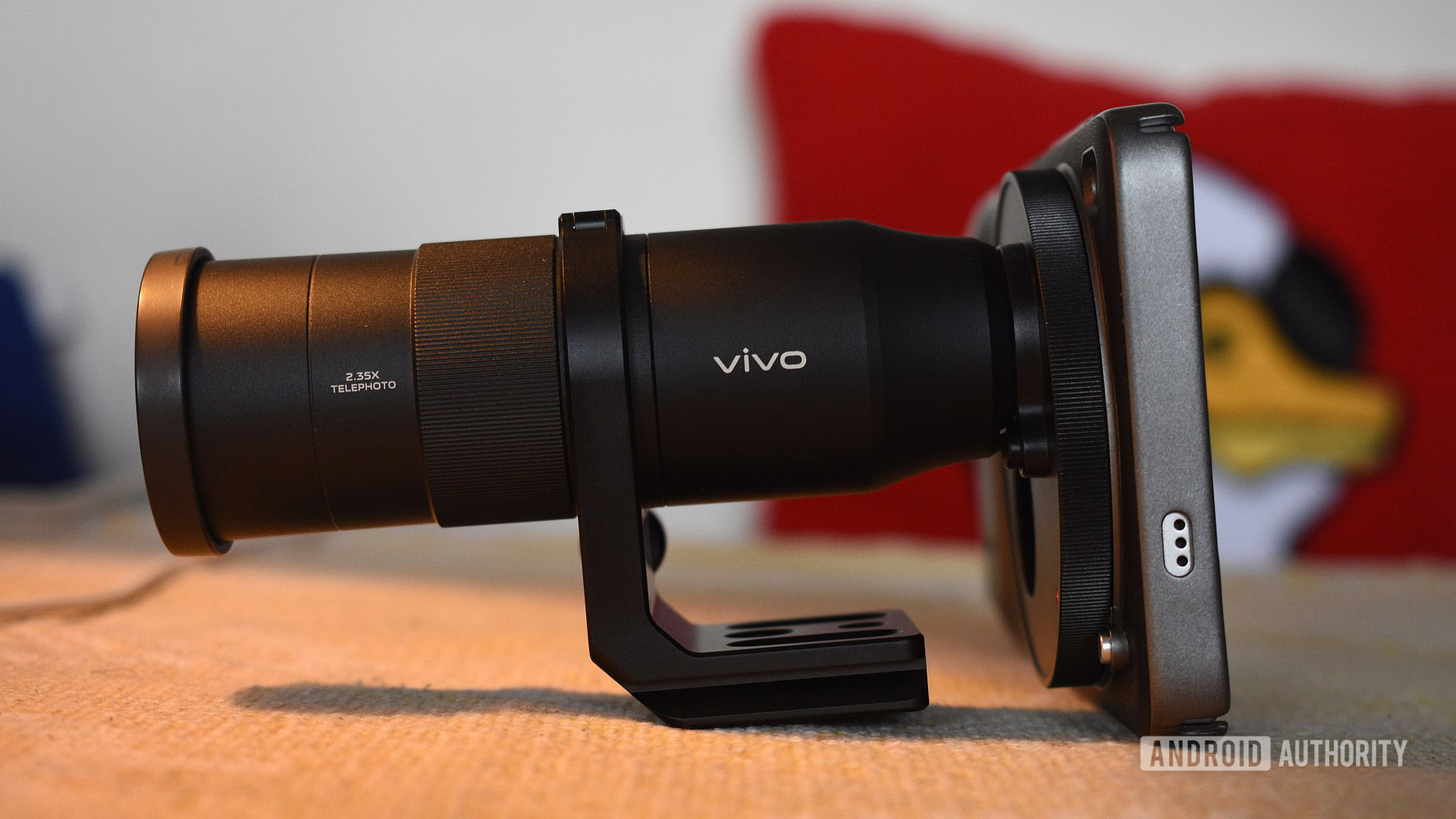
For the uninitiated, a telephoto extender (also referred to as zoom lenses, telephoto converters, or teleconverters) is effectively an attachable lens that extends a camera phone’s effective zoom range. This allows a phone to reach further than it theoretically could with its standard built-in camera kit. The device I’ve been using for a few months now — the vivo X200 Ultra — mounts its extenal lens to its 200MP periscope camera to give an effective 200mm of zoom. That’s native zoom — no digital trickery is involved, at least not initially.
Telephoto extenders enhance the zoom range of smartphone cameras, allowing them to reach even further.
The concept isn’t exactly new — one of my favorite Samsung products was the 2014 Galaxy K Zoom. Unlike modern devices that support external telephoto extenders, it had a retractable lens, which gave it considerable bulk and an utterly silly profile. While I loved the brashness of the concept, it’s fair to say that camera hardware wasn’t quite up to snuff back then.
More than a decade later, with phones now regularly packing capable sensors, vivo launched the X200 Ultra. The 2025 phone was one of the first commercial devices with a purpose-built teleconverter, and it kicked off a lens rush. The OPPO Find X9 Pro followed late last year with its own farther-reaching attachable lens, while vivo followed up with the X300 Pro. There’s even a rumor that Apple is considering such an accessory for the iPhone 18 series. There’s no doubt that telephoto extenders are hot right now, but they’re more than just hype — they’re practical, feasible, and hugely rewarding for photography.
Phone photography is exciting again!
For the New Year break, I took a trip to an apple farm. It was a glorious stay in a cottage surrounded by orchards, the scent of fallen pine needles, and the call of a particularly noisy common buzzard. I’d normally have my camera dangling from my shoulder on these trips, but I left it at home — I was intent on using the X200 Ultra for my weekend photography.
So I grabbed it, mounted the lens, and pointed at the raptor. The results speak for themselves:
I could capture a detailed image of this amazing bird sitting 20 meters away. This simply wouldn’t be possible, at least not with this clarity, on any other phone I’ve used before. You can enjoy a few other avian friends captured using this system below.
With the increased zoom range (good up to 400mm effective range, in my opinion), I’ve also been challenged to focus on framing once again when I’m not snapping singular subjects. I have the reach to capture distance scenes, but that also means solving more interesting problems with my eye. I loved playing with light and faraway subjects — subjects I wouldn’t or couldn’t normally consider. It’s been a wonderfully refreshing feeling.
Beyond the results, there are practical benefits of this system over my DSLR. While my Nikon is certainly capable, the vivo X200 Ultra and its lens easily fit in my pocket. I don’t have to fuss about lint in my pocket — the lens is well protected, and the sensor lies within the phone. I’m constantly concerned with the odd grain of sand or speck of damaging dust infiltrating my DSLR’s housing.
And, as it’s a phone, I have access to two other cameras almost immediately. Twisting off the teleconverter and switching to the ultrawide lens, I can go from capturing a bird perched on a faraway branch to a broad shot of the valley unfolding ahead of me. This versatility would otherwise require a large camera bag and space in my hatchback’s relatively small boot. All the phone system needs is a free pants pocket.
A snags list as long as its zoom range

Hadlee Simons / Android Authority
As smitten as I am by the telephoto extender trend, I’ll admit that it has a long, long list of snags and shortcomings companies must contend with. Worst of all is the usability, which directly affects the quality of snaps.
vivo’s lens is bulky and heavy, so when it’s attached to a comparatively balanced smartphone, it makes the system lopsided. This is a detriment when trying to keep the camera pegged on a subject at high zoom — the slightest movement or twitch can lurch the subject out of the frame or smear the foreground. A phone with such a system lacks the stability of a DSLR perched against your eye. Sure, the lens kit does come with a grip kit and I’ve been using the tripod support as handhold, but this presents its own problems; I now have two additional pieces of kit I’d need to carry.
Telephoto extenders have their problems, but none are insurmountable.
Then there’s the mounting system. I understand that the X300 Pro largely solves this flaw with a sturdier case, but this is a core problem with telephoto extenders. You could build the mount onto the phone itself, but this makes it bulky for those who don’t use it. vivo’s solution is a case that houses the mount. However, mounting the lens to it is time-consuming and requires fiddly work when time is of the essence. The lens also wiggles around when it’s attached, which, while not affecting image quality, isn’t a reassuring feeling in the hand.
I have no doubt that these and other problems will be ironed out in time. vivo’s software processing really needs to be taken down several notches, while the lens offers very few shooting modes and no manual controls. The glass is also far too slow, too sensitive to the smallest of movements, and perhaps doesn’t reach as far as it could to be truly useful. Perhaps 400mm would be a far better starting point? This is certainly the direction that OPPO seems to be heading.
This is the smartphone innovation to watch in 2026

Hadlee Simons / Android Authority
Look, despite the numerous problems, telephoto extenders are inherently fascinating to me. After we’ve seemingly maximized the available space for zoom potential within the phone’s body, it’s a natural progression in the zoom race to have a more powerful external lens that doesn’t face the same space constraints. It looks like a silly gimmick, and it will be for many people, but the casual photographer in me can’t help but get excited by this technology. After using the vivo X200 Ultra — which is no longer the best example of this solution — I saw and felt the tangible benefits a reaching lens has on smartphone photography.
With the price of devices set to spike this year, it’s the perfect time for companies to innovate.
Yes, there are kinks to iron out, and yes, this solution is pricey, but I hope the likes of Apple, Samsung, and Google consider introducing their own solutions in the coming years. With device prices set to spike in the near future, it’s the perfect time for these companies to innovate. The underlying technology in these devices is so similar that standout developments, like telephoto extenders, can be the real difference-makers.
Don’t want to miss the best from Android Authority?


Thank you for being part of our community. Read our Comment Policy before posting.