Ukraine recently survived the fourth winter of Russia’s full-scale invasion. That is not a figure of speech. During the winter months, Moscow’s clear intention was to freeze millions of Ukrainians into submission by bombing power and heating infrastructure amid subzero temperatures.
Russia has employed similar tactics during each wartime winter, but the scale of the latest bombing campaign was unprecedented. In January, United Nations officials documented regular strikes on energy infrastructure across seventeen regions of Ukraine. By the end of the winter season, all of Ukraine’s thermal power plants had been damaged or destroyed.
In Kyiv, thousands of residential buildings were left without central heating for extended periods. The municipal authorities reported zero deaths as a result of power and heating outages, but some volunteers who visited freezing apartments remain skeptical that the official statistics tell the full story.
Ukraine was able to endure the hardships of the past winter because it adapted and improvised. In doing so, the country laid the foundations for an operational doctrine to keep cities warm when civilian infrastructure comes under systematic attack. This has practical applications beyond the borders of wartime Ukraine.
The model of heating infrastructure resilience that has emerged in Ukraine in recent years is based on decentralization and speed. When centralized heating plants became high-value targets for Russian drones and missiles, Ukrainian operators pivoted toward mobile cogeneration units. Greater reliance on these compact systems created the conditions to generate both electricity and heat independently of the wider grid.
By November 2025, Ukraine’s district heating sector was operating 182 cogeneration units alongside almost 250 block-modular boilers. This made it possible to create so-called “energy islands” for hospitals, water utilities, and residential heating. While European procurement cycles can often be measured in years, Ukrainian operators were able to install these decentralized heating and energy solutions in a matter of days.
Ukraine’s response was not planned in advance; it was improvised under fire. As Russia’s bombing campaigns have intensified over the past four years, Ukraine has developed a rapid repair doctrine complete with pre-positioned spare parts, emergency communication protocols, and decision-making at the municipal level that cuts through the bureaucratic hierarchy.
An assessment by the International Energy Agency (IEA) published in February 2026 found that Ukraine’s comprehensive emergency response capabilities could offer important lessons for the international community. The immediate neighborhood stands to gain most from studying Ukraine’s experience.
Across Central and Eastern Europe, district heating is the primary way cities stay warm. Poland, Slovakia, the Czech Republic, Hungary, and the Baltic states all depend on centralized systems similar to Ukraine’s that date back to the Soviet era. This makes them potentially vulnerable if adversaries choose to target civilian infrastructure.
Eurasia Center events

For now, the region is unprepared. Crisis protocols are untested, while limited municipal budgets are more likely to be spent on boiler maintenance than cyber security. Meanwhile, there are signs that the threat to civilian infrastructure is not limited to bombardment and could also include a cyber dimension.
In January 2024, malware shut down heating to over six hundred apartment buildings in Lviv in western Ukraine. This was the first known use of this method to disrupt municipal heating systems. Researchers have identified similarly exposed systems in Lithuania and Romania.
In late 2025, a coordinated cyber attack targeted a large Polish combined heating and power plant serving nearly half a million customers. A probe into the incident found links to the Russian security services and revealed that the attackers had penetrated the system months in advance.
Ukraine knows what these attacks look like, how they escalate, and how to keep heat flowing in spite of them. However, the European providers who need this information do not always have it. There are some signs that European attention is beginning to turn toward collective cyber defense and infrastructure resilience. Proposals for joint European cyber defense capabilities are now on the table, but the pace of the debate does not match the scale of the threat.
The institutional infrastructure for knowledge exchange already exists. Europe’s Energy Community Secretariat connects Ukraine to its European neighbors and has signed memorandums specifically on district heating coordination. Meanwhile, the Preparedness Union Strategy sets out thirty actions for crisis resilience across the EU. However, there is currently no mechanism to translate Ukraine’s hard-won knowledge into systematic European preparedness.
Ukraine did not choose to become Europe’s laboratory for civilian heating infrastructure under attack, but it is now institutionalizing the results. In early March, Ukraine’s National Security and Defense Council approved energy resilience plans for every region of the country built around four pillars: Critical infrastructure protection, additional cogeneration capacity, decentralized heating supply, and decentralized water supply.
Ukraine is turning wartime improvisation into national doctrine. The question is whether the country’s European neighbors will absorb this knowledge before they have to learn the same lessons first-hand.
Miro Sedlák is a senior energy sector executive, security and defense studies doctoral candidate at Slovakia’s Armed Forces Academy of General M.R. Štefánik, and an associate research fellow at the Institute for Central Europe.
The views expressed in UkraineAlert are solely those of the authors and do not necessarily reflect the views of the , its staff, or its supporters.

The Eurasia Center’s mission is to enhance transatlantic cooperation in promoting stability, democratic values, and prosperity in Eurasia, from Eastern Europe and Turkey in the West to the Caucasus, Russia, and Central Asia in the East.
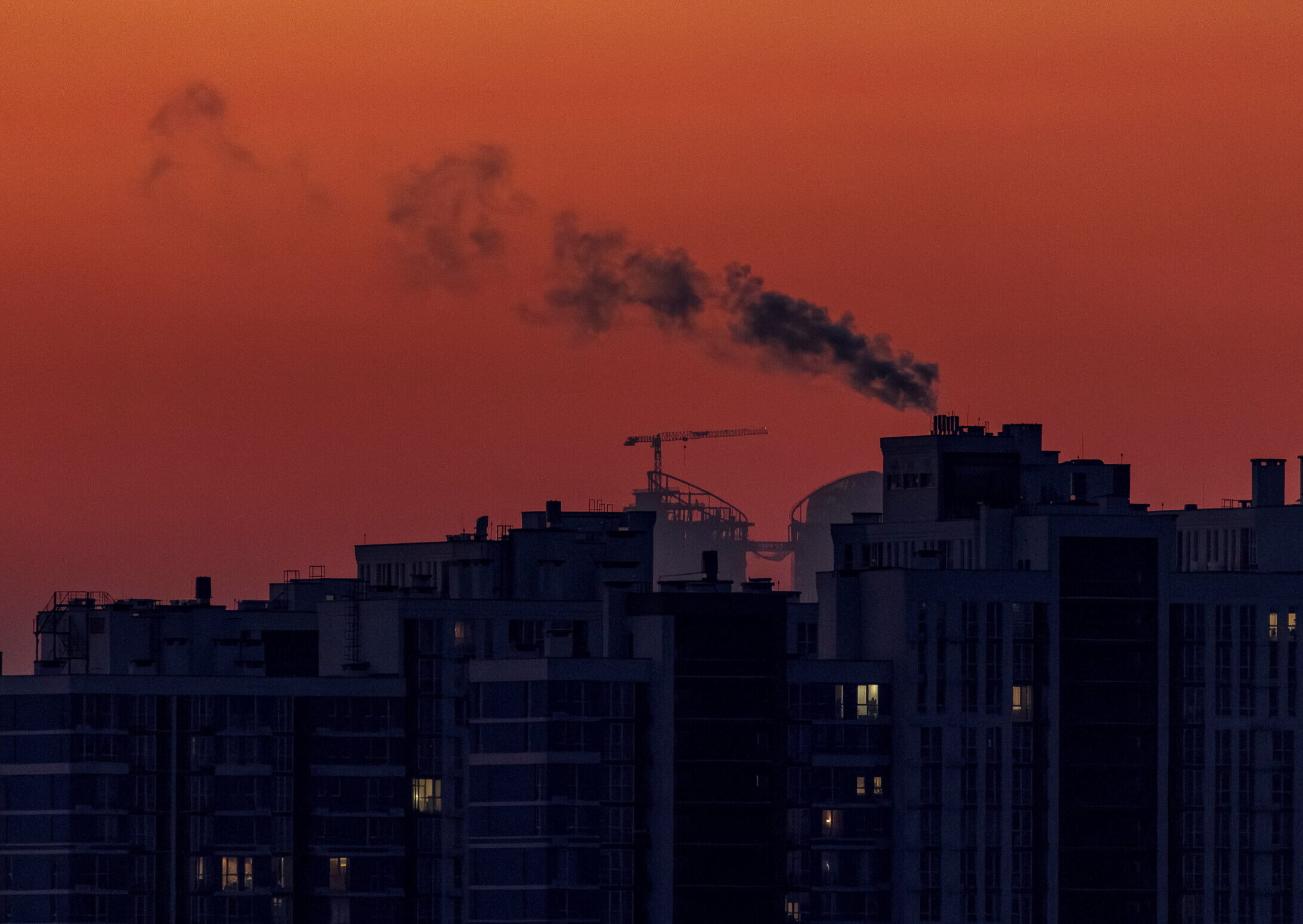
Image: Water vapour rises from residential buildings’ autonomous heating systems during a power blackout and freezing temperatures, after critical civil infrastructure was hit by recent Russian missile and drone attacks, amid Russia’s attack on Ukraine, in Kyiv. January 19, 2026. (REUTERS/Vladyslav Sodel)