Don’t look now, but smart glasses with displays could be poised to start slowly replacing the smartphones we stare at all day. Right now smart glasses are seen as smart phone accessories, but with steady improvements in the tech and new models on the way from Meta, Google, Samsung and eventually Apple, the phone we used today could eventually be seen as more of a hub for our glasses than as the foremost mobile computing device.
The Meta Ray-Ban Display glasses are considered the current gold standard for smart glasses with displays, and Lumus makes the technology behind them. Dubbed waveguides, the transparent optical component beams light from a tiny projector, allowing you to see digital info layered on top of the real world.
I also checked out the Z-30, a waveguide with a 30-degree FOV and a new Z-30 2.0 that’s ultra-thin. Yup, the writing could be on the wall for the best phones.
A world’s first 70-degree FOV
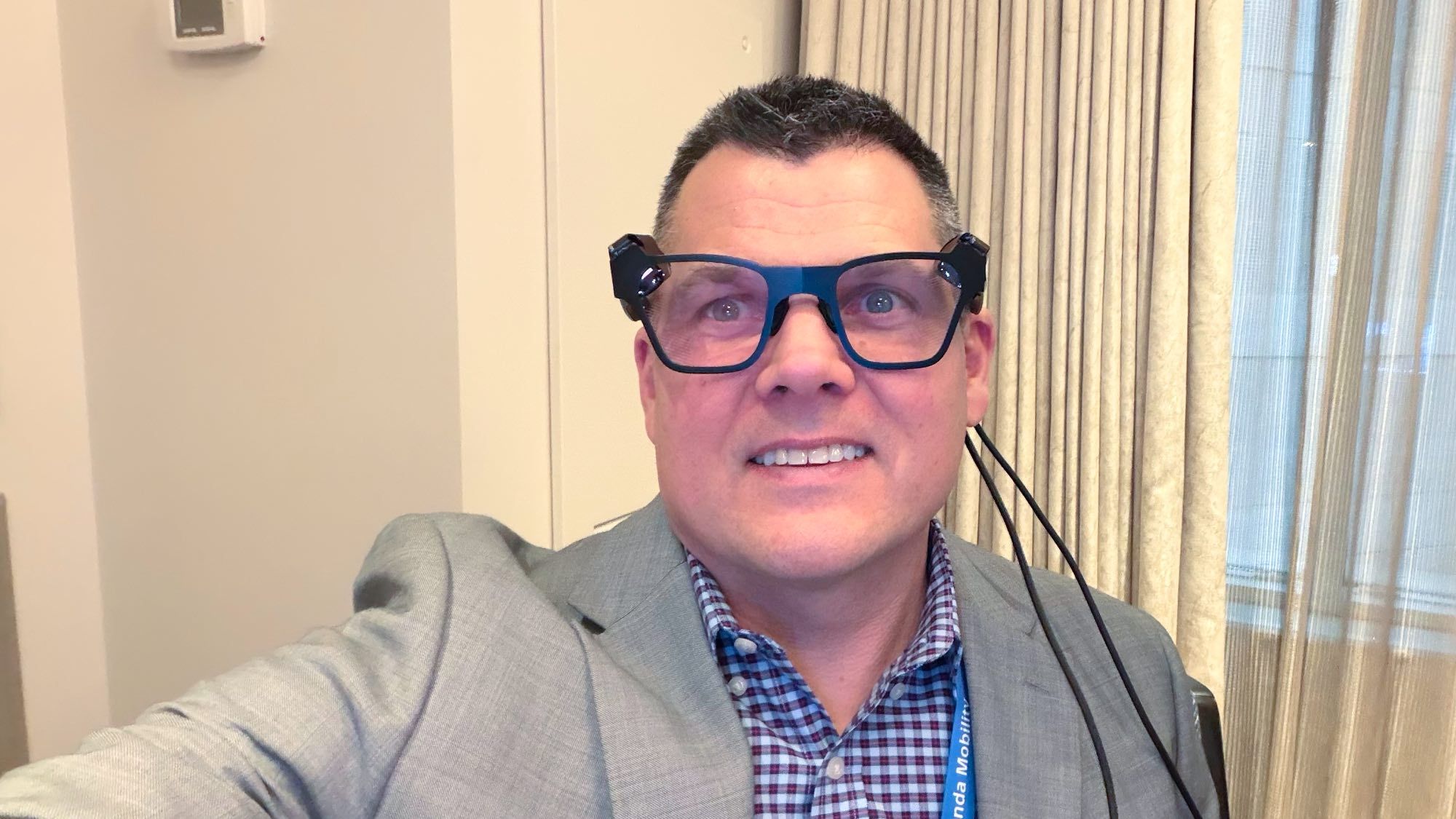
The ZOE is the “world’s first geometric waved guide” that surpasses a 70-degree FOV. The prototype I tried on is very fragile, but once I put it on I was fully immersed in the content being displayed from a nearby laptop. This included a 3D video of a cyberpunk airship, as well as still images of characters like Kermit the Frog.
The images were much sharper than anything I’ve seen before from smart glasses, including from the existing Meta’s but also the prototype Android XR glasses that are coming from Google and its partners.
Lumus promises “sharp image quality, natural transparency, and full-color fidelity (1080p resolution)….in immersive AR applications like spatial entertainment, multi-app productivity, and new modes of communication.”
It’s also worth noting that the prototype Meta Orion glasses Facebook showed off in 2024 had a 70-degree FOV. So this technology could very much power the next version of the Meta Ray-Ban Display along with other new smart glasses.
The quest for slimmer smart glasses — and less phone screen time

I also tried on the Z-30 optical engine, which is rated for 40% higher brightness than previous waveguides along with improved image quality. I noticed this especially when looking at test patterns. Weighing just 11 grams, the Z-30 is designed for placeable experiences like navigation, translation and more.
If you think most smart glasses look too thick and geeky, I have good news. Lumus also showed me its Z-30 2.0 prototype, which is 40% thinner and 30% lighter than previous waveguides. The result should be slimmer, more natural looking frames.

Part of the reason why Lumus’ waveguide tech is so compelling is that other people can’t tell that you’re looking at content. But given the sheer size of the image with the 70-degree prototype, I had to ask Lumus’ VP of marketing David Goldman if the image takes up too much of the user’s view.

The good news is that this will be controllable via software, so when you’re on the go you could have a smaller FOV, and it could be much larger when you’re at home or at your desk.
Over time, Lumus sees its technology as enabling users to lessen our dependence on phones as smart glasses proliferate.
“We’re moving to near-eye displays, and we’re not going to be locked in the black mirror for much longer,” Goldman said. “I don’t think there’s a turn back from that.”

Follow Tom’s Guide on Google News and add us as a preferred source to get our up-to-date news, analysis, and reviews in your feeds.