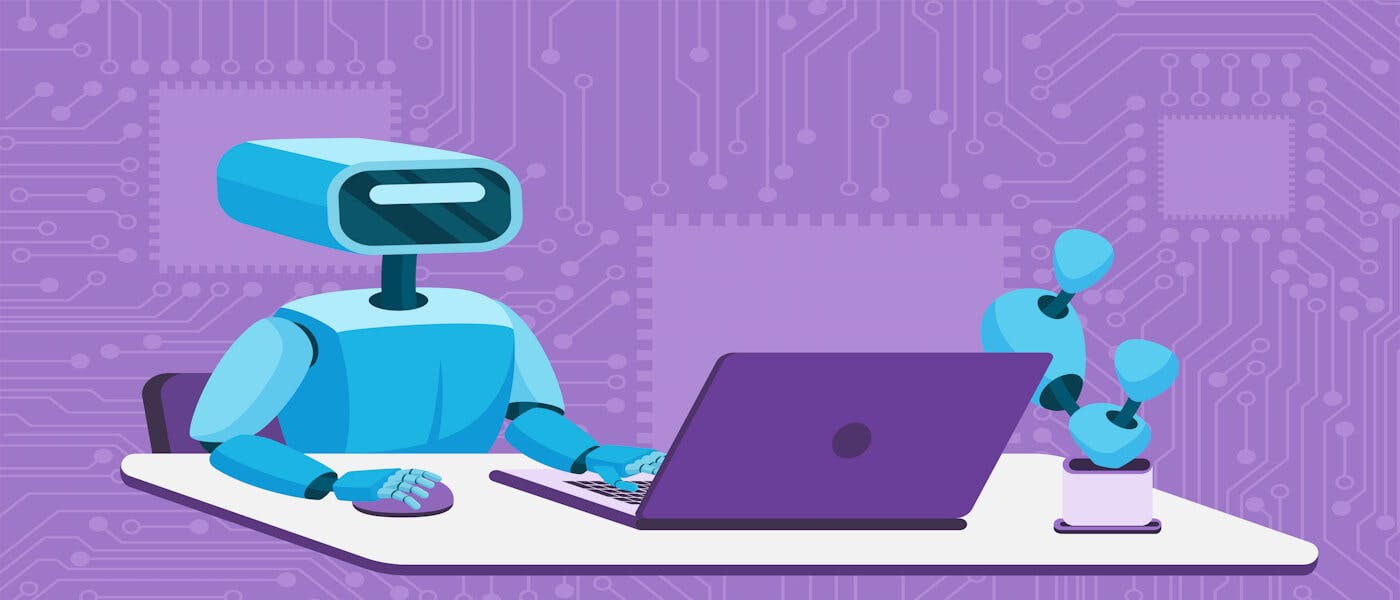
For years, developers handled every line of code by hand. Long hours. Debugging sessions that stretched late into the night. Coffee cups everywhere.
Now, something interesting is happening.
Many developers are letting AI tools write parts of their code. Not for a few minutes. Not just for a quick snippet. But for days at a time.
So, what actually happens if you let AI write your code for an entire week?
Does productivity explode? Do bugs multiply? Does it replace developers or simply change the way they work?
Let’s talk about what really happens when teams try this experiment.
The First Day Feels Surprisingly Fast
The first thing most developers notice is speed.
Tasks that normally take 20 minutes can take five. Boilerplate code appears almost instantly. Functions that once required careful typing suddenly show up with a single prompt.
You ask for a login API. It generates one.
You need a form validation script. Done.
You want a quick database query. There it is.
At first, it feels like a cheat code. Developers spend less time typing and more time reviewing what appears on the screen.
And that shift matters.
Instead of building everything from scratch, the role begins to change. You guide the code rather than write every character.
The keyboard gets quieter. The brain gets busier.
Routine Work Almost Disappears
Developers spend a surprising amount of time on repetitive work.
Creating similar functions. Writing standard API calls. Building CRUD operations again and again.
After a few days of using AI tools, that repetitive work starts to fade away.
You can request things like:
- Create an API endpoint for user profiles
- Write a pagination function
- Generate test cases for this module
The result appears quickly.
This does not mean the code is always perfect. Far from it. But it usually gets you halfway there.
Instead of spending an hour writing the structure, you spend ten minutes adjusting the details.
That shift saves real time.
Debugging Becomes a Different Experience
By day three or four, something interesting happens.
Developers begin using AI to fix bugs as well.
You paste an error message. It suggests possible fixes.
You share a block of code. It points out issues.
Sometimes, the solution works instantly. Other times it sends you in the wrong direction.
But even when the answer is not perfect, it often gives developers a starting point.
Think about how debugging normally works. You search documentation, read Stack Overflow threads, and test ideas.
Now you can ask for possible fixes instantly.
It becomes a brainstorming partner rather than just a coding assistant.
The Developer Still Does the Real Thinking
Here is the part that many people misunderstand.
Even if AI writes pieces of the code, developers still make the important decisions.
You decide the architecture.
You define how systems communicate.
You design the database.
You determine performance requirements.
AI can generate code, but it does not understand the business problem the way you do.
And that difference becomes obvious after a few days.
Developers who give vague instructions often receive messy code. Developers who give clear instructions get better results.
In other words, good thinking still matters.
Code Reviews Become More Important
When AI writes part of your code, reviewing becomes critical.
Developers cannot assume every line is correct.
Some generated code may be inefficient. Some may ignore edge cases. Occasionally, there may be security issues.
So teams spend more time reviewing and testing.
That sounds like extra work, but it balances out. Since the code appears faster, there is more time to inspect it carefully.
Many developers describe the process like this:
- AI writes the first draft.
- The developer edits it.
It feels similar to editing a document someone else started.
Small Projects Move Much Faster
After a full week of working this way, the speed difference becomes clear.
Small features can ship quickly.
Internal tools get built faster.
Prototypes appear in days instead of weeks.
Startups find this particularly helpful. When you’re testing ideas quickly, speed can make a big difference.
Instead of spending weeks building a proof of concept, teams can assemble something functional in a few days.
That agility helps teams experiment more often.
Complex Systems Still Need Human Experience
Here is where reality sets in.
Large systems still require deep experience.
AI tools may generate individual pieces of code, but designing complex platforms still depends on human judgment.
Think about things like:
- Microservice architecture
- Security rules
- Scaling strategy
- Database design
- API versioning
These decisions affect the entire product.
AI can help with smaller tasks inside those systems, but the big picture still belongs to experienced developers.
And that likely won’t change anytime soon.
Developers Spend More Time Asking Good Questions
When developers rely on AI tools, one skill becomes very important.
Asking clear questions.
The quality of the answer often depends on how the request is written.
A vague request may produce vague results.
A detailed request usually leads to better code.
Developers who learn how to describe problems clearly get the most value from these tools.
That skill improves with practice.
By the end of the week, many developers notice they spend more time thinking about the request than typing the solution.
Costs Become a Serious Topic
Once teams see how much faster development can move, another conversation begins.
Cost.
Companies begin asking whether faster development reduces project budgets.
Some teams notice they need fewer development hours to build certain features. Others find they can build more features within the same budget.
Both situations change how companies think about software planning.
And this is where discussions about AI software development cost in 2026 become very relevant.
The tools themselves are not free. Teams must pay for subscriptions, cloud usage, and additional infrastructure.
But the productivity increase can offset those expenses.
If a feature takes half the time to build, the overall project cost may drop.
That potential shift is why many businesses are exploring how AI tools affect development budgets.
The Learning Curve Is Surprisingly Short
One surprising discovery is how quickly developers adapt.
Most tools work through simple prompts or code suggestions.
Developers experiment for a few hours and quickly find a rhythm.
By day five or six, the workflow starts to feel natural.
- Write a prompt.
- Review the code.
- Adjust it.
- Test it.
That cycle repeats throughout the day.
The process does not replace traditional coding. It simply adds another tool to the toolbox.
Creativity Starts to Increase
Less repetitive work means developers have more time to think about creative solutions.
Instead of focusing on small coding details, they can focus on improving the product.
User experience.
Feature ideas.
Performance improvements.
Developers often say the job becomes more interesting when routine tasks shrink.
And when teams move faster, experimentation becomes easier.
You can try new ideas without committing weeks of development time.
That freedom changes how teams build software.
Some Developers Feel Skeptical
Not every developer loves the experience right away.
Some worry about code quality.
Others feel uncomfortable relying on generated code.
There is also a fear that heavy reliance on AI could weaken core programming skills.
Those concerns are understandable.
But after a week of testing these tools, many developers realize something important.
AI is not replacing their skills.
It is amplifying them.
The developer still decides what gets built and how it should behave.
Teams Start Rethinking Development Workflows
When coding speed increases, team workflows often change.
Developers collaborate differently. Code reviews become more detailed. Planning sessions focus more on architecture and less on writing basic functions.
Product managers also notice something interesting.
Features move through development faster.
That can shorten release cycles and speed up product updates.
And when software updates reach users faster, companies can respond to feedback quickly.
Security and Testing Stay Critical
One thing that never changes is the need for careful testing.
Generated code must still go through security checks, performance tests, and QA review.
Companies cannot skip those steps.
If anything, automated code generation makes testing even more important.
Teams need to confirm that every component behaves correctly.
Developers who rely heavily on generated code usually increase their testing coverage to stay safe.
The Real Outcome After One Week
After seven days of letting AI write parts of the code, most developers reach the same conclusion.
It helps. A lot.
But it does not replace human developers.
Instead, it changes how they spend their time.
Less typing.
More reviewing.
More planning.
More problem-solving.
Developers move from writing every line to guiding the direction of the code.
And that shift can significantly affect productivity.
Why This Matters for Businesses
Companies building software care about two things.
Speed and cost.
If development teams can move faster without sacrificing quality, that affects project planning, hiring decisions, and product timelines.
It also changes conversations about AI software development cost in 2026.
Businesses want to know if these tools can reduce development expenses or help them ship products faster.
The answer often depends on how well teams use the technology.
Used correctly, it can accelerate development cycles.
Used poorly, it can create messy code that takes longer to fix.
The difference usually comes down to experienced developers guiding the process.
A Week Is Only the Beginning
Letting AI write your code for a week is just the start.
As tools continue to improve, developers will likely find new ways to use them.
Maybe for testing.
Maybe for documentation.
Maybe for code refactoring.
What is clear right now is this.
AI tools are not removing developers from the process. They are reshaping how development happens.
Developers who learn how to work alongside these tools may build software faster than ever before.
And companies paying attention to that shift will likely stay ahead of the competition.