

Why Black Walnut Tincture Can Stain is a practical question because black walnut hull products can look much darker than people expect. A few drops may leave brown, greenish-brown, or almost black marks on fingers, labels, sinks, countertops, towels, or clothing. That does not automatically mean the product is spoiled. It often reflects the nature of black walnut hulls and the dark compounds that develop in the outer husk.
Black walnut tincture is usually made from the green hull or husk, not the edible nut kernel. The hull is known for staining during harvest and handling. HerbEra treats this as product-experience literacy: a dark tincture should be handled like a staining botanical extract, not like a clear, neutral liquid supplement.
This article does not provide medical advice. Black walnut tinctures, hull extracts, powders, and supplements are not intended to diagnose, treat, cure, or prevent parasites, infections, digestive conditions, skin conditions, inflammation, oral issues, or any disease. If you are pregnant or breastfeeding, under 18, taking medication, allergic to tree nuts, preparing for surgery, managing a health condition, or unsure whether black walnut products are appropriate for you, ask a qualified healthcare professional before use.
Why Can Black Walnut Tincture Stain?
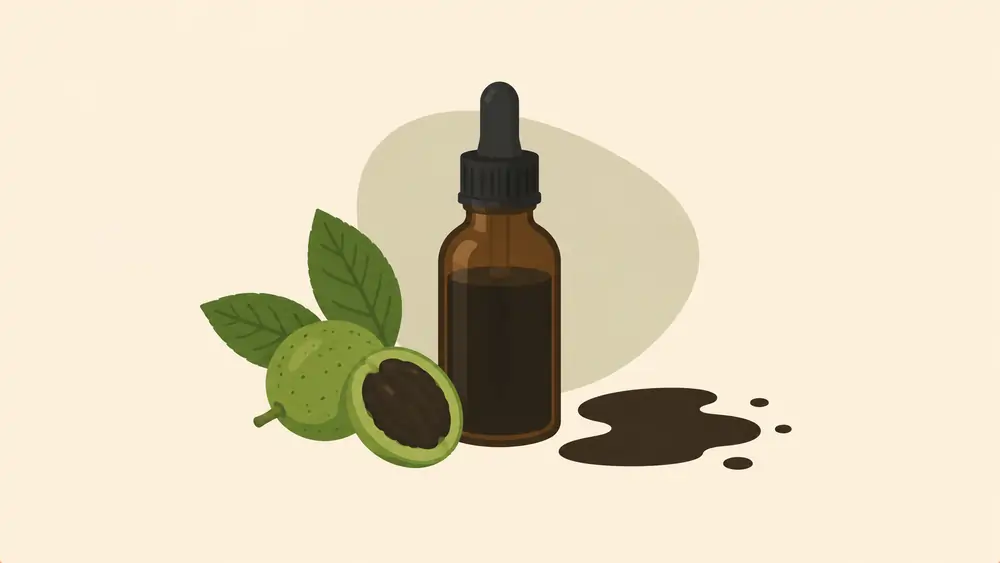
Black walnut tincture can stain because the green hull contains dark plant pigments and reactive compounds that can oxidize and leave visible marks.
When black walnut hulls age, bruise, dry, or react with air, they can turn from green to brown or black. A tincture made from hulls can carry that dark color into the liquid.
That is why small drips may mark skin, fabric, paper labels, wood, porous stone, light countertops, and unfinished surfaces.
Is Staining Normal for Black Walnut Hull Products?
Yes, staining can be normal for black walnut hull products. The hull is the plant part most associated with dark color and staining.
People who harvest black walnuts often wear gloves because the hulls can discolor hands and clothing. A tincture is not the same as handling fresh hulls, but it can still stain if drops spill or dry on a surface.
Staining is a handling issue. It is not proof of quality by itself.
Quick Comparison: Normal Color vs Suspicious Signs
| Feature | Often Normal | Potentially Suspicious |
|---|---|---|
| Color | Amber, brown, greenish-brown, dark brown, almost black | Sudden major change with bad odor, visible growth, or damaged bottle |
| Staining | Brown marks on skin, label, sink, or cloth from drips | Sticky leakage from broken cap, damaged dropper, or compromised seal |
| Smell | Earthy, bitter, herbal, sharp, hull-like | Moldy, rotten, rancid, sour, fermented, or chemical-like |
| Sediment | Light natural particles in some herbal extracts | Fuzzy growth, unusual floating material, gas pressure, or contamination |
| Packaging | Dark bottle, tight cap, clean dropper | Broken seal, leaking cap, cracked bottle, dirty dropper |
What Part of Black Walnut Causes the Staining Concern?
The green hull, also called the husk, is the main plant part behind the staining concern.
The edible nut kernel is inside the hard shell. It is used as food. The hull is the outer covering around the shell and has a very different texture, chemistry, and practical handling profile.
When a tincture label says black walnut hull, it usually means this outer husk was used for extraction.
What Is Juglone?
Juglone is a naturally occurring compound associated with black walnut and other walnut-family plants. It is often discussed in gardening because black walnut trees can affect some nearby plants.
For a tincture user, juglone is mainly part of the plant-part conversation. It helps explain why black walnut hull is chemically different from the edible nut kernel.
Do not turn the word juglone into a health claim. The practical point here is color, plant chemistry, and careful handling.
Why Does Black Walnut Tincture Look So Dark?
Black walnut tincture looks dark because hull material can develop deep brown or black color as it oxidizes. Extraction can pull some of that color into the liquid.
Alcohol, glycerin, water, extraction time, hull stage, storage, and batch variation can all influence the final shade.
A dark tincture can be normal. A strange smell, visible growth, broken packaging, or unusual pressure is more concerning than darkness alone.
Why Drops Can Leave Marks on Skin
Black walnut tincture drops may leave temporary marks on fingers because the liquid carries dark hull-derived color.
Skin staining can be more noticeable around nails, dry skin, cuts, or rough areas. It may also appear darker if the drop dries before being washed away.
Wash spills quickly with soap and water. Avoid rubbing the tincture into skin.
Why Drops Can Stain Countertops and Sinks
Countertops and sinks vary. Smooth nonporous surfaces are usually easier to clean. Porous surfaces can absorb color faster.
Light stone, unsealed grout, unfinished wood, porous tile, paper, and fabric may hold stains more easily than stainless steel or sealed surfaces.
Use the tincture over a protected surface if staining would bother you.
Surface Staining Risk Guide
| Surface | Staining Risk | Handling Tip |
|---|---|---|
| Paper label | High | Wipe bottle neck before closing |
| White cloth | High | Keep towels and clothing away from open bottle |
| Unfinished wood | High | Use a tray or washable mat |
| Unsealed stone or grout | High | Avoid placing open dropper above it |
| Stainless steel sink | Lower | Rinse immediately after spills |
| Glass | Lower | Wash before drops dry |
| Sealed countertop | Variable | Wipe immediately and test cleaners carefully |
Why Clothing Is Especially Vulnerable
Fabric can absorb black walnut tincture quickly. White shirts, towels, tablecloths, and kitchen cloths can hold dark marks after a spill.
Because the liquid is concentrated and dark, even a small drop can be visible.
Do not open the bottle over clothing. Use a counter, sink, tray, or washable surface instead.
How to Handle the Dropper More Neatly
Open the bottle slowly and keep it upright. Draw the serving into the dropper without touching the sides more than needed.
Hold the dropper over a glass, spoon, or sink-safe area. Dispense the drops carefully. Avoid swinging the dropper over fabric, paper, or porous surfaces.
Before closing, check the bottle neck and wipe any visible drip with a disposable tissue or dark cloth you do not mind staining.
Why the Bottle Neck Gets Messy
Tincture can collect around the bottle neck when drops run down the glass or when the dropper is returned too quickly.
Black walnut tincture makes this more obvious because the liquid is dark. Over time, dried residue can stain the label or cap area.
A quick wipe after each use keeps the bottle cleaner.
Why Labels Sometimes Get Dark Marks
Paper labels can absorb tincture. If a drop slides down the bottle, the label may develop a brown or black streak.
This is usually a handling issue, not a sign that the product inside is bad.
Keep the outside of the bottle dry and store it upright.
Should You Wear Gloves?
You usually do not need gloves for ordinary dropper use if you handle the bottle carefully. But gloves can help if you are messy, filling travel bottles, cleaning a spill, or handling a leaking bottle.
Gloves are also useful if you have light nails, dry skin, cuts, or sensitive skin.
If the product touches your skin, wash the area promptly.
How to Clean Small Spills
Clean small spills immediately. Use water and mild soap first. Blot fabric rather than rubbing hard, because rubbing can push color deeper into fibers.
For countertops, follow the surface manufacturer’s cleaning guidance. Avoid harsh cleaners on delicate stone, wood, or painted surfaces.
Fast cleanup matters more than aggressive scrubbing.
What Not to Do With a Spill
Do not let drops dry on fabric, paper, wood, grout, or light porous surfaces. Do not rub stained fabric aggressively. Do not use strong chemicals on surfaces that can be damaged.
Do not put a dripping dropper back into a bag, purse, backpack, or drawer.
A little prevention prevents most staining problems.
Why Travel Can Make Staining More Likely
Travel adds shaking, pressure changes, loose caps, tilted bottles, and crowded bags. A small leak can stain toiletry bags, paper, clothing, and luggage lining.
Keep black walnut tincture upright when possible. Use a sealed secondary bag. Check that the cap is tight before packing.
Do not place the bottle loose next to light-colored fabric.
How to Store Black Walnut Tincture
Store the bottle as the label directs. In most cases, that means closed tightly, away from heat, direct light, and unnecessary moisture.
Keep it upright. Keep the cap clean. Keep it away from children and pets.
A clean storage routine reduces leaks, staining, and contamination risk.
Why Dark Color Does Not Mean “Stronger”
Dark color does not automatically mean a stronger or better tincture. Color reflects plant part, extraction, oxidation, batch, storage, and formulation.
A darker product is not automatically more effective, and a lighter product is not automatically weak.
Judge the product by label clarity, storage condition, smell, seal integrity, and appropriate use directions.
When the Product May Be Suspicious
Be cautious if the product smells moldy, rotten, rancid, sour, fermented, or chemical-like. Also avoid using it if the seal is broken, the bottle is cracked, the cap leaks, the dropper is contaminated, or the liquid shows unusual growth.
Some sediment may be normal in herbal extracts, but fuzzy material is not normal.
If the bottle looks compromised, do not use it.
Who Should Be Extra Careful With Black Walnut Tincture?
Extra caution matters for children and teens, pregnant or breastfeeding people, medication users, people preparing for surgery, people with tree nut allergies, and people with liver, kidney, digestive, immune, or chronic health conditions.
Black walnut hull tincture is not the same as eating black walnut kernels. It is a concentrated herbal product with its own label directions.
Ask a qualified healthcare professional if your health context is complex.
Why Tree Nut Allergy Context Still Matters
Black walnut is a tree nut in food allergy contexts. Even though hull tincture is not the edible nut kernel, people with tree nut allergies should not assume it is automatically appropriate.
Cross-contact, manufacturing conditions, plant material, and personal allergy history matter.
Bring the exact label to a qualified professional if allergy risk is relevant.
Why Plant Part Still Comes First
The staining topic points back to the plant part. Black walnut hull is the outer husk. It behaves differently from the edible nut kernel.
That is why black walnut tincture can be dark, bitter, and staining rather than nutty, oily, and food-like.
HerbEra takes a cautious editorial stance here: plant-part identification should come before assumptions about use, taste, color, or nutrition.
Why Black Walnut Tincture Can Stain Checklist
Use this checklist before opening, using, storing, or traveling with black walnut tincture. The goal is to avoid stains and keep the bottle clean without overcomplicating the routine.
Open It Over a Safe Surface
Use the tincture over a sink, tray, washable mat, or dark towel rather than over clothing, paper, or porous surfaces.
Keep the Bottle Upright
An upright bottle reduces drips, cap mess, and label staining.
Control the Dropper
Move the dropper slowly and keep it over the glass or sink-safe area while dispensing.
Wipe the Bottle Neck
Remove visible residue before closing the cap to prevent dried streaks and sticky buildup.
Wash Skin Quickly
If drops touch your fingers, wash promptly with soap and water before the color dries.
Protect Fabric
Keep light clothing, towels, tablecloths, and bags away from the open bottle.
Clean Spills Immediately
Blot or wipe spills quickly. Avoid rubbing fabric hard or using harsh cleaners on delicate surfaces.
Use Secondary Containment for Travel
Pack the bottle inside a sealed bag to protect clothing and luggage.
Check for Suspicious Signs
Do not use a bottle with moldy odor, broken seal, cracked glass, leaking cap, or visible contamination.
Common Mistakes to Avoid
Opening the Bottle Over Clothing
Even one drop can leave a visible mark on light fabric.
Letting Drops Dry on the Counter
Dried drops can be harder to remove, especially on porous or light surfaces.
Assuming Dark Color Means Spoilage
Dark color can be normal for black walnut hull tincture. Odor, growth, and packaging condition matter more.
Ignoring the Bottle Neck
Residue around the cap can stain labels, fingers, and storage areas.
Packing It Loose in a Bag
Travel movement can cause leaks and stains if the bottle is not contained.
FAQ
Why can black walnut tincture stain?
Black walnut tincture can stain because hull-derived dark compounds can leave brown or black marks on skin, fabric, and surfaces.
Is staining normal for black walnut hull products?
Yes. Staining can be normal because black walnut hulls are naturally dark and known for discoloring hands and materials.
Why is black walnut tincture so dark?
It is often made from green hulls that darken through oxidation and extraction.
Does dark color mean black walnut tincture is spoiled?
No. Dark color alone does not mean spoilage. Bad odor, visible growth, broken seal, or contamination is more concerning.
Can black walnut tincture stain clothes?
Yes. It can stain light fabric, towels, tablecloths, and bags if drops spill or dry.
Can black walnut tincture stain countertops?
Yes, especially porous, light, unfinished, or unsealed surfaces.
How should I handle black walnut tincture neatly?
Open it over a safe surface, dispense slowly, keep the bottle upright, and wipe the neck before closing.
Should I wear gloves when using black walnut tincture?
Gloves are optional for normal use but helpful for spills, travel transfer, or sensitive skin.
What is juglone?
Juglone is a compound associated with black walnut and is part of why plant-part chemistry matters.
Glossary
Black Walnut
A tree commonly identified as Juglans nigra, known for edible nuts and hulls used in herbal products.
Juglans nigra
The botanical name for black walnut.
Hull
The outer green husk around the black walnut shell.
Husk
Another term often used for the outer hull of the black walnut fruit.
Juglone
A naturally occurring compound associated with black walnut and related plants.
Oxidation
A reaction with oxygen that can darken plant material over time.
Tincture
A liquid herbal extract made with a solvent such as alcohol, glycerin, water, or a combination.
Sediment
Fine plant-derived particles that may settle in some herbal extracts.
Porous Surface
A surface that can absorb liquid more easily, such as fabric, unfinished wood, grout, or unsealed stone.
Supplement Facts
The label panel that lists serving size and dietary ingredients in a supplement.
Conclusion
Why Black Walnut Tincture Can Stain comes down to black walnut hull color, oxidation, juglone-related plant chemistry, and careful handling. Use it over safe surfaces, wipe drips quickly, store the bottle upright, and treat dark color as a normal hull-product feature unless other warning signs appear.
Sources
Black walnut botanical profile and Juglans nigra identification, Plants of the World Online / Royal Botanic Gardens, Kew — powo.science.kew.org
Black walnut overview including plant part context and safety cautions, WebMD — webmd.com/vitamins/ai/ingredientmono-639/black-walnut
Juglone-producing plants and black walnut plant chemistry context, Penn State Extension — extension.psu.edu
Black walnut harvesting guidance noting hull darkening, hand and clothing staining, and glove use, University of Georgia CAES Field Report — fieldreport.caes.uga.edu
Black walnut harvest and hulling guidance, Iowa State University Extension and Outreach — yardandgarden.extension.iastate.edu
Black walnut toxicity and juglone discussion in horticultural context, Wisconsin Horticulture Extension — hort.extension.wisc.edu
Dietary and herbal supplement safety overview including interaction and special-population cautions, National Center for Complementary and Integrative Health — nccih.nih.gov/health/dietary-and-herbal-supplements
Dietary supplement consumer guidance and Supplement Facts label basics, U.S. Food and Drug Administration — fda.gov/food/information-consumers-using-dietary-supplements/questions-and-answers-dietary-supplements
