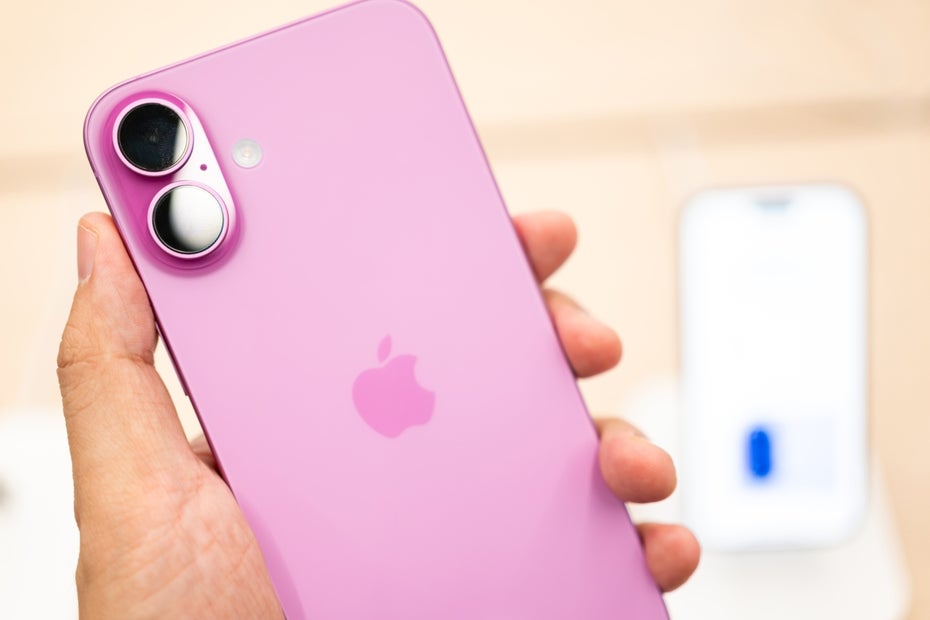
Initially, Apple had good news for iPhone owners. The update to iOS 27 should ultimately run on all devices that were also compatible with iOS 26. Anyone who still uses an iPhone 11 will also get the next version of the operating system. And it should even make old iPhones faster. Commendable in terms of sustainability. If you’re happy with an older smartphone, you don’t necessarily have to switch to be up to date. However, things look different if you always benefit from the new features.
Built for Apple Intelligence – but not compatible with all features
It has been clear since 2024 that you need certain iPhones for the features around the Apple Intelligence package and now also the new AI Siri. An iPhone 15 Pro or newer, otherwise the AI won’t work. Now an announcement is making customers angry again. Because if you really want to benefit from all the newly introduced features, you now need an iPhone 17 Pro, Pro Max or the iPhone Air. This was announced by software boss Craig Federighi during the keynote speech at WWDC 2026. “Our most powerful on-device model and the features that it enables, such as expressive voices and an even better dictation function, come to our most powerful iPhone, iPad and Mac systems,” says Federighi.
Editorial recommendations
${content}
${custom_anzeige-badge}
${custom_tr-badge}
${section}
${title}
Among other things, this is about the possibility of personalizing the voice reproduction of the new AI Siri according to your own ideas. The new dictation function should also work more precisely, take better account of upper and lower case letters and set punctuation marks automatically. Both of these only work on the latest iPhones. Actually a nuance – you might think. But Apple markets its AI package with a focus on privacy. Nobody should have access to the data in the cloud. It would be even safer if AI requests did not leave the iPhone and remained on-device. It is at least not entirely unlikely that Apple will expand this area in the future.
Of course, you don’t have to buy a new smartphone right away. Especially not in the European Union, which initially only benefits from the new functions on the Mac, but not on the iPhone. That comes later. Perhaps. But if you bought an iPhone 16 (or Plus, Pro, Pro Max) in 2024, you can already feel a little fooled. “The iPhone 16 models were developed for Apple Intelligence,” Apple announced less than two years ago. And now these AI machines, which cost buyers just under 1,000 euros or more back then, don’t get all the AI functions again. That’s not a good signal.
Updates must not degenerate into consumer battles
How seriously customers treat update announcements or the lack of them can be seen in another product. Just four years after its market launch, the first Apple Watch Ultra will no longer receive the update to watchOS 27. This means that the device, which cost around 1,000 euros at the time, only received three major operating system updates. Like the iPhones, the watch does not stop operating. But “Ultra” can only mean one thing here: ultra-short support period.
The fact that Apple is trying to make AI functions available offline and thus protect customer data as best as possible is without question commendable. But it must not escalate into a consumer battle that destroys the sustainability aspect mentioned above. If you buy a product that has been declared “developed for Apple Intelligence”, this should also apply to all functions in the long term.
This article was originally published on June 9th, 2026, but is still of interest to many of our readers. That’s why we’ve updated it and made it available again here.
Top Article
${content}
${custom_anzeige-badge}
${custom_tr-badge}
${section}
${title}