Since the early 2020s, Nigeria’s tech industry has faced a wave of talent migration, which peaked after COVID-19. While the trend has raised valid concerns about brain drain, it has created a new class of diasporan angel investors backing Nigerian startups.
Several angel networks have emerged from this shift, including HoaQ, which caters specifically to diasporan investors and founders. While these syndicates continue to grow in membership, capital deployed and influence, some angel investors continue to back startups independently.
Though these cheques are typically small by venture standards, they play the critical role of giving founders early runway to validate ideas before syndicates, accelerators and early-stage VC firms step in.
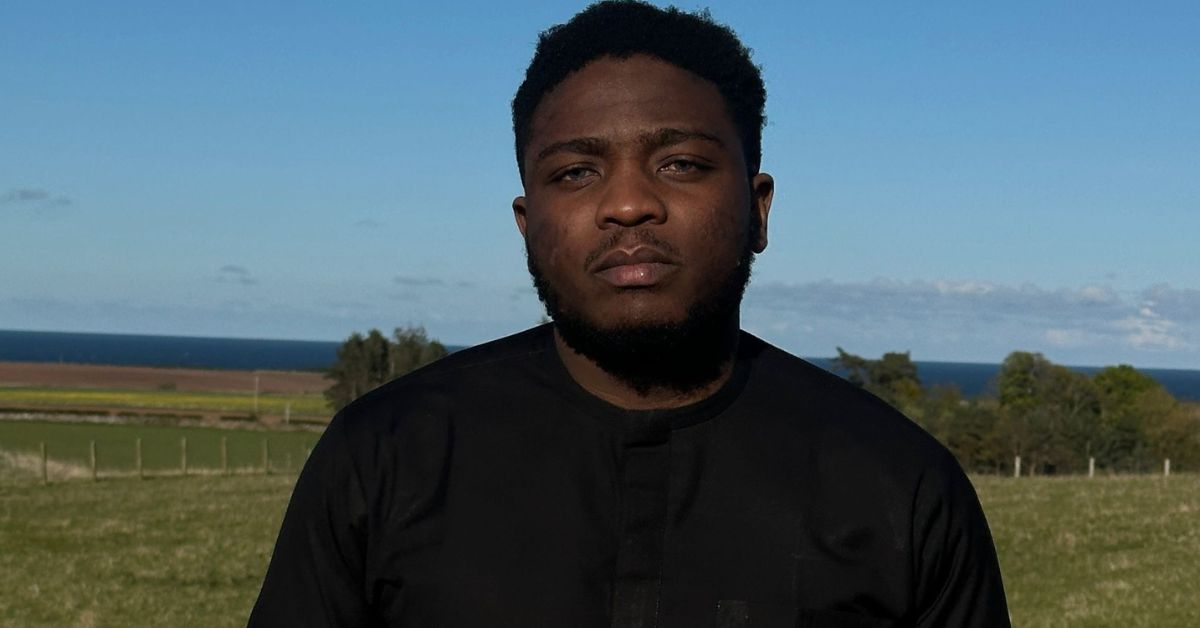
One such angel investor is Uche Divine, a 26-year-old Manchester-based product designer who works in London. He relocated from Lagos in 2023 and began investing after his first year abroad. Since then, he has backed two undisclosed startups as an angel investor through HoaQ.
Angel investors are foundational to any tech ecosystem. They provide capital when institutional investors will not and often offer hands-on support at the earliest stages. Drawing on six years of experience as a product designer, Ibeafu also advises the founders he backs on product development.
For this week’s Ask an Investor, I spoke with Divine about his journey into angel investing as a source of passive income and long-term retirement planning; his founder-led approach, which prioritises trust and product viability over a defined thesis; and how his product background shapes his edge as an investor.
This interview has been edited for clarity and length.
How many startups have you invested in, over what time period, and how have they performed so far?
I’ve invested in two, and because I invested in both of them last year, I can’t really speak to performance yet. They’re still in the building phase.
I just put the money in and told myself, “Okay, I’ve never done this before. I might as well do it for my first time and see how it works.” Both companies were built by people I trust. I know these guys; I’ve seen them work, and I trust what they’re doing.
Why did you write the cheque—was it more support, or more that you believed in the startups?
Both. I have a couple of friends building things—people I trust—but I didn’t give them money. This one was different. It was both: these are my people, and what they’re building makes sense. It wasn’t a difficult decision.
At what point did you move from being a non-angel investor to being an angel investor?
I want multiple sources of income, and I want to invest. Investing is how I imagine my “endgame”. I’ve spoken to friends, and many of them want to own a company or build something big. But for me, how I picture calling it quits is having a serious portfolio—just chilling on an island and living off profits from investments.
I already explored other parts of the market: I buy stocks, I buy crypto, and I’ve played across different parts of the financial market. Angel investing was just the one thing I hadn’t done. So it felt like the perfect time to try it, especially because these founders were doing something I was interested in. It’s something I’ve always wanted to do.
When you invest in startups, do you have a thesis, or are you investing based on what you believe will be a good company? And what made you believe in the two you invested in?
Because I’m still a beginner—like a baby angel investor—I don’t have a solid thesis yet. I can’t even tell you the returns right now because there’s nothing to measure yet.
I invested mainly based on the people building and what they were building, and whether it made sense. One of them is an AI startup solving a serious problem. I don’t want to mention the name, but it’s addressing a key problem in its space. And the advice people always give is: follow the money, follow volume. Most of the companies making the most money right now are AI companies. So, if there’s one that makes sense and what they’re doing looks like it’ll eventually make money, that’s enough for me.
To be fair, it was partly trend-driven. But if this is something I’m going to do more of, I’ll definitely develop a thesis. Right now, it felt safer to invest in people I trusted and in products I felt would work. It was instinct. Over time, as I invest more, I’ll build a clearer thesis. Experience improves everything.
Are you investing to generate venture-scale returns or to build proximity and learn how startups work?
It’s a bit of both. I’m investing for returns too, but right now, I’m also trying to understand how it works.
Watching the founders go through this process has taught me a lot. I might eventually build something myself and need to raise money or go through different rounds. So for me, it’s also a learning curve—how to approach fundraising, how to reach out to VC firms—just by being close to people building and raising.
What unfair advantage do you think you have as an angel investor? What makes a founder want to take your money, knowing they’re giving up equity?
For me, it’s mainly my insight into how digital products work.
If you’ve invested in a company, you’re part of it. The way I tell people: I own Google stocks, even if they’re diluted. If Google does anything, I’m like, “That’s my company,” because I own a piece of it.
With angel investing, you’re even closer to the company.
For the two companies I invested in, whenever there’s a new update or feature, they reach out: “Come and see this—what do you think?” I take it more seriously because my money is in it. I’m not just advising as a friend. I’m advising as a part-owner.
Bringing product design and product thinking is a real advantage. If I invest more, I can even come on board more formally as a product counsel person—“We want to work on this; what do you think?” That insight is what I bring beyond money.
If I come to you and say, “Invest in my startup.” What would make you say no?
I get what you’re saying. There are a couple of reasons.
First, I have to see the vision. Same way with stocks—if I don’t understand what the company is doing, or it doesn’t align with me, that’s a problem. It’s instinct and clarity. If it’s not something I can personally stand behind—something I can explain, even “sell” as an idea—I’m not likely to invest.
Then there’s the market. If it doesn’t look like it can become profitable, there’s no guarantee, but you can use data and basic projections to understand whether the economics can make sense. If the projections don’t add up, that’s another reason.
The biggest factor is the people building. You can have a great idea with the wrong builders. If I don’t know much about the founders, I’ll research. I’ll ask around. In our ecosystem, you hear stories—people lose money easily. I need to trust the people: what’s their reputation, what do people know about them, and what do people say? For me, it’s the people first, then what they’re building.
Pragmatically, if the first five investments don’t work out, do you stop angel investing, or is this a long-term play no matter what happens early?
It’s a long-term play for me.
Another edge I probably have is that I’m not afraid of losing money in the beginning. Whether this works or not, it’s something I know I want to do. So for me, it’s long-term. Whether it works or it doesn’t, if I have money, I’ll invest. The only reason I wouldn’t is if I don’t have money.
Over time, as I invest more, I’ll develop a thesis around what works. I’ll also seek counsel from people who have done this better, just to refine my decision-making. But I won’t stop because the first few didn’t work. That was never the deal.
I traded meme coins for a year; this is not make-or-break. If it works, great—beginner’s luck. If it doesn’t, no problem. I’ll still invest.
In five years, what would make you say, “I did angel investing well,” or “I was a good angel investor”?
A working thesis and better decision-making. Nobody can perfectly spot good and bad plays, but there’s pattern recognition in investing. You start to recognise signals because you’ve seen similar situations before.
If my decision-making gets to a level where I can say, “The chances of this working are 70–80%,” that would be a sign of growth. Returns would matter too, of course.
But mainly: more confidence, more precision, better judgement, and being able to assess a company more clearly with experience.
What do you think is your biggest blind spot right now as a new investor?
The biggest blind spot is that you don’t really know what’s happening day to day. You put your money in, but at that point, you can only hope.
You don’t know how much work is happening daily. Startup builders often have other commitments, and you can’t always measure their level of commitment from the outside. You can ask questions, and you can check in, but you’re not in their Slack groups; you’re not in their internal day-to-day. You mostly have to take what they tell you.
The companies I invested in are still building. You can’t tell exactly when something will be ready. If they say Monday, Monday can pass, and there’s always a reason. That uncertainty—timelines, progress, what’s really happening behind the scenes—that’s the blind spot.
I don’t think it’s a bad thing; it’s just part of what it means to invest at this stage.