
As much as it’s in your interest to have a great agency-client relationship, it doesn’t always go as planned. Almost every agency has that client horror story they still talk about.
At first, everything seemed fine. Then came the endless feedback, the “quick” last-minute changes, and the mounting Slack messages at 11 PM. The truth is, red flag clients 🚩 don’t show up wearing warning labels. They reveal themselves through patterns.
In this article, we’ll teach you how to spot six types of red flag clients, deal with them without burning bridges, and build processes that prevent chaos.
Let’s jump right in!👇
Red Flag #1: The “We Needed This Yesterday” Client
It usually starts with urgency.
“We need leads immediately.”
“Our last agency failed us.”
“Can you launch something this week?”
Ambition is healthy. Panic is not.
One user on Reddit said it without sugarcoating:
“If a client needs something fixed yesterday and needs to create a profitable campaign today, run far away.”
🛠️ How to Handle It Professionally
You don’t need to walk away immediately, but you do need to reset the expectations.
- Anchor expectations to data. Show typical ramp-up timelines for campaigns.
- Document assumptions clearly. Outline what must be true for results to happen.
- Break work into milestones. Avoid open-ended promises.
- Clarify accountability. Define what your team controls—and what the client controls.
If they resist realistic timelines or push for guaranteed outcomes, that’s your real signal to walk away.
Red Flag #2: They Want a Price Before Discussing the Problem
Sometimes the first real question in a discovery call isn’t about goals, audience, or strategy.
It’s: “What’s your monthly fee?”
If pricing becomes the focus before you’ve even discussed what needs to be solved, that’s often a warning sign. Not because budgets are bad, but because context matters. Without understanding the problem, any number you give is just a guess.
As one agency owner put it:
“Wanting a price without even discussing the project is a big no-no.”

When prospects push for a number upfront, it usually signals they’re comparing agencies like line items. Strategy becomes secondary. Execution becomes transactional. And collaboration becomes fragile.
The long-term risk? Constant pressure to justify every invoice, every hour, and every recommendation.
🛠️ How to Deal with It Professionally
Instead of answering the pricing question immediately, shift the conversation.
- Require discovery before quoting. No scope, no price.
- Tie pricing to outcomes. Show how strategy defines cost.
- Offer tiered solutions. Present options based on impact, not hours.
- Be willing to walk away. If the only variable is price, it won’t improve later.
Red Flag #3: Endless Approvals and Micromanagement
Another red flag clients wave early? Approval chaos and constant micromanagement.
It starts small: “Our CEO just wants a quick look.” Then the legal team weighs in. Then someone reopens feedback that was already approved. Suddenly, a single asset requires ten rounds of revisions.
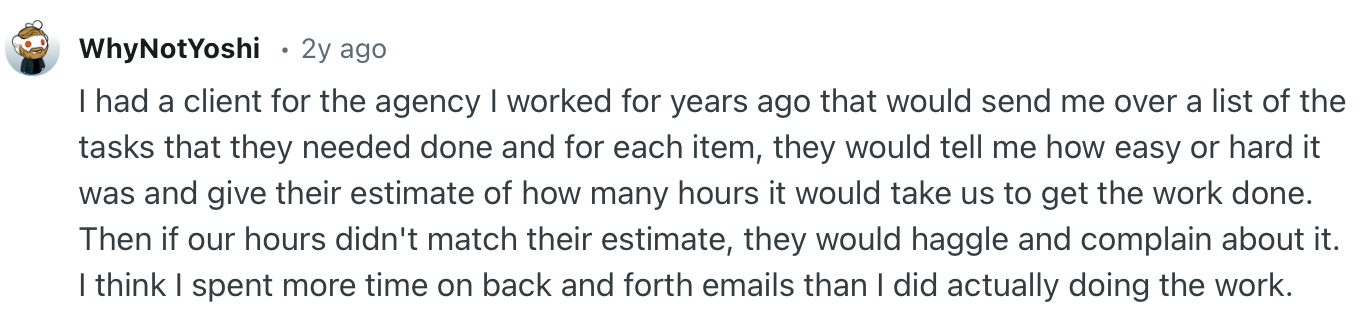
Another common theme? Clients who think they know better how long certain tasks will take you to complete which is often a sign of micromanagement rather than trust in your expertise.
One agency owner shared that a client would send task lists with their own hour estimates—and argue if the agency’s time didn’t match.
🛠️ How to Handle These Issues Professionally
If you spot this early, don’t ignore it. Fix it structurally. Here’s how to protect your agency:
- Set client expectations in advance. Define how many approval rounds are included and who the final decision-maker is before work begins.
- Put it in the contract. Clearly outline revision limits, timelines for feedback, and how additional changes affect pricing.
- Establish approval deadlines. No feedback within the window? The project moves forward.
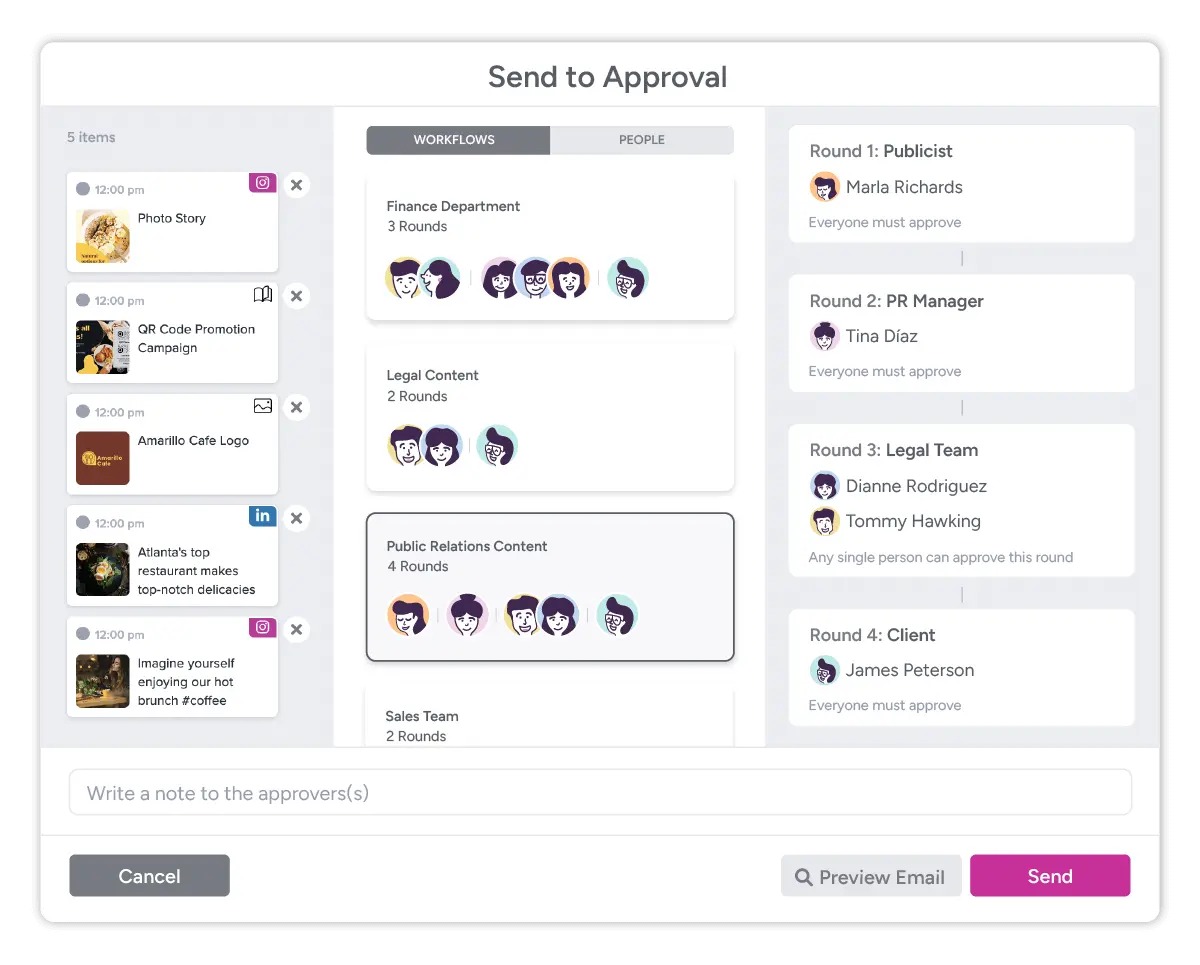
💡And when it comes to approvals specifically, using a dedicated content approval app is the smartest move. A social media content approval tool like Gain replaces messy email threads and Slack messages with automated content approval workflows. You can add as many rounds and as many approvers as you need, and content moves automatically to the next person for review, revisions, or approval.
Approvers receive secure email notifications and can log in without a password using Magic Approver Login. They can request changes, approve with one click, leave comments and edit requests next to marketing assets, and view dynamic previews of exactly how content will look when published.
👉 Try Gain for free today!
Red Flag #4: The Scope That Never Stops Expanding
Another red flag clients show early? The “small extra request.” You know, when they ask you to make a small change here and there. But a thousand times. 😅
Individually, these asks seem harmless. But when the scope isn’t clearly defined, small additions quietly stack up. Before long, your team is delivering 30% more work for the same fee (and deadlines start slipping).
Scope creep isn’t always malicious. Often, it’s the result of unclear expectations or shifting priorities. But if a client frequently changes direction mid-project, it signals a lack of strategy and internal alignment.
🛠️ The fix is simple but firm: define scope in writing, separate strategy from execution, and tie additional requests to formal change orders. If boundaries aren’t respected early, they won’t be respected later.
Red Flag #5: They Question Everything You Do
There’s a healthy kind of curiosity… And then there’s constant skepticism.
If a client challenges every recommendation or insists tasks “shouldn’t take that long,” it usually points to a deeper trust issue. Over time, this dynamic slows execution and drains your team’s energy. You were hired for expertise, but you end up operating like you’re asking for permission.
🛠️ How to Deal with This Type of Client
The best way to handle this is through clarity and boundaries.
Tie every recommendation back to agreed goals and KPIs. Document scope. Define communication expectations.
But also pay attention to patterns. If trust never forms, the partnership may never function smoothly. Mutual respect is a prerequisite for a successful partnership.
Red Flag #6: They’ve Fired Multiple Agencies Before You
When a prospect casually mentions you’re their fourth or fifth agency in two years, pay attention.
Of course, agencies can fail. Expectations can misalign. But when every previous partnership ended badly (and every story positions the client as the victim), that’s a pattern worth examining.
Sometimes the issue isn’t execution. It’s unrealistic expectations, unclear goals, or constant strategic pivots. If a business keeps cycling through agencies, there’s often an internal problem that no external partner can fully solve.
🛠️ What to Do About This
Before signing, ask direct questions. Why did the last relationship end? What would they do differently this time? Listen carefully for ownership versus blame.
If you move forward, protect yourself with a defined scope, measurable KPIs, and possibly a shorter pilot engagement. One failed agency relationship can be bad luck. Five is usually a system issue.
FAQs
Client resistance often shows up as constant second-guessing, reluctance to follow agreed processes, delayed approvals, or repeated challenges to scope and pricing. Other signs include pushing for unrealistic timelines, refusing discovery conversations, or questioning expertise without context. Resistance isn’t about asking thoughtful questions. It’s about consistently undermining structure or boundaries. If collaboration feels adversarial before work begins, that dynamic usually continues throughout the engagement.
Pay attention to how they behave during discovery. Do they resist discussing goals before asking for the price? Do they avoid clarity around budget or timelines? Are expectations vague or overly aggressive? A bad-fit client often shows signs of disorganization, misalignment, or distrust early on. If they dismiss your process or pressure you to skip steps, that’s a strong indicator that the partnership may become difficult later.
Sometimes, yes. If the issue stems from unclear expectations or previous negative experiences, structured onboarding and clear communication can reset the relationship. Defining scope, approval workflows, and KPIs early often reduces friction. However, if the behavior involves consistent disrespect, blame shifting, or refusal to follow agreed-upon processes, transformation is unlikely.
Build Better Systems To Prevent These Situations
Red flag clients rarely appear out of nowhere. The warning signs are usually there from the very beginning.
The moment you sign a client, put a clear contract in place that defines scope, approval workflows, revision limits, timelines, and pricing. Remember, strong systems protect your margins, your timelines, and your team’s energy.
And if you’re looking for a streamlined way to handle client approvals, look no further than Gain. Try it for free now!