A wave of anti-surveillance vigilantism is gripping American activists. According to a February 2026 report by Blood in the Machine, a journalism project by author Brian Merchant, concerned citizens from San Diego to Virginia are campaigning against Flock Safety, the automatic license plate reader (ALPR) cameras used by over 6,000 local communities to identify and track vehicles and their drivers. From petitioning legislators to physically defacing its traffic cameras, locals are fighting back against the ever-entrenched web of mass surveillance around them.
The actions come after Flock’s collaboration with smart doorbell provider Ring collapsed following an ill-advised Super Bowl ad that prompted a public boycott. But critics argue that Flock’s abuses run much deeper than a failed marketing campaign. Notably, U.S. Immigration and Customs Enforcement has leveraged Flock’s data throughout its controversial crackdown. Misuse by local authorities has further fanned the anti-surveillance flames, raising questions about citizens’ fourth amendment rights. Proponents, meanwhile, have lauded the company’s cameras and AI-enabled smart systems as effective public safety instruments.
Some municipalities have responded by cancelling their contracts with the embattled company, while others have banned federal authorities from accessing their data or imposed privacy guardrails to ensure its responsible usage. In other cases, however, local law enforcement have actively shared data with federal authorities. In particular, Flock’s “National Lookup” tool has enabled out-of-state immigration searches, circumventing legal restrictions and sparking backlash. To its credit, Flock has instituted guardrails to address these issues. However, activists argue that the company’s business model requires the type of national, interconnected network that engenders these abuses. On balance, the ongoing battle strikes at the heart of a privacy debate embroiling America, as AI technologies continue to revolutionize military, intelligence, and law enforcement operations.
Does Flock bring safety or controversy?
Valued at $7.5 billion in 2025, Flock Safety frames itself as an essential public safety tool used by police forces to “eliminate crime.” According to a study published by the company, Flock was “instrumental in solving 10 percent of reported crime in the U.S.” Notably, the accuracy of such claims have been roundly criticized, including by its own researchers. Despite questions surrounding its effectiveness in crime reduction, Flock’s products are incredibly popular. With over 12,000 clients, Flock touts itself as delivering headline-grabbing public safety victories, including ousting human trafficking rings and solving high-profile jewelry heists.
Typically deployed on street-corners or police cars, Flock’s AI-powered license plate readers are now utilized by over 5,000 American law enforcement agencies. This success has prompted the Atlanta company to move beyond its initial mission with a diverse product line of AI-powered cameras, drones, and software . The company continues to add new features to its cameras to ‘fingerprint’ vehicles and indiscriminately map driver’s movements. The company’s Condor camera, for instance, “detects and tracks people,” according to its website. One feature saw Flock’s gunshot-detection microphone Raven add “distress” signals like “screaming” to its alert system (via EFF). Flock increasingly markets to non-first responders, including corporations, community groups, and individuals, dubbing itself “the largest public-private safety network.”
Critics warn that Flock has created a web of mass surveillance increasingly weaponized by federal authorities and local law enforcement. Even before its controversial usage by ICE, activists decried Flock’s systems as ripe for abuse. To date, the company’s tech has been deployed to identify activists ,track abortion visits, stalk women, and reinforce racial profiling. Security issues further exacerbated privacy concerns after activists discovered Flock accidentally exposed live camera feeds on the internet.
Cutting down on surveillance
Criticism reached its zenith when a series of investigations revealed that ICE operatives weaponized Flock to enforce its deportation policies. A report by 404 Media, for example, found that Flock’s lookup tool had aided at least 4,000 immigration-related searches between President Trump’s inauguration and May 2025. Critically, ICE used Flock’s “National Lookup” platform to access data in states that banned law enforcement from collaborating with the agency. One investigation by The 74 found that ICE even turned a school district’s cameras against students’ families. While Flock denies any ICE contracts, the company admitted to pilot programs with federal immigration authorities before canceling them. Ultimately, the company claims its clients are responsible for their data. In August 2025, Senate records revealed that 75% of law enforcement customers had enrolled in Flock’s national database.
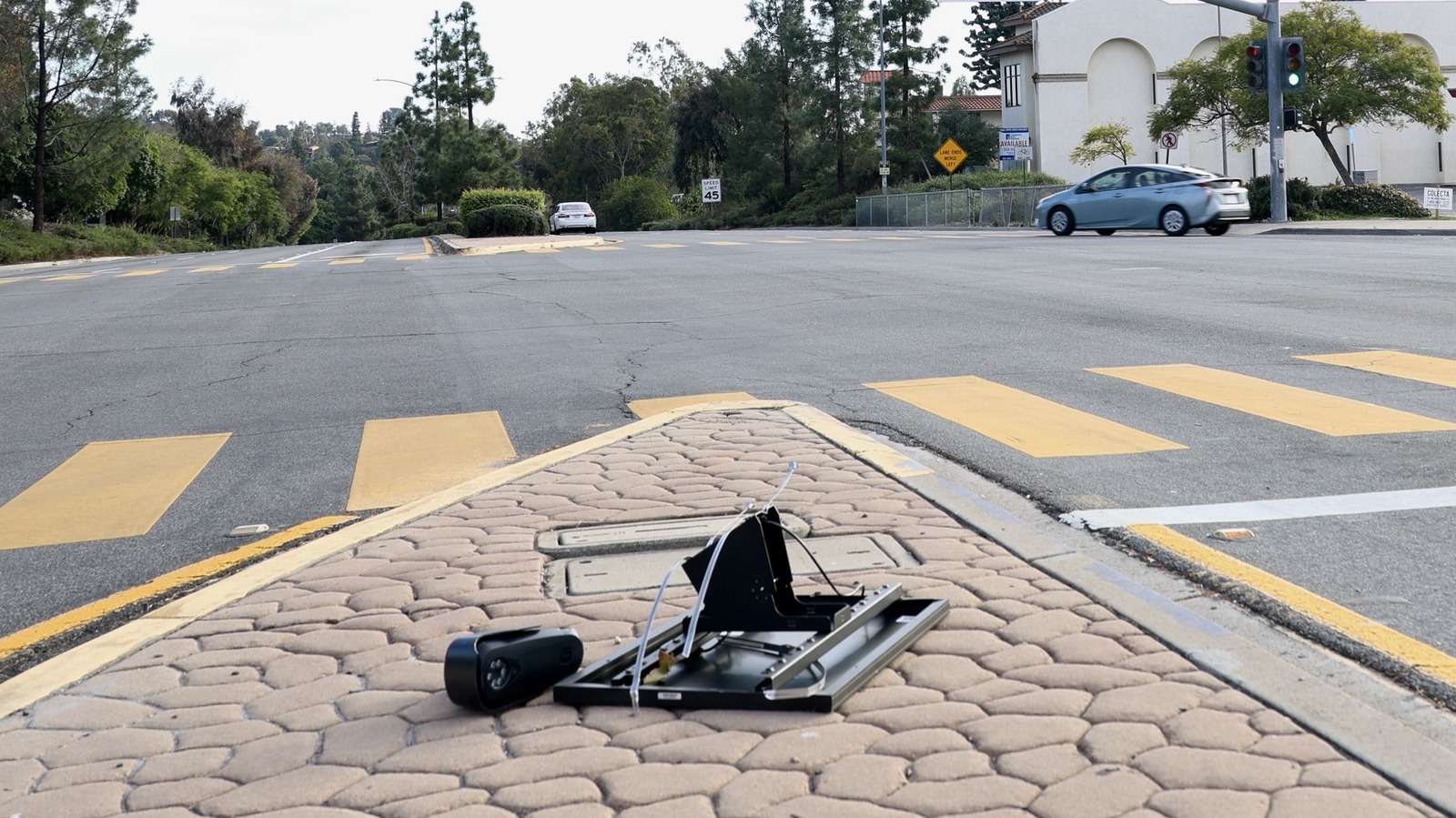
Citizens have taken matters into their own hands. As Merchant reported, protestors have dismantled Flock cameras in at least five states, often following public outcry. In Virginia, one activist reportedly destroyed at least thirteen Flock cameras. In Oregon, citizens replaced cut down cameras with expletive-ladened notes. Others are Flock-proofing their license plates, prompting Florida legislators to ban license-plate obstructions.
Some municipalities have retracted their relationship with Flock. According to DeFlock, an open-source project mapping ALPRs, at least 50 cities have canceled their Flock partnership, deactivated their cameras, or rejected measures to add the controversial technology. However, this pales in comparison to Flock’s growing client list. To date, DeFlock has counted nearly 80,000 ALPRs across the U.S. Whether backlash results in a rejection of surveillance platforms, or fades beneath their unrelenting adoption, will likely remain a hot issue. For some, the fight starts in their smart-products’ privacy settings. For others, it apparently involves visiting their local street-corner with a saw.