While Washington debates deepfakes and Silicon Valley obsesses over LLMs writing poetry, the global economy is hitting a physical wall. We are staring at the greatest opportunity for value creation in human history – and we are focused on the wrong revolution.
The next frontier isn’t digital intelligence that can do that to describe the world. It is physical intelligence that can do that change It.
The current AI hype cycle is built on a foundation that does not translate to the real world. LLMs are trained on trillions of text tokens – a static snapshot of the internet. But think of a child learning to hold a cup. They don’t learn gravity by reading a manual on friction. They learn by generating their own data through interaction. The data density of walking through a room dwarfs the collected works of Shakespeare.
This is the strategic moat that most investors ignore. 2D AI had a built-in advantage: the internet existed as a pre-made training set. 3D AI – machines that must master physics, gravity and consequences – has no such shortcut. There is no ‘physical internet’ to scrape. We need to build world models: internal simulations of cause and effect.
In the 2D world, an AI hallucination is a typo. In the 3D world, it’s a robot that crushes a package, tips over a pallet or crashes a truck.
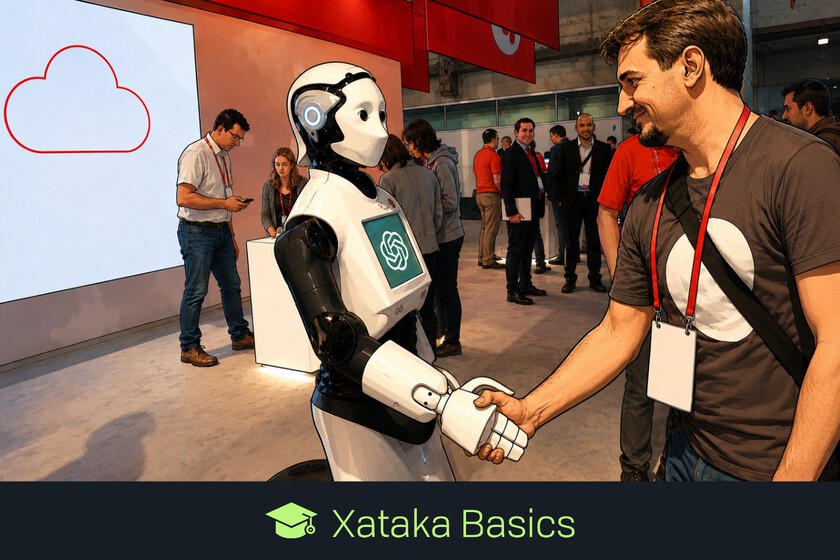
Much of the capital chasing physical AI is flowing to the wrong target: the general-purpose humanoid robot. Companies that chase the vision of machines that look and behave like humans are missing the whole point of industrial evolution.
Humans are evolutionarily designed for hunting and gathering – not for lifting 50-pound boxes for eight hours or breathing toxic dust in an industrial shed cabin. So why build a machine with the same physical limitations as the human body?
-
We don’t need a robot with legs to sort packages; we need a suction-based arm that never tires
-
We don’t need a humanoid to sand blast parts – we need a precision instrument that completely removes humans from the dust cloud
The future belongs to purpose-built machines, not science fiction knockoffs.
We are experiencing the “Amazonization” of the global economy, where consumer demand for instant delivery has created a logistical burden that human labor simply cannot support. There are not enough people to fill these jobs. And there is a moral imperative to automate them: standing on a concrete floor for eleven hours, twisting and lifting, is not what humans were made for.