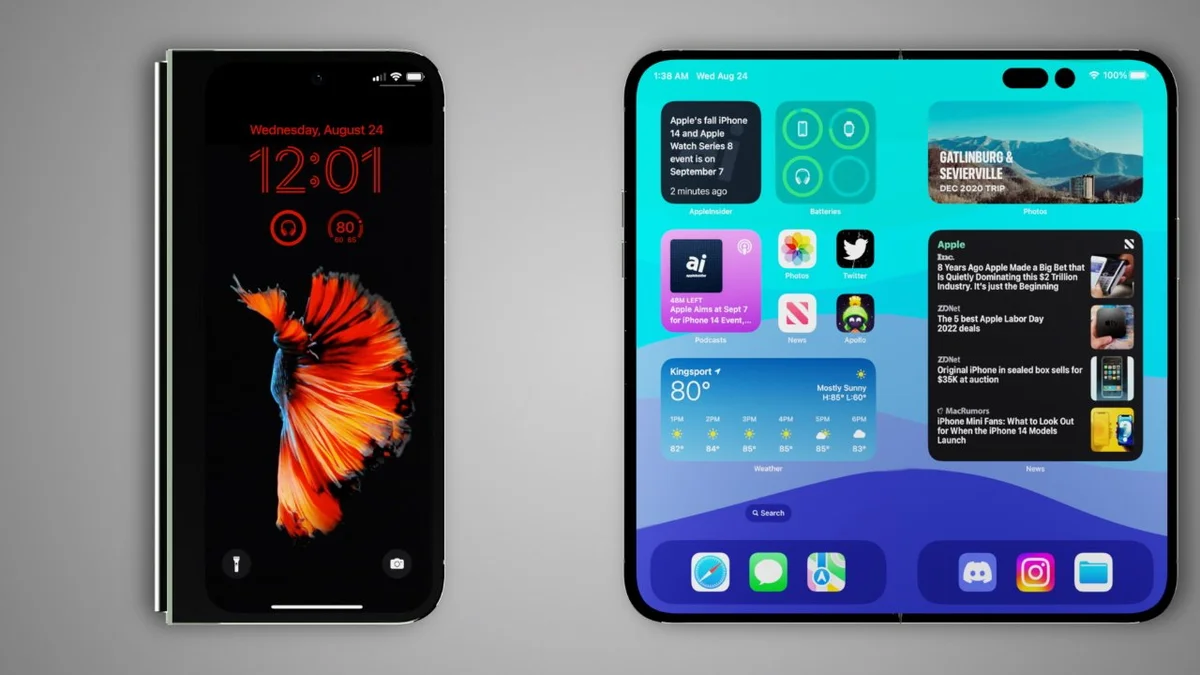
Fixing the Achilles’ heel of foldables
In a Weibo post from March 23, prominent leaker Digital Chat Station spills an interesting detail about how Apple could attempt to solve two of the main problems with foldables: crease visibility and fragility. Essentially, the post outlines four key concepts that the Cupertino tech giant may employ, the first of which is a possible implementation of self-healing glass. This technology sounds a bit like magic — and it’s actually close.
Self-healing glass usually features an elastic polymer layer, which can “heal itself” after scratches. Some types depend on chemical reactions, while others react under heat.
DCS also claims Apple might use a seamless hinge design, which could eliminate the gap when the phone is closed. Ideally, the approach could prevent dust and debris from getting trapped on the hinge.
The cherry on top is a rumored dual-layer UTG (ultra-thin glass)/UFG (ultra-foldable glass) design, which could encompass the display on either side. DCS explains Apple could use this to prevent the screen from directly touching the hinge, which could cause wear and tear more quickly.
Most likely, the rumored “sandwich” design aims to address the fragility of foldable screens.
Will this come true?
While Digital Chat Station is a highly reliable leaker, I can’t treat this leak as more than just a rumor. At the end of the day, the iPhone Fold is still a long time away, so even if there’s talk about such novelties being included, there’s still a chance that Apple could abandon the approach before the release date. Secondly, while this method has theoretical benefits, once the product goes into testing, it could fail to deliver on the expected results. And yet, I’m very excited to see how the iPhone Fold could solve the crease and fragility problems.