$3 million says you’re wrong, Samsung
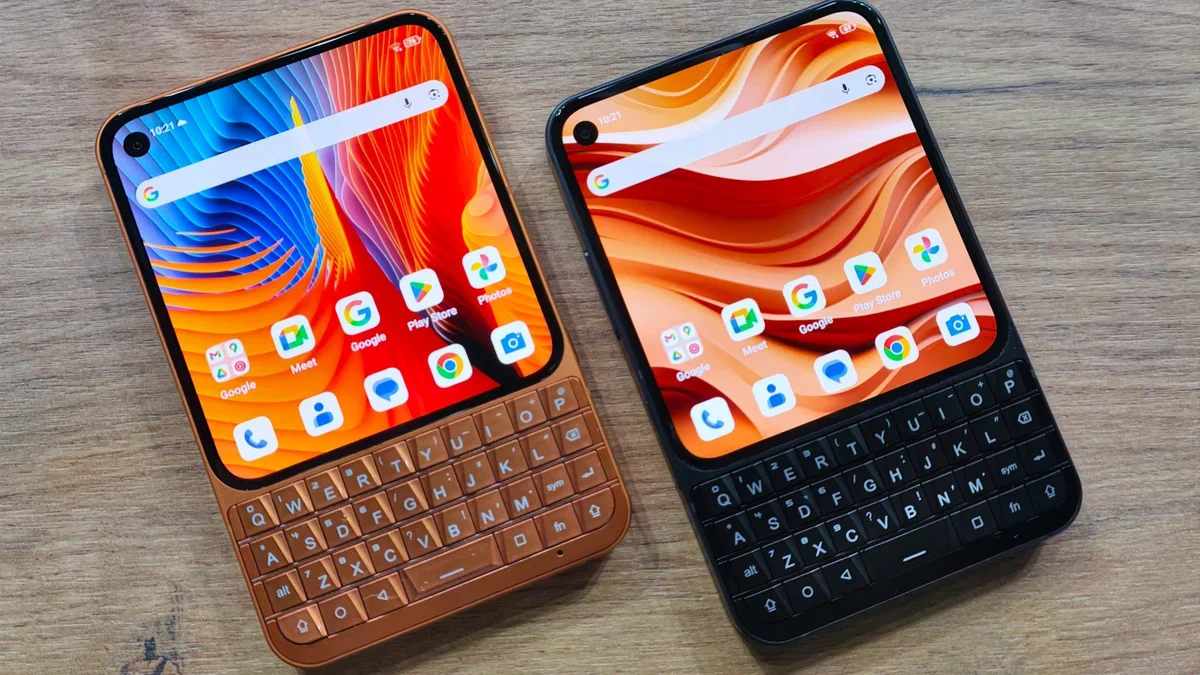
Here’s how fast this happened. Unihertz set a funding goal of just over $100,000 for the Titan 2 Elite, and backers crushed it in under 12 minutes. Over 6,000 people have now put down real money for a phone that doesn’t have the best camera, the thinnest bezels, or a folding screen.What it does have is a physical keyboard, a 4.03-inch AMOLED screen with a 120Hz refresh rate, 5G, and Android 16 with updates promised all the way through Android 20. The standard model runs on a MediaTek Dimensity 7400 with 12GB of RAM and 256GB of storage at $389. The Pro steps up to a Dimensity 8400 and 512GB for $479.
These aren’t flagship specs, and Unihertz isn’t pretending they are. But they’re more than enough for a phone that’s built around getting things done, not chasing gaming benchmarks.
The excuse that doesn’t hold up anymore
The usual argument from big brands goes like this: the market for keyboard phones is too small to justify the R&D, the manufacturing costs, and the retail shelf space. And on paper, sure, 6,000 backers out of billions of smartphone users sounds like a rounding error.
But think about it for a second. Unihertz is a small company out of Shanghai with no Samsung-level marketing budget, no Motorola carrier partnerships, and no Google-tier name recognition. They posted a Kickstarter page and pulled in $3 million in a week.
Now imagine what Samsung or Motorola could do if they actually stocked a keyboard phone on shelves next to the Galaxy S26 or the Razr. The audience is clearly there. These companies just won’t serve it.
And this isn’t coming from nowhere, either. Our own polls have shown consistently strong reader interest in physical keyboards. When we asked which upcoming keyboard phone had your attention, over 40% of you picked the Titan 2 Elite, with the Clicks Communicator sitting at around 20%.
BlackBerry proved the model can fail, but Unihertz is proving it doesn’t have to
BlackBerry’s shadow hangs over every conversation about keyboard phones, and it probably should. The brand tried to come back several times and couldn’t make it work. TCL’s KEY2 was the last real shot from a recognizable name, and it didn’t last.
But the takeaway from BlackBerry’s downfall isn’t that nobody wants keyboards. It’s that BlackBerry tried to play the flagship game while charging flagship prices for aging hardware. Unihertz sidesteps that problem completely.
The Titan 2 Elite is priced like a mid-ranger, specc’d like a mid-ranger, and sold directly to the people who want it through Kickstarter. No massive ad campaign, no carrier negotiations, no pressure to move millions of units. On top of that, they’re committing to software support through Android 20 and security patches until 2031, which is more than some bigger brands are willing to offer.
The Clicks factor
Unihertz isn’t alone here, either. Clicks, the company co-founded by Michael Fisher, is getting ready to launch its own keyboard phone, the Communicator, later this year at $499. Our team got hands-on with it at MWC, and came away impressed.
The Communicator leans more toward being a companion device, while the Titan 2 Elite wants to be your main phone. Two very different takes on the same idea, and both are betting on something the big brands keep ignoring: people want choices.
Samsung and Motorola, take notes
I’m interested in both the Titan 2 Elite and the Clicks Communicator. I used a BlackBerry back in the day, and I still remember how satisfying it felt to type on those keys without even glancing at the screen. There was a confidence to it that tapping on glass has never quite matched for me, no matter how smart autocorrect gets.Do I think Samsung is going to drop a Galaxy with a keyboard anytime soon? Not a chance. But the fact that a small company can pull $3 million for a keyboard phone on Kickstarter should make someone at Samsung, Motorola, or even Google stop and ask one simple question: what if we’re wrong?
Because right now, the only companies willing to test that theory are the ones without billion-dollar safety nets. And they keep showing that the demand is there. That’s not some niche curiosity. That’s money left on the table.